
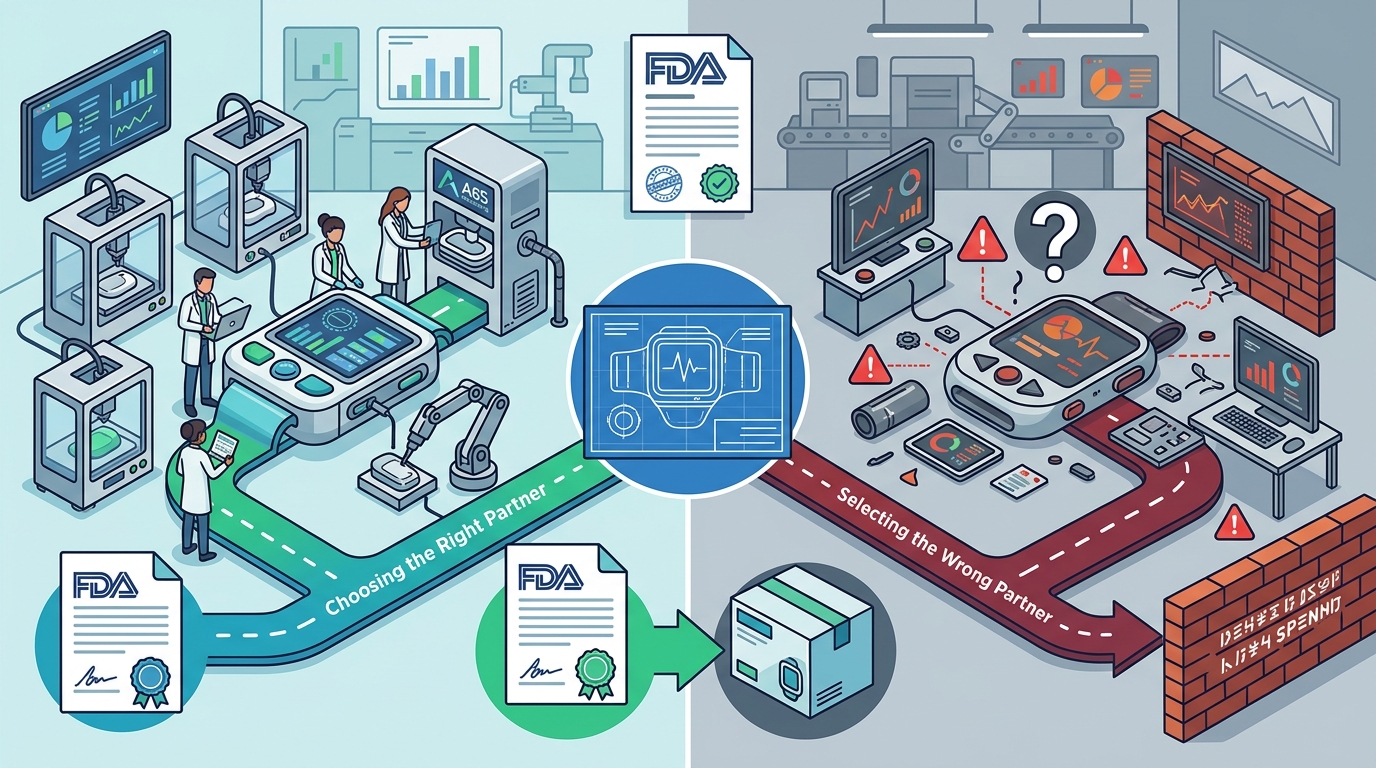
Choosing a medical device design partner is one of the most consequential decisions a MedTech company will make. The right firm accelerates your path from concept to FDA clearance; the wrong one drains budget, burns months, and introduces regulatory risk. Whether you are a startup with a breakthrough concept or an established manufacturer that needs extra engineering bandwidth, this guide walks you through a proven process for evaluating, selecting, and engaging a design partner that fits your product goals, timeline, and quality expectations.
Why You Need a Medical Device Design Partner
Medical device organizations today operate in a tighter, more complex environment than ever before. Regulatory scrutiny continues to rise, technology stacks converge, development timelines compress, and cost pressure is unrelenting. Most companies simply cannot maintain deep expertise across mechanical engineering, systems engineering, human factors, and manufacturing engineering on a single internal team.
A medical device design partner is an external engineering firm that integrates with your team to fill capability gaps and deliver design outputs that meet FDA and ISO requirements. Outsourcing engineering is a strategic business decision that lets you bring in the right specialists without the cost and commitment of hiring them full-time, as discussed in depth in our post on medical device engineering outsourcing.
Types of Medical Device Design Partners
Not every external resource is the same. Understanding partner categories helps you match the right firm to your project scope.
| Partner Type | Best For | Typical Limitations |
|---|---|---|
| Independent Consultant | Rapid prototyping, proof of concept | Limited cross-functional depth |
| Boutique Engineering Firm | End-to-end design through manufacturing transfer | Smaller headcount; selective on projects |
| Large Contract Design Organization | High-volume, multi-site programs | Higher overhead; less flexibility |
| Contract Manufacturer with Design Services | Production-focused programs | Design may be secondary to manufacturing |
A boutique engineering firm is a specialized consultancy, typically under 50 engineers, that offers deep domain expertise with direct access to senior talent. Firms like A65 Consulting in Denver fall into this category, pairing mechanical, systems, and manufacturing engineering under one roof so that design intent carries through to production.
Key Evaluation Criteria
Domain Experience
Look for a partner with a portfolio that spans your device class. Ask for case studies or examples of prior work that demonstrate problem-solving skills in a similar therapeutic area. Reviewing a firm's recent projects is one of the fastest ways to gauge relevance.
Engineering Breadth
Complex devices demand mechanical design, electronics integration, software, and systems engineering working in concert. A65 Consulting, for example, offers precision mechanism design, electromechanical system design, and complex robotic system design alongside system-level requirements traceability, verification, and validation.
Communication and Collaboration
Poor communication leads to misunderstandings, missed deadlines, and quality problems. Choose a firm with clear communication processes, responsive support, and a dedicated point of contact. Regular client meetings to ensure design alignment are non-negotiable.
Regulatory and Quality System Essentials
A Quality Management System (QMS) is a documented framework that governs every step of a medical device's design and manufacturing lifecycle. Under 21 CFR Part 820, manufacturers must implement controls covering design validation, production oversight, and post-market tracking. Any design partner you engage should operate within a QMS that aligns with both FDA regulations and ISO 13485.
Your partner should also demonstrate competency in risk management tools such as FMEA and hazard analysis, as well as human factors engineering. These capabilities are essential for meeting FDA expectations and are explored further in our articles on medical device compliance and human factors and usability.
Step-by-Step Selection Process
1. Define Your Project Scope and Goals
Before contacting any firm, document your objectives: target device class, intended use, timeline, budget range, and which engineering disciplines you need. A clear scope saves weeks of back-and-forth during proposal review.
2. Shortlist and Request Proposals
Identify three to five firms with relevant experience. Share your scope document and request detailed proposals that include staffing plans, milestone schedules, and deliverable lists. Evaluate how each firm structures its engineering milestones.
3. Conduct Technical Interviews and Reference Checks
Schedule working sessions with the engineers who will actually execute your project. Ask about their approach to design for manufacturing, designing the product and the process simultaneously, and how they handle design changes mid-program. Reach out to former clients to gather feedback on reliability and results.
Red Flags to Watch For
Making a hasty decision to meet deadlines can result in overlooking critical details or selecting the wrong partner. Watch for these warning signs:
- No documented QMS or ISO 13485 certification. Compliance is non-negotiable in the medical device industry.
- Vague milestone definitions. If a firm cannot articulate gate criteria, schedule risk will be high.
- Lack of IP protection clauses. Failing to address intellectual property concerns can expose your designs to theft or misuse.
- No prototyping capability. Cutting prototyping to save time is one of the most reliable ways to lengthen a development program. Learn why in our medical device prototyping guide.
- Single-discipline teams. A partner that only covers mechanical design will leave gaps in systems engineering and manufacturing transfer.
Key Takeaways
- A medical device design partner fills engineering gaps so you can reach market faster without hiring full-time specialists.
- Boutique firms offer direct access to senior engineers and tighter collaboration than large contract organizations.
- QMS alignment with FDA 21 CFR Part 820 and ISO 13485 is a baseline requirement for any credible partner.
- Define your project scope, device class, and budget before requesting proposals.
- Evaluate communication style and meeting cadence as seriously as technical capability.
- Protect your intellectual property with explicit contract clauses from day one.
- Integrate design for manufacturing early; your partner should design the product and the production process together.
Frequently Asked Questions
What is a medical device design partner?
A medical device design partner is an external engineering consultancy that works alongside your team to design, develop, and prepare a medical device for regulatory submission and manufacturing. These partners bring specialized expertise in areas like mechanical engineering, systems engineering, and regulatory compliance.
How much does it cost to hire a medical device design firm?
Costs vary widely based on device complexity, regulatory pathway, and project duration. Development costs can range from hundreds of thousands to several million dollars. A detailed proposal from your shortlisted firms will provide the most accurate estimate.
Should I choose a large firm or a boutique consultancy?
Boutique firms typically offer more senior-level engagement and faster decision-making. Large firms offer scale for multi-site programs. The best choice depends on your project complexity and how closely you want to collaborate with the engineers doing the work.
What certifications should a design partner have?
At minimum, look for ISO 13485 certification and demonstrated compliance with FDA 21 CFR Part 820. Experience with risk management standards like ISO 14971 and human factors standards like IEC 62366 is also important.
How do I protect my intellectual property when outsourcing design?
Use non-disclosure agreements and ensure your contract includes robust IP ownership and protection clauses. Verify that the firm has a strong track record of safeguarding client confidentiality before sharing proprietary information.
What is design for manufacturing in medical devices?
Design for manufacturing (DFM) is an engineering discipline that optimizes a device's design so it can be produced consistently, at scale, and at target cost. Integrating DFM early prevents costly redesigns during production transfer.
How long does the partner selection process take?
A thorough evaluation typically takes four to eight weeks, including scope definition, proposal review, technical interviews, and reference checks. Rushing this process increases the risk of misalignment.
Can a design partner help with FDA submissions?
Many full-service partners support regulatory strategy, design history file preparation, and verification and validation documentation. Confirm the specific regulatory services included in any proposal you receive.
Start Your Search Today
Finding the right medical device design partner does not have to be overwhelming. Start by defining your scope, then evaluate firms against the criteria outlined above. If you are looking for a boutique engineering team in Denver that handles everything from concept through manufacturing transfer, contact A65 Consulting to request a proposal and see how our engineers can integrate with your team to deliver results.