
Bringing a medical device from concept to market is one of the most complex product development challenges in any industry. Regulatory requirements, precision engineering, and tight timelines demand specialized expertise that most internal teams simply cannot cover alone. A medical device design partner is an external engineering firm that collaborates with you to design, prototype, and prepare your device for manufacturing and regulatory submission. Choosing the right one can mean the difference between a successful launch and costly delays. This guide walks you through a proven process for evaluating, selecting, and engaging the partner that fits your project.
Why You Need a Medical Device Design Partner
Medical device startups and established companies alike face a common bottleneck: insufficient engineering resources at critical project milestones. Tight deadlines, missing domain knowledge, or competing priorities can stall development when the stakes are highest.
A qualified design partner fills that gap. Rather than hiring full-time specialists for every discipline, you gain access to experienced engineers who integrate directly with your team. This approach reduces overhead while accelerating your path to design verification and validation.
The Cost of Getting It Wrong
Selecting the wrong partner can lead to redesign cycles, failed submissions, and launch delays that erode investor confidence. According to the FDA, design controls are required for all Class II and Class III devices, meaning regulatory missteps early in development compound downstream.
Core Capabilities to Look For
Not every engineering firm is equipped for the unique demands of medical device development. Your ideal partner should demonstrate depth in several areas.
Mechanical and Electromechanical Engineering
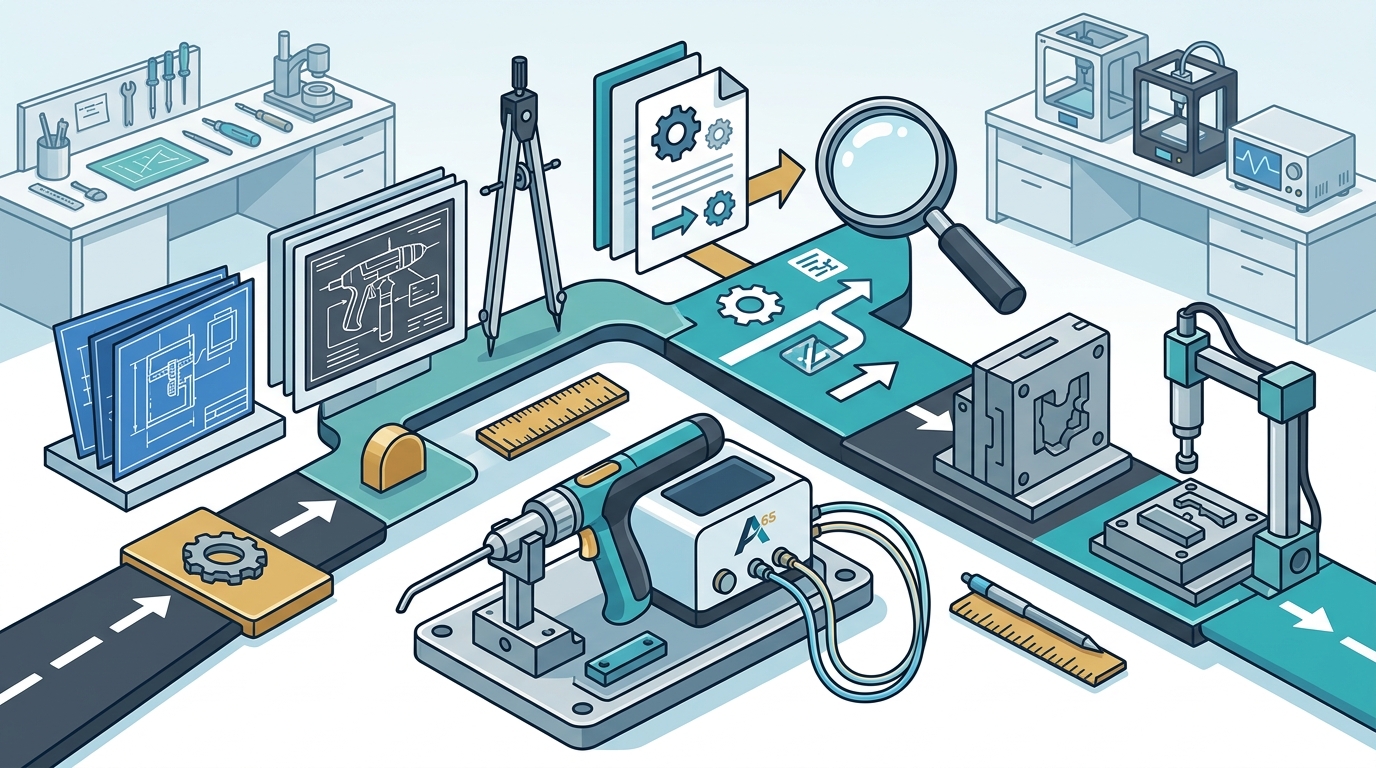
Look for firms that offer end-to-end mechanical engineering services, including precision mechanism design, high-volume disposable device design, and complex robotic or automated system design. A65 Consulting, for example, provides a full range of medical device design and engineering services covering concept generation, mathematical modeling, detailed design, and prototype build-and-test.
Prototyping and Design for Manufacturing
Design for Manufacturing (DfM) is the practice of designing products so they can be manufactured efficiently at scale without sacrificing quality. Strong partners embed DfM thinking from the earliest design phases, not as an afterthought. You can explore how disciplined prototyping fits into the process in this complete framework for medical device prototyping success.
Manufacturing System Design
Some partners go beyond the device itself and also design the manufacturing systems used to assemble it. This end-to-end capability shortens the gap between design freeze and production launch.
Evaluation Criteria: Comparing Potential Partners
Use a structured scorecard to compare firms objectively. The table below outlines key criteria and what to look for in each.
| Criterion | What to Evaluate | Why It Matters |
|---|---|---|
| Domain Experience | Years in medical devices, therapy areas served | Regulatory and clinical nuance varies by specialty |
| Engineering Depth | Mechanical, electrical, software, systems | Complex devices require multidisciplinary teams |
| Quality System | ISO 13485 certification or compliance | Ensures design outputs meet regulatory expectations |
| Scalability | Team size flexibility, staff augmentation options | Project needs fluctuate across development phases |
| DfM and Transfer | Track record of designs reaching production | A beautiful prototype that cannot be manufactured is a failure |
| Communication | Regular client meetings, transparent reporting | Alignment prevents costly mid-project pivots |
| Location | Proximity or time-zone overlap | Facilitates collaboration, especially for hands-on prototyping |
A firm like A65 Consulting, based in Denver, Colorado, scores well across these criteria by offering comprehensive engineering services with a hands-on, collaborative process.
Ensure Regulatory and Quality System Alignment
Design controls are an interrelated set of practices and procedures incorporated into the design and development process to ensure devices meet safety and performance requirements. In 2024, the FDA introduced a final rule to harmonize 21 CFR Part 820 with ISO 13485, renaming it the Quality Management System Regulation (QMSR), which takes effect in 2026.
Your design partner must understand these evolving requirements. Ask whether they follow a structured design control process, maintain design history files, and can support your verification and validation activities. Partners who treat regulatory as an afterthought will cost you time and money.
Understand Engagement Models
An engagement model is the contractual and operational structure that defines how a design partner works with your team. Common models include:
- Project-based: The partner owns a defined scope of work from start to finish.
- Staff augmentation: Engineers from the partner firm embed within your team to supplement capacity.
- Hybrid: A combination where the partner leads certain workstreams while augmenting others.
Choosing the right model depends on your internal capabilities and project phase. If your team is overwhelmed by tight deadlines or missing critical knowledge, bringing in a partner on a project basis lets you maintain focus on strategic priorities. For ongoing capacity needs, staff augmentation provides specialist engineers without the cost and commitment of full-time hires.
Red Flags to Avoid When Selecting a Partner
Watch out for these warning signs during your evaluation:
- No medical device track record. General product design firms often underestimate the regulatory burden.
- Vague project scoping. A credible partner will ask detailed questions and provide a thorough proposal before starting.
- No quality system. Without ISO 13485 alignment, design outputs may not withstand regulatory scrutiny.
- Poor communication cadence. Partners who resist regular check-ins create alignment risk.
- Inability to support DfM. If a firm only designs but cannot think through manufacturability, expect transfer headaches.
Key Takeaways
- A medical device design partner supplements your engineering capacity so you can meet deadlines without compromising quality.
- Prioritize firms with deep domain experience in medical devices, not generalist product design shops.
- Verify quality system alignment, especially as the FDA transitions to QMSR in 2026.
- Use a structured scorecard covering domain experience, engineering depth, DfM capability, and communication practices.
- Understand engagement models and match them to your project phase and internal resources.
- Watch for red flags like vague scoping, no QMS, or lack of a medical device portfolio.
- The right partner should feel like an extension of your team, not a disconnected vendor.
Frequently Asked Questions
What is a medical device design partner?
A medical device design partner is an external engineering firm that works alongside your team to design, prototype, and prepare medical devices for regulatory submission and manufacturing. They bring specialized skills you may not have in-house.
How do I know if my company needs a design partner?
If your team lacks bandwidth, specific technical expertise, or experience navigating FDA design controls, a partner can fill those gaps. Startups and large companies alike use partners to accelerate timelines.
What qualifications should a design partner have?
Look for ISO 13485 compliance or alignment, proven medical device project history, multidisciplinary engineering capabilities, and a clear design control process. Check their recent project portfolio for relevant experience.
How much does it cost to hire a medical device design firm?
Costs vary widely based on device complexity, regulatory class, and engagement model. Project-based engagements may range from $50,000 for simple devices to several million for Class III systems. Request a detailed proposal to understand pricing.
What is the difference between staff augmentation and project-based engagement?
Staff augmentation places individual engineers on your team under your direction. Project-based engagement means the partner manages a defined deliverable independently. Hybrid models combine both approaches.
How long does it take to develop a medical device with a partner?
Timelines depend on device complexity and regulatory pathway. Simple Class II devices may take 12 to 18 months, while novel Class III devices can require three or more years. A good partner helps you build a realistic schedule.
Should my design partner be located near me?
Proximity helps during prototyping and testing phases but is not always essential. Many firms operate effectively with remote collaboration. Denver-based teams, for instance, are centrally located for convenient travel across the U.S.
What role does design for manufacturing play in partner selection?
DfM is critical. A partner who considers manufacturability from the start reduces production costs, minimizes transfer risk, and shortens time to market. Visit the A65 blog for in-depth articles on DfM best practices.
Ready to Find Your Medical Device Design Partner?
The right engineering partner does not just execute tasks. They become a strategic extension of your team, helping you navigate complexity, hit milestones, and bring safe, effective devices to market. A65 Consulting works with startups and top-tier medical device companies from their Denver, Colorado headquarters, offering everything from concept design to manufacturing system development.
Contact A65 Consulting today to request a proposal and discover how their engineering team can accelerate your next medical device project.