
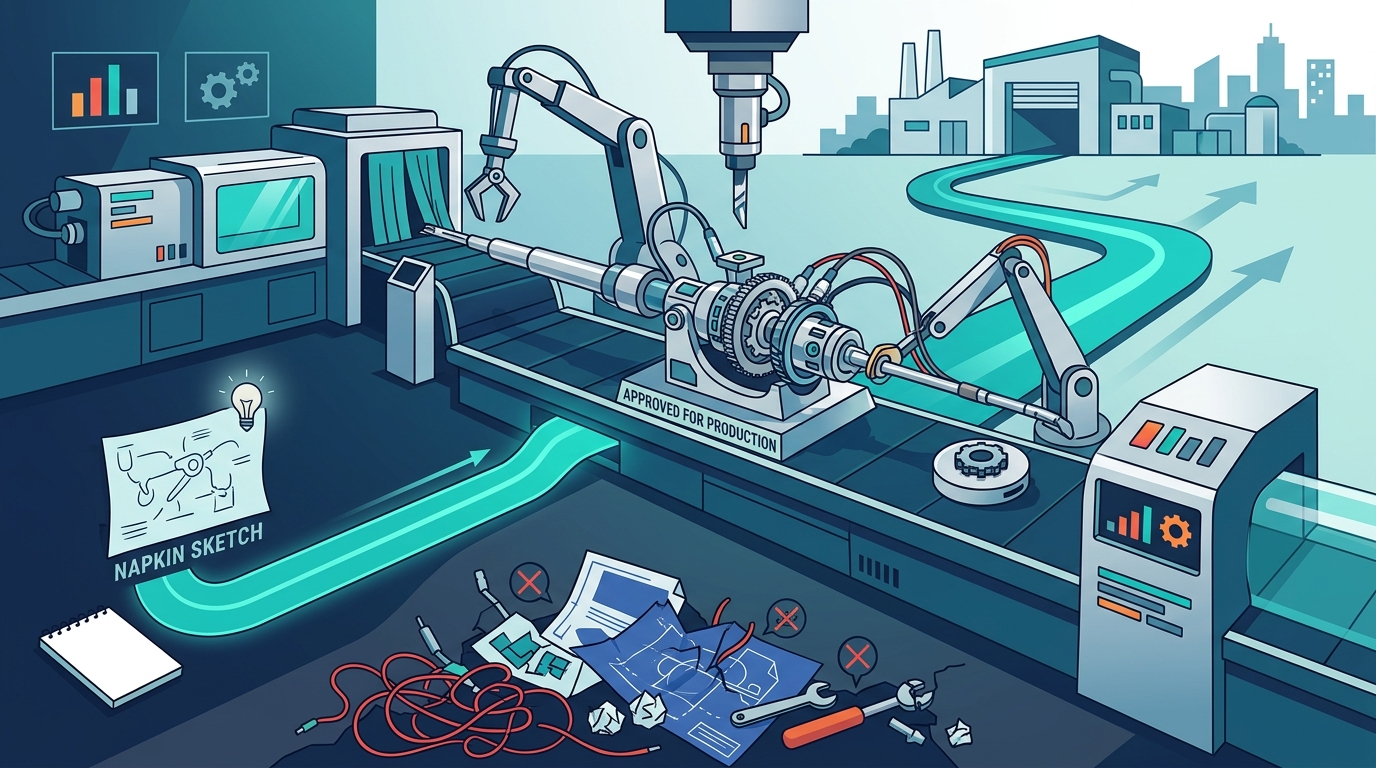
Choosing a medical device design partner is one of the highest-impact decisions a product team will make. The right firm accelerates your time to market, reduces regulatory risk, and fills critical engineering gaps. The wrong one burns budget, delays submissions, and erodes stakeholder confidence. Whether you are a startup with a napkin sketch or an established OEM that needs to scale R&D capacity, the selection process follows a repeatable set of criteria. This guide walks you through each step so you can evaluate partners with clarity and land on the best fit for your project.
Why You Need a Medical Device Design Partner
Medical device organizations today operate in a tighter, more complex environment than ever before. Regulatory scrutiny continues to rise, development timelines are compressing, and cost pressure is unrelenting. Many teams simply lack the bandwidth or specialized skills to cover every discipline in-house.
A medical device design partner is an external engineering firm that supplements or leads product development activities on behalf of a device company. Partnering with a firm like A65 Consulting lets you bring in the right specialists without the cost and commitment of hiring them full-time. The result is faster iteration, broader expertise, and fewer bottlenecks.
Types of Medical Device Design Partners
Not all partners offer the same scope. Understanding the landscape helps you match capabilities to your project needs.
| Partner Type | Typical Scope | Best For |
|---|---|---|
| Independent Design Consultancy | Concept through verification, prototyping, FEA | Startups and focused project work |
| Full-Service Engineering Firm | Mechanical, electrical, systems, manufacturing, leadership | Companies needing end-to-end coverage |
| Contract Design & Manufacturing Org (CDMO) | Design plus volume production | Teams wanting a single source to market |
| Staff Augmentation Provider | Individual engineers placed on your team | Filling a temporary headcount gap |
A full-service boutique firm occupies a sweet spot: deep domain expertise with the flexibility to integrate into your existing processes. A65's engineering services span mechanical, electrical, systems, and manufacturing engineering, plus project management and interim R&D leadership.
Key Evaluation Criteria
Domain Experience
Look for a partner whose portfolio includes devices in your therapeutic area or device class. Prior work on precision mechanisms, disposable devices, or electromechanical systems signals relevant depth. Review recent project case studies to confirm hands-on experience rather than theoretical claims.
Team Integration Model
The best partners do not operate in a black box. They hold regular client meetings, align on design goals, and embed within your workflows. A seamless integration model is a hallmark of a firm that values transparency and accountability.
Breadth of Engineering Disciplines
Medical devices rarely involve a single discipline. Your partner should offer mechanical design, systems engineering, electrical design, and manufacturing support under one roof. Gaps in coverage force you to manage multiple vendors and increase coordination risk.
Regulatory and Quality System Fit
A design control process is the structured methodology required by FDA 21 CFR 820.30 to ensure that devices are developed safely and effectively. Your partner must demonstrate fluency in design inputs, design outputs, verification, and validation.
Around 85% of medical devices reach the U.S. market through the 510(k) pathway, which requires showing substantial equivalence to a predicate device. A partner who understands predicate selection and submission strategy can shave months off your timeline.
ISO 13485 is the international quality management standard specific to medical device organizations. While not every boutique consultancy holds the certification itself, your partner should operate within a quality framework that aligns with ISO 13485 and supports your QMS documentation requirements.
Engagement Models and Cost Structures
Understanding how a partner charges helps you forecast budgets accurately. The two most common structures are monthly retainers tied to milestones and fixed-price project contracts.
| Model | How It Works | Pros | Cons |
|---|---|---|---|
| Monthly Retainer | Agreed hours per month toward defined milestones | Flexibility, ongoing access to team | Requires active scope management |
| Fixed-Price Project | Lump sum for a defined deliverable | Budget certainty | Less flexibility for scope changes |
| Staff Augmentation | Hourly or daily rate per engineer | Simple, scalable | You manage the work directly |
A65 Consulting typically charges on a monthly retainer basis and works toward mutually agreed-on project milestones, giving clients both predictability and flexibility.
Red Flags to Watch For
Even impressive portfolios can mask underlying problems. Watch for these warning signs during your evaluation:
- No clear project management process. If timelines and milestones are vague before the contract, they will be vague after it.
- Single-discipline teams. A partner that outsources electrical or systems work adds hidden coordination layers.
- No regulatory vocabulary. If a firm cannot discuss design controls, risk management, or verification and validation fluently, they are not ready for med-tech.
- Resistance to transparency. Insist on regular design reviews and open documentation. Partners who push back may be hiding capacity or quality issues.
- No references in your device class. Ask for at least two client references whose devices reached market.
Reading industry-focused blog content from a prospective partner is one quick way to gauge their technical depth and thought leadership before scheduling a call.
Key Takeaways
- A medical device design partner fills engineering gaps so your product reaches market faster.
- Full-service boutique firms offer the best balance of depth and flexibility for most projects.
- Regulatory fluency, including design controls and 510(k) strategy, is non-negotiable.
- Team integration matters more than team size; look for firms that embed with your workflows.
- Monthly retainer models tied to milestones provide budget predictability with room for iteration.
- Always verify domain experience through recent project portfolios and client references.
- Red flags like vague timelines or single-discipline teams signal future project risk.
Frequently Asked Questions
What is a medical device design partner?
A medical device design partner is an external engineering firm that collaborates with device companies to develop, test, and prepare products for regulatory submission and manufacturing. They can lead or supplement your internal team across disciplines like mechanical, electrical, and systems engineering.
How do I know if my team needs an outside partner?
Common indicators include missed milestones, gaps in specialized skills (such as FEA or systems engineering), leadership vacancies, and approaching deadlines with insufficient headcount. If your team is stretched thin, a partner can relieve pressure quickly.
What regulatory experience should a design partner have?
At minimum, your partner should understand FDA design controls under 21 CFR 820.30, the 510(k) submission process, and risk management per ISO 14971. Experience with EU MDR requirements is a plus if you plan to sell internationally.
How much does it cost to hire a medical device design firm?
Costs vary widely based on project scope and device complexity. A 510(k) device development engagement may range from $50,000 to $200,000 or more. Boutique firms like A65 Consulting often provide strong value by operating on lean retainer models without the overhead of large consultancies.
Should I choose a large consultancy or a boutique firm?
Large firms offer breadth but often assign junior staff to day-to-day work. Boutique firms like A65 Consulting give you direct access to senior engineers who stay engaged throughout the project lifecycle.
What questions should I ask during a discovery call?
Ask about device class experience, team composition, project management methodology, quality system alignment, typical engagement length, and how they handle scope changes. A transparent partner will answer all of these willingly.
How long does a typical medical device design engagement last?
Timelines depend on device complexity and regulatory pathway. Simple Class I devices may take three to six months. Class II devices following the 510(k) pathway often require 12 to 18 months from concept through submission.
Can a design partner help with manufacturing transfer?
Yes. Many full-service partners support design for manufacturing (DFM) reviews, process development, and production transition. A65's leadership services also cover interim operations roles to guide supply chain and manufacturing scale-up.
Ready to Find Your Partner?
The search for the right medical device design partner does not have to be overwhelming. Start by defining your project scope, listing must-have capabilities, and scheduling discovery calls with two or three firms that match your criteria. If you are looking for a Denver-based boutique firm with decades of hands-on medical device engineering experience, book a consultation with A65 Consulting and see how their team can integrate with yours to move your device from concept to market.