
Choosing a medical device design partner is one of the most consequential decisions a medtech company can make. The wrong choice leads to blown budgets, missed regulatory submissions, and months of lost time. The right partner accelerates your path from concept to clearance, fills critical engineering gaps, and integrates with your team as though they have always been there. Whether you are a startup with a first-generation concept or an established manufacturer scaling a product line, the criteria below will help you evaluate candidates and make a confident decision.
Why You Need a Medical Device Design Partner
A medical device design partner is an external engineering firm that supplements or leads the product development work a company cannot complete with internal resources alone. Many companies, from venture-backed startups to Fortune 500 manufacturers, engage design partners to access specialized expertise, scale teams quickly, and shorten time to market.
Tight deadlines, missing specializations, and gaps in engineering leadership are common triggers. According to industry data cited in recent prototyping research, about 75% of US-based medical device startups fail, with failures often attributed to financial burdens, regulatory hurdles, and technical development challenges. A strong design partner helps mitigate those risks early.
Key Criteria for Evaluating a Design Partner
Relevant Domain Experience
Look for a partner with direct medical device engineering experience, not just general product design. A firm that has worked across device classes, from high-volume disposables to complex electromechanical systems, will anticipate problems a generalist would miss. Review their recent project portfolio for evidence of work similar to yours.
Multidisciplinary Engineering Depth
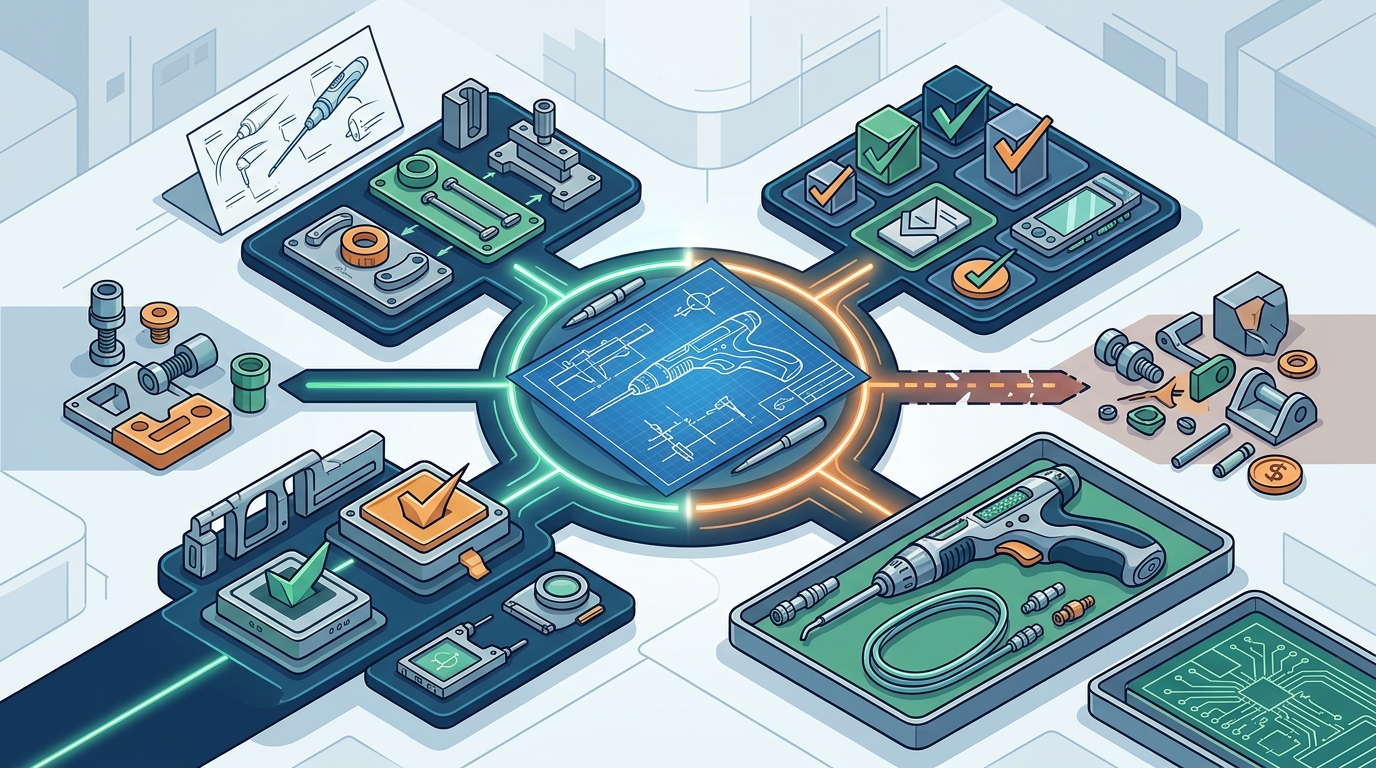
Medical devices often require mechanical, electrical, systems, and manufacturing engineering working in concert. A partner that covers these disciplines under one roof reduces handoff risk. For example, A65 Consulting offers mechanical, systems, manufacturing, quality, and regulatory services so that all critical functions stay coordinated throughout development.
Team Integration and Communication
The best partners do not operate in a silo. They integrate seamlessly with your existing processes, hold regular alignment meetings, and provide transparent status reporting. This embedded approach keeps projects on time, on budget, and aligned with product requirements.
Regulatory and Quality System Expertise
Regulatory knowledge is a non-negotiable criterion. A design partner should understand FDA design controls, risk management standards like ISO 14971, and quality management frameworks such as ISO 13485. ISO 13485 is a quality management standard specific to the medical device industry that defines processes for design, development, production, and post-market activities.
Partners with 510(k) submission experience bring practical insight into what documentation and testing the FDA expects. As regulatory scrutiny in both the US and EU continues to tighten in 2026, this expertise directly impacts whether your product reaches the market on schedule.
Engagement Models: Consulting vs. Full-Service vs. Staff Augmentation
Understanding how a partner charges and delivers work is just as important as evaluating their technical skill. There are three common engagement models in medical device design consulting.
Staff augmentation is a model where the partner provides individual engineers who work under your direction, filling specific skill or capacity gaps. Project-based consulting is an arrangement where the partner owns a defined scope and delivers agreed-upon milestones. Full-service development covers the entire lifecycle from concept through design transfer to manufacturing.
Boutique firms like A65 Consulting often blend these models, offering the flexibility of staff augmentation with the strategic guidance of a full-service partner. They can step into interim engineering leadership roles or provide hands-on design support depending on what the program requires.
Red Flags to Watch For
Not every partner is the right fit. Watch for these warning signs during your evaluation:
- No medical device track record. General product design firms may lack the regulatory discipline this industry demands.
- Vague timelines and milestones. A credible partner ties deliverables to specific design review gates.
- No QMS or design control process. If a firm cannot describe their quality system, they are not ready for regulated work.
- Poor communication cadence. Partners that resist regular check-ins often deliver misaligned work.
- Offshore-only teams with no US-based oversight. Coordination gaps can compound regulatory risk.
Partner Evaluation Comparison Table
| Evaluation Criterion | What to Look For | Why It Matters |
|---|---|---|
| Medical device experience | Portfolio of cleared or approved devices | Reduces regulatory risk and rework |
| Engineering disciplines | Mechanical, electrical, systems, manufacturing | Fewer handoffs, better integration |
| Quality system | ISO 13485 or equivalent QMS | Ensures design control compliance |
| Regulatory pathway knowledge | 510(k), De Novo, or PMA experience | Speeds time to clearance |
| Team integration | Embedded engineers, regular meetings | Alignment with your internal processes |
| Flexibility | Scalable team, retainer or project-based | Adapts to changing project needs |
| Location and availability | US-based, accessible time zones | Faster communication cycles |
Key Takeaways
- Start your search by defining whether you need staff augmentation, project-based consulting, or full-service development.
- Prioritize partners with direct medical device experience and a portfolio of regulated products.
- Verify that the partner operates under a formal quality management system aligned with ISO 13485.
- Evaluate regulatory pathway expertise, especially 510(k) and risk management experience.
- Insist on transparent communication, regular design reviews, and milestone-based deliverables.
- Consider boutique firms that offer the depth of a large consultancy with the agility of a small team.
- Check references and review past project outcomes before signing a contract.
Frequently Asked Questions
What is a medical device design partner?
A medical device design partner is an external engineering firm that collaborates with medical device companies to design, develop, and bring regulated products to market. These partners fill gaps in expertise, capacity, or leadership during the product development lifecycle.
How much does it cost to hire a medical device design firm?
Costs vary widely depending on scope. Staff augmentation typically runs on monthly retainers, while full development programs for a 510(k) device can range from $50,000 to over $200,000 in engineering fees alone, not including regulatory submission costs.
What regulatory experience should a design partner have?
At minimum, they should understand FDA design controls, ISO 14971 risk management, and the 510(k) clearance process. For higher-risk devices, look for experience with De Novo or PMA pathways.
Should I choose a large firm or a boutique consultancy?
Both have advantages. Large firms offer breadth of resources. Boutique firms like A65 Consulting provide senior-level attention, faster decision-making, and seamless team integration, often at a lower cost than adding full-time headcount.
How do I verify a partner's quality system?
Ask for documentation of their QMS, including design control procedures, CAPA processes, and any third-party audit results. A partner with dedicated quality engineering services will be able to provide this readily.
What is the typical timeline for a medical device development project?
Timelines depend on device complexity and regulatory class. A straightforward Class II device may take 12 to 18 months from concept to 510(k) submission, while more complex systems can take two to three years.
Can a design partner help with manufacturing transfer?
Yes. Many design partners offer manufacturing engineering services that include DFM analysis, fixture development, production line layout, and supplier management to ensure a smooth transition from design to production.
What questions should I ask during a discovery call?
Ask about their experience with your device type, their quality system, how they handle design changes, their communication cadence, and whether they can share references from past clients in similar programs.
Ready to Find Your Engineering Partner?
If you are looking for a medical device design partner that integrates with your team, brings decades of engineering expertise, and delivers results from concept through production, start a conversation with A65 Consulting. Book a free discovery call to discuss your project goals, timeline, and engineering needs. Visit the A65 blog for more insights on medical device development best practices.