
Medical Device Engineering Consultant vs. Full-Time Hiring for Early-Stage Development
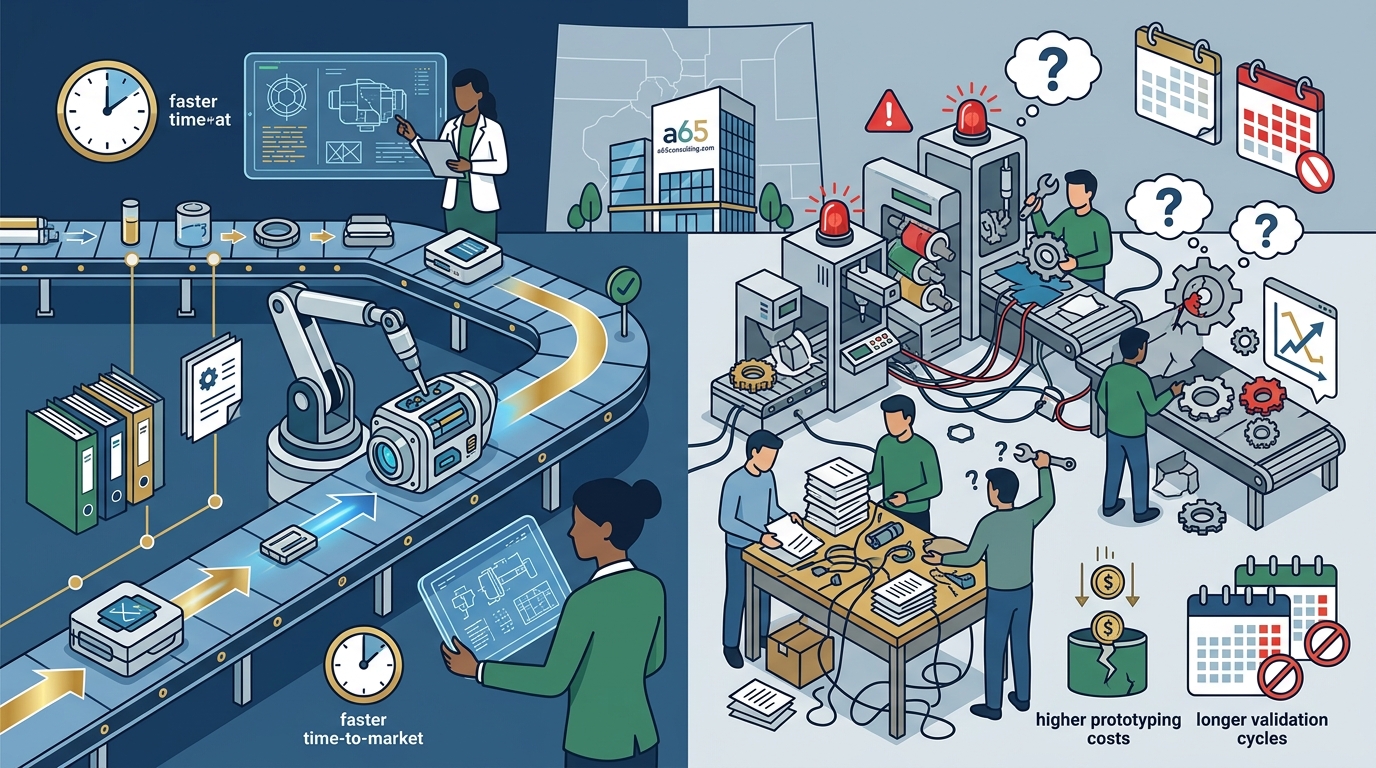
Early-stage medical device programs face a 68 percent failure rate when engineering leadership lacks specialized regulatory experience. According to industry lifecycle data, organizations that bypass structured engineering oversight typically experience 40 percent longer validation cycles and 25 percent higher prototyping costs. These metrics highlight why founders must carefully evaluate whether to engage a specialized engineering consultant or build an internal full-time team. The decision directly impacts capital allocation, time-to-market, and long-term compliance posture. This analysis breaks down the operational, financial, and strategic tradeoffs to help your leadership team make a data-driven hiring decision. (New Study Compares)
The Hidden Costs of Early-Stage Engineering Gaps
Building an internal engineering team requires substantial upfront capital. Salaries, benefits, workspace, and specialized software licenses quickly exceed initial budget projections. A senior medical device engineer commands a base salary between 130,000 and 180,000 dollars annually. When you factor in recruitment fees, onboarding time, and equipment procurement, the break-even timeline extends well beyond the critical validation phase. Many startups exhaust their seed funding before reaching a functional prototype.
Engaging a specialized engineering consultant flips this financial model. You pay strictly for the expertise required during the concept and design phases. This model eliminates long-term payroll obligations while granting immediate access to senior-level technical leadership. Your capital remains allocated to testing, regulatory submissions, and market entry strategies. Capital preservation during the pre-seed phase directly correlates with successful product launch timelines.
Scaling Expertise Without Overhead
Medical device development demands multidisciplinary knowledge. Mechanical engineering, embedded software, electrical systems, and human factors design must operate in perfect synchronization. Hiring full-time staff to cover every discipline creates management complexity and communication bottlenecks. A dedicated engineering consultant brings a pre-assembled cross-functional team. This structure accelerates decision-making and reduces internal coordination friction.
Design for Manufacturing is a quality exercise, not a cost exercise. When consultants integrate production constraints early, they prevent costly redesigns during later validation stages. Your internal team can focus on core business development, investor relations, and clinical trial planning. The consultant handles the technical execution. This division of labor maximizes organizational efficiency and reduces burn rate. Explore our full-service engineering framework to see how cross-disciplinary teams operate in practice.
Regulatory Compliance and Verification Workflows
Verification is a system, not a phase. Early-stage programs frequently treat testing as a final checkpoint rather than an integrated development process. This approach generates massive rework when design inputs do not align with regulatory requirements. A specialized consultant implements continuous verification protocols from day one. They map design controls to ISO 13485 standards and FDA guidance documents simultaneously. This proactive approach eliminates last-minute compliance surprises.
According to regulatory submission data, programs with integrated verification workflows experience 35 percent fewer review cycles. The average time to first submission drops significantly when engineering consultants manage the documentation pipeline. Your leadership team gains confidence that every design decision supports regulatory approval. Review FDA design controls guidance to understand the baseline requirements. Read our verification methodology breakdown for deeper technical insights.
Manufacturing Transfer and Design for Manufacturing
Transferring a prototype to commercial production introduces unique engineering challenges. Tolerances, material selections, and assembly sequences must align with factory capabilities. Full-time hires often lack commercial manufacturing experience. They design beautiful prototypes that factories cannot produce at scale. Engineering consultants bridge this gap by embedding production constraints into the initial design architecture.
Cost optimization occurs naturally when manufacturing engineers participate during the conceptual phase. They identify alternative materials, simplify assembly steps, and standardize components before tooling begins. This process reduces unit costs by 20 to 40 percent compared to traditional handoff models. Your product reaches the market with healthy margins and scalable production volumes. View our manufacturing transfer case studies to see these principles in action. (Analyzing cost impacts)
Risk Management and Executive Oversight
Risk management is a continuous lifecycle process. Early-stage programs frequently underestimate the complexity of hazard analysis and mitigation planning. Consultants implement structured risk management frameworks that align with IEC 62368 standards. They document failure modes, assign severity ratings, and validate mitigation strategies before hardware commits to production. This discipline prevents catastrophic design flaws from reaching clinical environments.
Executive oversight improves dramatically when consultants provide transparent program metrics. Dashboards track milestone completion, budget utilization, and risk exposure in real time. Leadership teams receive accurate program status without micromanaging daily engineering tasks. This transparency builds investor confidence and accelerates funding rounds. Learn how our leadership model operates across complex development programs.
Consultant Versus Full-Time Hiring Comparison Matrix
| Operational Factor | Specialized Engineering Consultant | Full-Time Internal Team |
|---|---|---|
| Initial Capital Requirement | Low. Pay-per-project or retainer model. | High. Salaries, benefits, and equipment. |
| Regulatory Expertise | Immediate access to senior compliance specialists. | Requires extensive hiring and training cycles. |
| Scalability | Flexible. Scale resources up or down instantly. | Rigid. Hiring and onboarding take months. |
| Manufacturing Integration | Embedded production constraints from day one. | Often added as an afterthought. |
| Long-Term Ownership | Requires structured knowledge transfer protocols. | Complete institutional knowledge retention. |
Key Takeaways
- Early-stage medical device programs face a 68 percent failure rate without specialized engineering oversight. (New Study Compares)
- Senior engineering salaries average 130,000 to 180,000 dollars annually plus benefits and overhead.
- Programs with integrated verification workflows experience 35 percent fewer regulatory review cycles.
- Manufacturing integration during design reduces unit costs by 20 to 40 percent compared to traditional handoffs.
- Consultants provide immediate cross-disciplinary expertise without long-term payroll obligations.
- Full-time teams offer complete institutional knowledge retention but require extended break-even timelines.
- Transparent program metrics from consultants accelerate investor confidence and funding rounds.
Frequently Asked Questions
When should a startup hire a full-time engineering lead instead of a consultant?
Full-time hiring becomes necessary once the product reaches commercial production and requires ongoing maintenance, iterative updates, and long-term regulatory support. Consultants excel during the concept, design, and validation phases. Internal teams provide stability during the commercialization and lifecycle management stages.
How do consultants handle intellectual property ownership?
Standard consulting agreements transfer all intellectual property rights to the client upon final payment. Your company retains complete ownership of all designs, documentation, and testing data. Clear contractual language ensures seamless IP transfer without legal ambiguity.
What is the typical timeline for a consultant-led development program?
Program duration depends on device complexity and regulatory pathway requirements. Most early-stage medical device projects require 12 to 24 months to reach commercial production. Consultants optimize schedules by running parallel workstreams and eliminating redundant testing phases.
Can consultants integrate with existing internal engineering staff?
Yes. Consultants frequently supplement internal teams by filling specific skill gaps or providing executive engineering leadership. They adopt your existing project management tools and communication protocols. This hybrid model maximizes productivity while maintaining organizational culture.
How are verification and validation costs calculated?
Verification costs scale with device complexity, testing requirements, and regulatory jurisdiction. Consultants provide detailed budget breakdowns during the initial discovery phase. Transparent pricing models prevent unexpected financial surprises during later development stages.
What happens to engineering documentation after the consultant departs?
All design records, test reports, and risk management files transfer to your internal servers before contract closure. Consultants provide structured knowledge transfer sessions to ensure your team understands every design decision. This process guarantees long-term product viability.
Do consultants guarantee regulatory approval?
No engineering firm can guarantee regulatory approval because final decisions rest with government agencies. Consultants maximize your probability of success by implementing rigorous design controls and compliance workflows. They reduce submission rejections by addressing technical gaps before filing.
Ready to Accelerate Your Development Timeline?
Building a medical device requires precision, regulatory expertise, and strategic resource allocation. Whether you choose a specialized engineering consultant or a full-time internal team, your program demands structured execution and transparent oversight. Schedule a discovery call today to discuss your specific development requirements. Our engineering leadership team will evaluate your concept, outline a realistic timeline, and provide a transparent proposal. Book your consultation now and transform your device concept into a commercially viable product.