
Preparing a medical device for regulatory approval requires precise documentation and rigorous testing protocols. According to the U.S. Food and Drug Administration, over 70 percent of 510(k) submissions encounter delays due to incomplete technical files or mismatched manufacturing data. FDA guidelines emphasize that early alignment between engineering teams and quality assurance departments prevents costly redesign cycles. This guide outlines the exact workflow required to transition a prototype into a commercially viable product while maintaining strict compliance standards.
Premarket Planning and Risk Analysis
Establishing Design Controls
Design controls form the backbone of any successful regulatory pathway. Design controls is a structured framework that ensures every engineering decision aligns with user needs and regulatory requirements. Your team must document user requirements, establish functional specifications, and map out risk management activities. A65 Consulting integrates these requirements directly into the product development lifecycle to prevent scope creep. Our engineering services cover the entire spectrum from initial concept validation to final design verification.
Risk Management Documentation
Risk management is not an afterthought. It dictates material selection, software architecture, and clinical evaluation strategies. You must conduct a thorough hazard analysis using recognized standards. ISO 14971 standards provide the exact methodology for identifying, evaluating, and controlling risks throughout the device lifecycle. Early identification of failure modes reduces downstream rework and accelerates the path to market.
Verification and Validation Testing
Building the Test Matrix
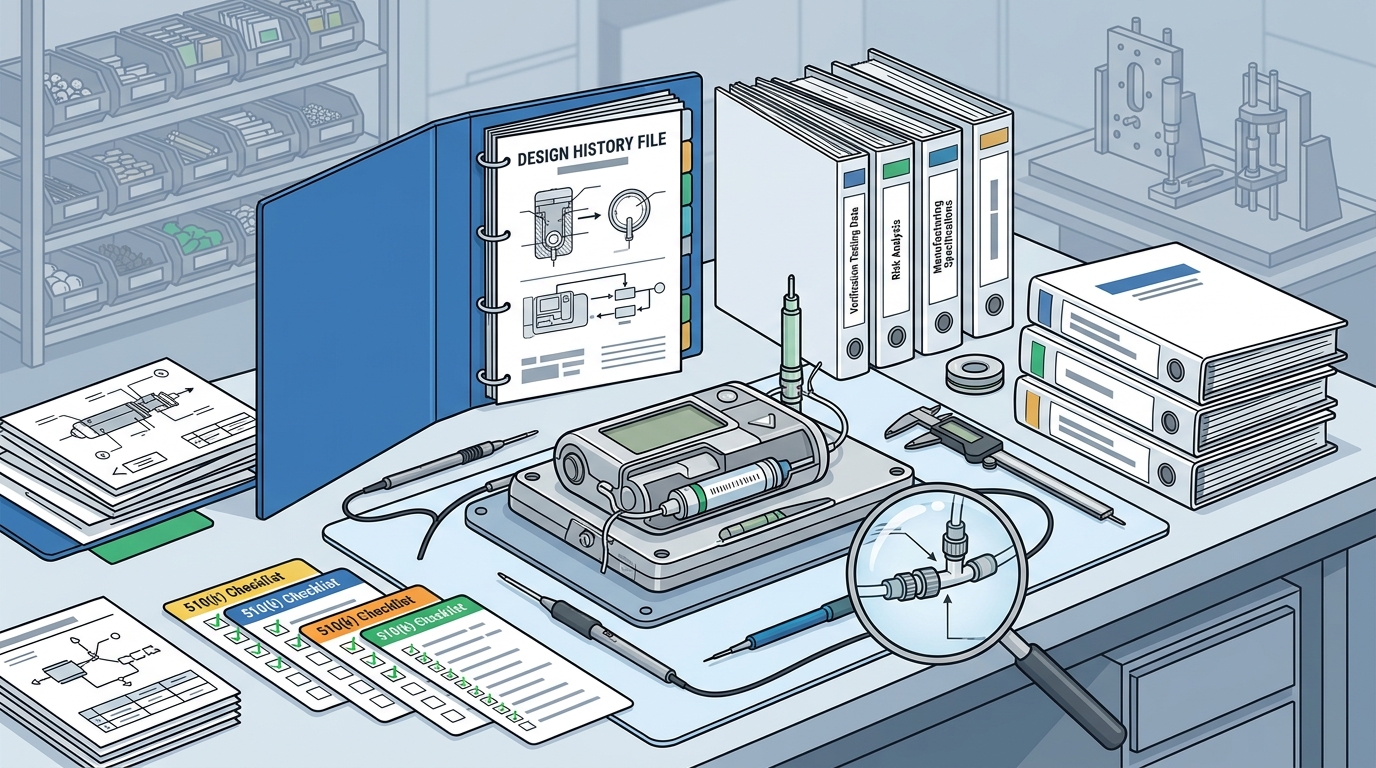
Verification confirms that your device meets its technical specifications. Validation confirms that the device performs as intended for the end user. Verification is a systematic process that proves every design output matches the original design input. You must build a comprehensive test matrix that covers environmental stress, electrical safety, and software functionality. Missing a single test case often triggers a deficiency letter from regulatory reviewers.
Clinical and Bench Evaluation
Bench testing establishes baseline performance metrics under controlled conditions. Clinical evaluation bridges the gap between laboratory results and real-world application. According to recent industry data, devices that skip early clinical correlation face a 45 percent higher chance of submission rejection. FDA clinical guidance outlines the exact evidence thresholds required for substantive equivalence. Your engineering team must document every test condition, environmental variable, and user interaction scenario.
Technical File Compilation
Assembling the 510(k) Dossier
The technical file serves as the primary evidence package for regulatory reviewers. You must organize design history files, labeling documents, and test reports into a single searchable repository. A65 Consulting maintains rigorous version control to ensure every document reflects the final approved design. Our team structure guarantees that regulatory specialists and engineers collaborate from day one. This collaborative model eliminates communication gaps that typically delay submissions.
Labeling and Intended Use Statements
Labeling accuracy directly impacts regulatory approval outcomes. Your intended use statement must precisely match the clinical data and risk analysis. Reviewers cross-reference labeling claims against test results to verify substantive equivalence. Our recent blog posts highlight how minor labeling discrepancies trigger additional testing requirements. You must align every marketing claim with verified performance data before submission.
Manufacturing Transfer Protocols
Process Validation and IQ/OQ/PQ
Transferring a prototype to high-volume production requires strict process validation. Installation, operational, and performance qualifications verify that the manufacturing line consistently produces compliant units. Manufacturing transfer is the structured handoff of design specifications, bill of materials, and assembly instructions to a production facility. You must document every process parameter, equipment calibration schedule, and operator training module.
Supply Chain and Component Qualification
Supply chain stability directly impacts regulatory compliance. You must qualify every critical component and raw material supplier before production begins. Regulatory agencies expect a complete supplier audit trail. Our recent project portfolio demonstrates how rigorous supplier qualification prevents production bottlenecks. You must maintain traceability for every batch to satisfy post-market surveillance requirements.
| Preparation Phase | Key Deliverables | Regulatory Focus |
|---|---|---|
| Premarket Planning | User requirements, risk analysis, design specs | Substantive equivalence, intended use alignment |
| Verification Testing | Test protocols, environmental stress data, software validation | Technical compliance, design input matching |
| Manufacturing Transfer | Process validation, supplier audits, IQ/OQ/PQ reports | Production consistency, batch traceability |
| Technical File Assembly | Design history, labeling, equivalence statements | Documentation completeness, reviewer accessibility |
Quality System Integration
Implementing QMS Requirements
A robust quality management system ensures continuous compliance after market launch. You must establish procedures for document control, corrective actions, and management reviews. Contact our team to discuss how we integrate quality systems into your development workflow. Regulatory audits focus heavily on procedural consistency and record retention practices.
Post-Market Surveillance Planning
Post-market surveillance begins before the device leaves the factory. You must establish complaint handling procedures, adverse event reporting workflows, and periodic safety update reports. According to FDA manufacturing guidance, post-market data directly influences future regulatory submissions. FDA manufacturing guidance emphasizes that post-market data directly influences future regulatory submissions. Your quality team must track field performance metrics to identify emerging risks early.
Submission Review and Response
Navigating the Review Cycle
The review cycle typically spans several months depending on submission complexity. Reviewers issue deficiency letters when documentation lacks clarity or test data appears incomplete. You must respond to each deficiency with precise, evidence-based corrections. A65 Consulting manages the entire review interaction to minimize back-and-forth delays. Contact our team to schedule a comprehensive regulatory strategy session.
Final Approval and Commercial Launch
Final approval requires strict adherence to all agreed-upon testing parameters and labeling requirements. You must update your design history file to reflect the final approved configuration. Regulatory clearance enables commercial distribution across your target markets. Your engineering team must maintain the approved configuration to prevent unauthorized design changes.
Key Takeaways
- Premarket planning must align engineering specifications with user requirements from day one.
- Verification confirms technical compliance while validation proves clinical effectiveness.
- Technical files require complete traceability from design inputs to final test reports.
- Manufacturing transfer demands full process validation and supplier qualification.
- Quality systems must operate continuously to satisfy post-market surveillance mandates.
- Review responses require precise, evidence-based corrections to avoid submission delays.
Frequently Asked Questions
How long does the 510k submission process typically take?
The standard review cycle spans 90 to 180 days depending on submission complexity and reviewer workload. Expedited pathways may reduce this timeframe for devices addressing unmet medical needs.
What is the primary difference between verification and validation?
Verification confirms that the device meets its technical design specifications. Validation proves that the device performs safely and effectively for the intended end user.
Why is manufacturing transfer critical before submission?
Manufacturing transfer ensures that the production line can consistently replicate the tested prototype. Regulatory agencies require proof that commercial units match the submitted design exactly.
How do you handle deficiency letters from reviewers?
You must respond to each deficiency with precise, evidence-based corrections and updated documentation. A65 Consulting manages the entire review interaction to minimize back-and-forth delays.
What documentation is required for the technical file?
The technical file requires design history records, risk management reports, test protocols, labeling documents, and equivalence statements.
Can you outsource the entire 510k preparation process?
Yes, specialized engineering firms can manage the entire regulatory workflow from concept to submission. Our engineering services cover the entire spectrum from initial concept validation to final design verification.
Ready to Streamline Your Regulatory Submission?
Transitioning from prototype to commercial product requires precise engineering, rigorous testing, and flawless documentation. A65 Consulting provides end-to-end support for medical device developers navigating complex regulatory pathways. Contact our team today to schedule your consultation and accelerate your path to market.