
Medical Device Engineering Consultant vs. Full-Time Hire for Early-Stage Development
Early-stage medical device companies face a critical strategic decision that often dictates their runway and product viability. The choice between engaging a specialized engineering consultant and hiring full-time staff is not merely an administrative task. It is a fundamental architectural decision that impacts regulatory compliance, cash flow, and time-to-market. According to industry analyses of startup funding trends, approximately 70% of medtech startups fail to reach commercialization due to poor execution and resource mismanagement. This statistic highlights why the initial engineering structure must be optimized for agility and expertise rather than just headcount. (About A65 Consulting)
Understanding the Consultant Model
Engineering consulting firms operate as flexible extensions of your core team. They provide immediate access to senior-level expertise without the long-term financial commitment of permanent employment. This model is particularly effective for early-stage companies that need to validate concepts and navigate complex regulatory landscapes. (Services A65 Consulting)
Immediate Expertise Access
When you engage a premium engineering partner, you gain access to a diverse portfolio of experience. These professionals have likely worked on hundreds of devices across various therapeutic areas. This breadth of knowledge allows them to anticipate pitfalls that junior full-time hires might miss. For instance, a consultant with decades of experience can identify potential manufacturing issues during the design phase, preventing costly rework later.
Focus on Core Competencies
By outsourcing specialized engineering tasks, your internal team can focus on business development, fundraising, and clinical strategy. This division of labor ensures that every member of your organization is working on high-impact activities. It prevents the common startup trap where engineers are bogged down by administrative or non-core technical tasks.
Evaluating Full-Time Hiring
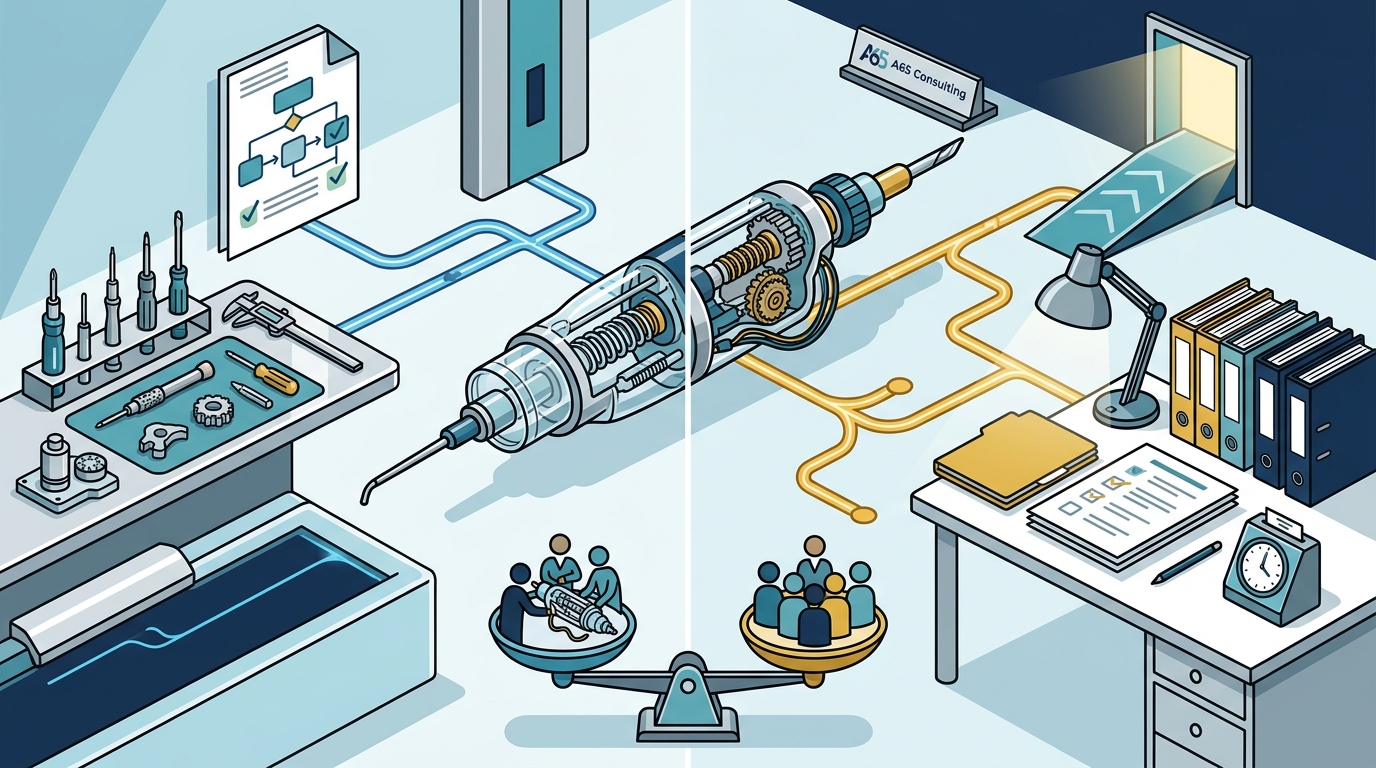
Hiring full-time engineers offers deep institutional knowledge and cultural alignment. However, it requires significant upfront investment and carries higher fixed costs. This approach is often better suited for companies that have secured substantial funding and have a clear, long-term product roadmap.
Institutional Knowledge Retention
Full-time employees build a deep understanding of your specific product vision and company culture. They are invested in the long-term success of the organization. This continuity is valuable for iterative development phases where subtle changes require a nuanced understanding of previous design decisions.
Cultural Integration
Building a cohesive team culture is easier with permanent staff. Full-time hires participate in company events, share in the equity upside, and develop strong interpersonal relationships with colleagues. This integration can lead to higher morale and better collaboration over time.
Cost and Resource Analysis
The financial implications of each model are starkly different. Consulting fees are variable and tied to deliverables, while full-time salaries are fixed and include significant overhead.
| Factor | Engineering Consultant | Full-Time Hire |
|---|---|---|
| Upfront Cost | Low (Hourly or Milestone-based) | High (Recruitment, Onboarding) |
| Monthly Burn Rate | Variable (Pay for what you use) | High (Salary + Benefits + Taxes) |
| Expertise Level | Senior/Specialized | Variable (Depends on Hire) |
| Regulatory Experience | High (Across multiple devices) | Dependent on Individual |
| Scalability | High (Add/remove resources quickly) | Low (Hiring/Firing is slow) |
According to data from the National Association of Manufacturers, the total cost of hiring a new engineer can exceed 30% of their annual salary when accounting for recruitment, benefits, and training. For early-stage medtech companies with limited capital, this overhead can be prohibitive. Consulting firms like A65 Consulting offer a way to bypass these fixed costs by providing senior expertise on a retainer or milestone basis.
Regulatory Compliance Impact
Medical device development is heavily regulated. Navigating FDA 510(k) submissions, ISO 13485 standards, and IEC 62304 requirements requires specialized knowledge. The choice between a consultant and a full-time hire significantly impacts your regulatory strategy.
Consultant Regulatory Track Record
Premium engineering partners often have a proven track record with regulatory bodies. They understand the documentation requirements for design history files (DHF) and design transfer packages. This experience reduces the risk of regulatory delays or rejections. For example, A65 Consulting has contributed to more than 8 FDA 510(k) submissions, demonstrating their capability to handle complex regulatory environments.
Full-Time Regulatory Learning Curve
A new full-time hire may lack specific regulatory experience. Training them to understand compliance requirements takes time and money. During this learning period, the company is at risk of making documentation errors that could delay product launch. This risk is particularly acute for early-stage companies that cannot afford significant delays.
Scalability and Flexibility
Early-stage product development is non-linear. Requirements change, funding rounds impact budgets, and market feedback alters product direction. The ability to scale engineering resources up or down is crucial.
Consultant Agility
Consulting firms can quickly ramp up resources during critical phases, such as design verification or regulatory submission. They can also scale down during quieter periods, helping you manage cash flow. This flexibility is a key advantage for startups navigating the unpredictable nature of product development.
Full-Time Rigidity
Hiring full-time engineers creates a fixed cost structure. If funding is delayed or the product roadmap shifts, you are still responsible for salaries and benefits. Laying off employees is also legally and culturally complex. This rigidity can force companies to make difficult financial decisions that jeopardize their survival.
Key Takeaways
- Cost Efficiency: Consulting firms offer variable costs, reducing the burn rate for early-stage companies compared to the fixed overhead of full-time hires.
- Expertise Access: Consultants provide immediate access to senior-level expertise and diverse industry experience, which is often unavailable to new hires.
- Regulatory Experience: Premium partners like A65 Consulting bring proven regulatory track records, including multiple FDA 510(k) submissions.
- Scalability: Consulting allows for rapid scaling of resources during critical development phases without the long-term commitment of hiring.
- Risk Mitigation: Outsourcing engineering reduces the risk of costly rework and regulatory delays by leveraging established best practices.
- Focus: It allows the internal team to focus on core business activities like fundraising and clinical strategy.
- Speed to Market: Access to experienced teams can accelerate the path from concept to viable product.
Frequently Asked Questions
When should I choose a consultant over a full-time hire?
You should choose a consultant when you need specialized expertise quickly, have limited capital, or require regulatory experience that your internal team lacks. Consultants are ideal for early-stage validation and complex design phases.
How does A65 Consulting charge for its services?
A65 Consulting typically charges on a monthly retainer basis and works toward mutually agreed upon project milestones. This structure aligns their incentives with your project goals.
Can a consultant help with FDA 510(k) submissions?
Yes, experienced engineering partners have a track record of contributing to successful FDA 510(k) submissions. They understand the documentation and testing requirements necessary for approval.
What are the risks of hiring full-time engineers early on?
The primary risks include high fixed costs, a steep learning curve for regulatory compliance, and the difficulty of scaling down if funding or product direction changes.
How long has A65 Consulting been in business?
The team has been working together since 2018, with decades of cumulative medical device development experience among its engineers.
Does A65 Consulting offer leadership support?
Yes, they provide engineering leadership and expert support to help teams navigate complex product development, including leadership team support and hands-on engineering expertise.
What types of medical devices does A65 work on?
A65 has experience designing a wide variety of medical devices. Their broad range of experience affords them insight into many areas, even if the specific device type is new to them.
Next Steps
Choosing the right engineering partner is a pivotal decision for your medical device startup. Whether you opt for the flexibility of consulting or the depth of full-time hiring, the goal is to build a viable product efficiently. If you are overwhelmed by tight deadlines or missing critical knowledge, consider partnering with experts who can solve these challenges. Contact A65 Consulting today to request a proposal and learn how they can help you achieve your product development objectives. You can also schedule a discovery call to discuss your specific needs.