
Reducing the bill of materials (BOM) for medical devices is not merely a procurement exercise. It is a strategic engineering imperative that determines whether a product achieves market viability. According to industry benchmarks, effective cost optimization during the design phase can reduce total manufacturing costs by up to 70 percent before production begins. This guide outlines the precise methodologies used by premium engineering partners to lower BOM costs without compromising regulatory compliance or clinical performance. (Contact A65 Consulting)
Understanding the Medical Device BOM
A bill of materials is the complete list of raw materials, components, and assemblies required to construct a medical device. In regulated industries, the BOM is not just a shopping list. It is a controlled document that feeds directly into quality management systems and regulatory submissions. The complexity of medical devices often leads to inflated costs because engineers default to high-specification parts to mitigate risk.
Medical device design is the process of translating clinical needs into technical specifications. When this translation lacks cost awareness, the resulting BOM becomes bloated with over-engineered components. For example, specifying a medical-grade connector when a standard industrial-grade part would suffice can increase unit costs by 300 percent. Understanding the distinction between critical-to-quality (CTQ) components and non-critical parts is the first step in optimization.
At A65 Consulting, we emphasize that cost reduction must begin with a clear definition of what the device actually does. By mapping every component to a specific functional requirement, engineering teams can identify parts that are driving cost without adding value. This approach aligns with our philosophy of delivering viable products that meet both clinical and financial objectives.
Design Phase Cost Strategies
The most significant leverage for reducing BOM costs exists during the conceptual and detailed design phases. Once a design is frozen, changing a component becomes exponentially more expensive due to re-validation requirements. Therefore, integrating cost engineering early is critical.
Standardization and Platform Engineering
One of the most effective ways to lower costs is to standardize components across multiple product lines. Using common sub-assemblies, connectors, and electronic modules reduces procurement volume and simplifies inventory management. This strategy is particularly powerful for companies developing a family of devices rather than a single isolated product.
Standardization is the practice of using identical parts across different products to achieve economies of scale. By reducing the variety of SKUs, companies can negotiate better pricing with suppliers and reduce the risk of obsolescence. This approach requires cross-functional collaboration between engineering, procurement, and quality teams.
Value Engineering and Function Analysis
Value engineering involves analyzing the function of each component to determine if a lower-cost alternative can perform the same task. This process often reveals opportunities to substitute expensive materials with more cost-effective alternatives that still meet performance criteria. For instance, replacing a titanium housing with a high-performance polymer may reduce weight and cost while maintaining sterilization compatibility.
Design for Manufacturing (DFM) is a quality exercise, not just a cost exercise. When engineers design parts that are difficult to manufacture, they incur hidden costs in tooling, assembly time, and defect rates. By simplifying geometries and reducing the number of fasteners, companies can significantly lower the BOM and improve yield rates. This principle is central to our engineering insights on sustainable product development.
Manufacturing Transfer and DFM
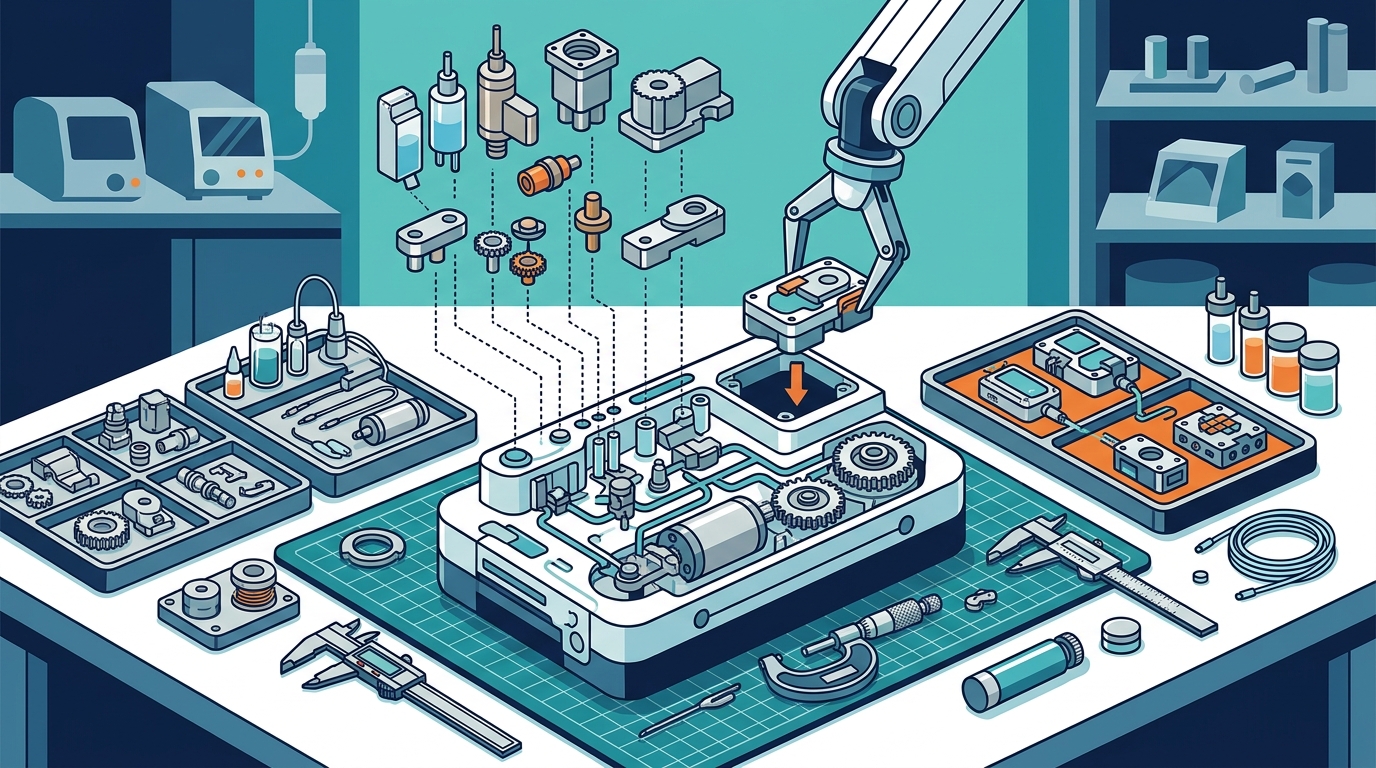
Transferring a design from the lab to the factory floor is where many cost-saving opportunities are lost. Manufacturing transfer involves moving the product from prototype to mass production while maintaining quality and cost targets. This phase requires rigorous process development and design for manufacturability (DFM) reviews.
During manufacturing transfer, engineering teams must validate that the design can be produced consistently at the target cost. This includes evaluating the capabilities of potential contract manufacturers and suppliers. If a design requires specialized tooling that is only available from a single source, the BOM cost will remain high due to lack of competition.
A65 Consulting provides expert support in navigating this complex transition. Our team helps clients identify manufacturing bottlenecks and optimize processes to ensure that the design intent is preserved while costs are minimized. We work alongside your team to provide the right expertise and guidance for your device, without the cost and commitment of adding full-time headcount.
Process Validation and Cost
Process validation is the act of establishing evidence that a manufacturing process will consistently produce a product meeting its predetermined specifications. While validation is non-negotiable for regulatory compliance, the scope of validation can be optimized. By using statistical process control (SPC) and risk-based approaches, companies can reduce the volume of testing required without compromising safety.
Verification is a system, not a phase. Treating verification as a continuous activity rather than a final gate allows teams to identify cost-driving defects earlier in the process. Early detection of design flaws prevents the need for expensive redesigns and re-validation cycles later in the product lifecycle.
Supply Chain and Sourcing
Even with an optimized design, BOM costs can spiral if supply chain management is weak. Medical device components often have long lead times and limited supplier bases, which gives suppliers significant pricing power. Proactive supply chain management is essential for cost control.
Dual Sourcing and Qualification
Dual sourcing involves qualifying two suppliers for critical components to create competitive pressure and mitigate supply risk. While this requires upfront investment in qualification and validation, it pays dividends in negotiation leverage and supply continuity. For example, qualifying a second supplier for a custom PCB can reduce component costs by 15 to 20 percent.
However, dual sourcing in medical devices requires careful regulatory management. Any change in supplier may trigger a regulatory submission or notification, depending on the criticality of the part. Engineers must work closely with quality assurance to ensure that supplier changes do not impact the device's safety or efficacy.
Component Obsolescence Management
Component obsolescence is the state where a part is no longer manufactured or supported by the supplier. This is a major cost driver in medical devices, as last-time buys and alternative sourcing often come at a premium. Implementing a robust obsolescence management strategy helps companies anticipate and mitigate these costs.
By monitoring component lifecycles and planning for end-of-life (EOL) events, companies can avoid emergency sourcing costs. This includes designing with alternative components in mind or qualifying substitutes during the initial design phase. This proactive approach aligns with our commitment to delivering results that exceed expectations.
Regulatory Impact of Cost Changes
Reducing BOM costs in medical devices is inherently linked to regulatory compliance. Any change to the BOM, especially for critical components, must be evaluated for its impact on the device's safety and performance. This evaluation is part of the risk management process.
Risk analysis is one of the most formalized engineering activities in regulated product development. It involves identifying hazards, estimating risk, and implementing mitigations. When reducing BOM costs, engineers must update the risk analysis to reflect any changes in material properties, supplier reliability, or manufacturing processes.
Many design problems arise when risk analysis is treated as a paperwork exercise rather than a design tool. By integrating risk analysis into the cost reduction process, teams can identify potential failures early and implement mitigations that are both cost-effective and safe. This approach ensures that cost reductions do not inadvertently introduce new risks.
510(k) and Post-Market Surveillance
For many medical devices, changes to the BOM may require a new 510(k) submission to the FDA. The threshold for regulatory submission depends on the significance of the change. Understanding these thresholds is crucial for planning cost reduction initiatives. A65 Consulting has experience with more than 10 FDA 510k submissions, ensuring that our clients navigate regulatory requirements efficiently.
Post-market surveillance data can also inform BOM optimization. If field data shows that certain components have high failure rates, replacing them with more reliable parts may reduce warranty costs and improve brand reputation, even if the initial unit cost is higher. This holistic view of total cost of ownership is essential for long-term success.
Key Takeaways
- Early Intervention: 70 percent of manufacturing costs are determined during the design phase. Engaging cost engineers early is critical.
- Standardization: Using common components across product lines reduces procurement costs and simplifies inventory management.
- DFM Integration: Design for Manufacturing must be treated as a quality exercise to prevent hidden costs in tooling and assembly.
- Supply Chain Resilience: Dual sourcing critical components mitigates risk and provides negotiation leverage.
- Regulatory Alignment: All BOM changes must be evaluated against risk management files and regulatory submission requirements.
- Total Cost of Ownership: Consider warranty and field failure costs, not just unit price, when evaluating component substitutions.
- Expert Partnership: Collaborating with experienced engineering partners can accelerate cost reduction initiatives while maintaining compliance.
Frequently Asked Questions
When should cost reduction strategies be implemented in the product lifecycle?
Cost reduction strategies should be implemented during the conceptual and detailed design phases. This is when the most significant leverage exists to influence manufacturing costs without compromising quality or requiring expensive re-validation.
How does Design for Manufacturing (DFM) reduce BOM costs?
DFM reduces BOM costs by simplifying part geometries, reducing the number of components, and selecting materials that are easier to process. This lowers tooling costs, assembly time, and defect rates, leading to a lower overall unit cost.
What is the impact of supplier changes on regulatory compliance?
Supplier changes can impact regulatory compliance, especially for critical components. Engineers must update the risk analysis and determine if a regulatory submission, such as a 510(k), is required before implementing the change.
How can standardization lower medical device costs?
Standardization lowers costs by increasing procurement volume for specific parts, which allows for better pricing negotiations. It also reduces inventory complexity and the risk of component obsolescence.
What role does verification play in cost reduction?
Verification ensures that the design meets its requirements. By treating verification as a continuous system rather than a final phase, teams can identify cost-driving defects early, preventing expensive redesigns later in the process.
How does A65 Consulting help with BOM optimization?
A65 Consulting provides engineering leadership and expert support to help teams navigate complex product development. We integrate seamlessly with your team to help keep your project on time, on budget, and aligned with your product requirements.
What is the difference between BOM cost and total cost of ownership?
BOM cost refers to the direct cost of components and materials. Total cost of ownership includes BOM cost plus manufacturing, quality, warranty, and regulatory costs. Optimizing for total cost of ownership often leads to better long-term financial outcomes.
Next Steps for Your Medical Device Project
Reducing the bill of materials for medical devices requires a disciplined, cross-functional approach that balances cost, quality, and regulatory compliance. By implementing the strategies outlined in this guide, you can improve the profitability of your product without compromising its clinical value.
If you are facing a gap in engineering capability or team capacity, A65 Consulting is here to help. We provide engineering leadership and expert support to help teams navigate complex product development with clarity and confidence. From leadership team support to hands-on engineering expertise, we help close critical gaps and keep programs moving forward.
Ready to optimize your next medical device? Book a consultation with our team today to discuss your project requirements and explore how we can help you achieve your product development objectives.