
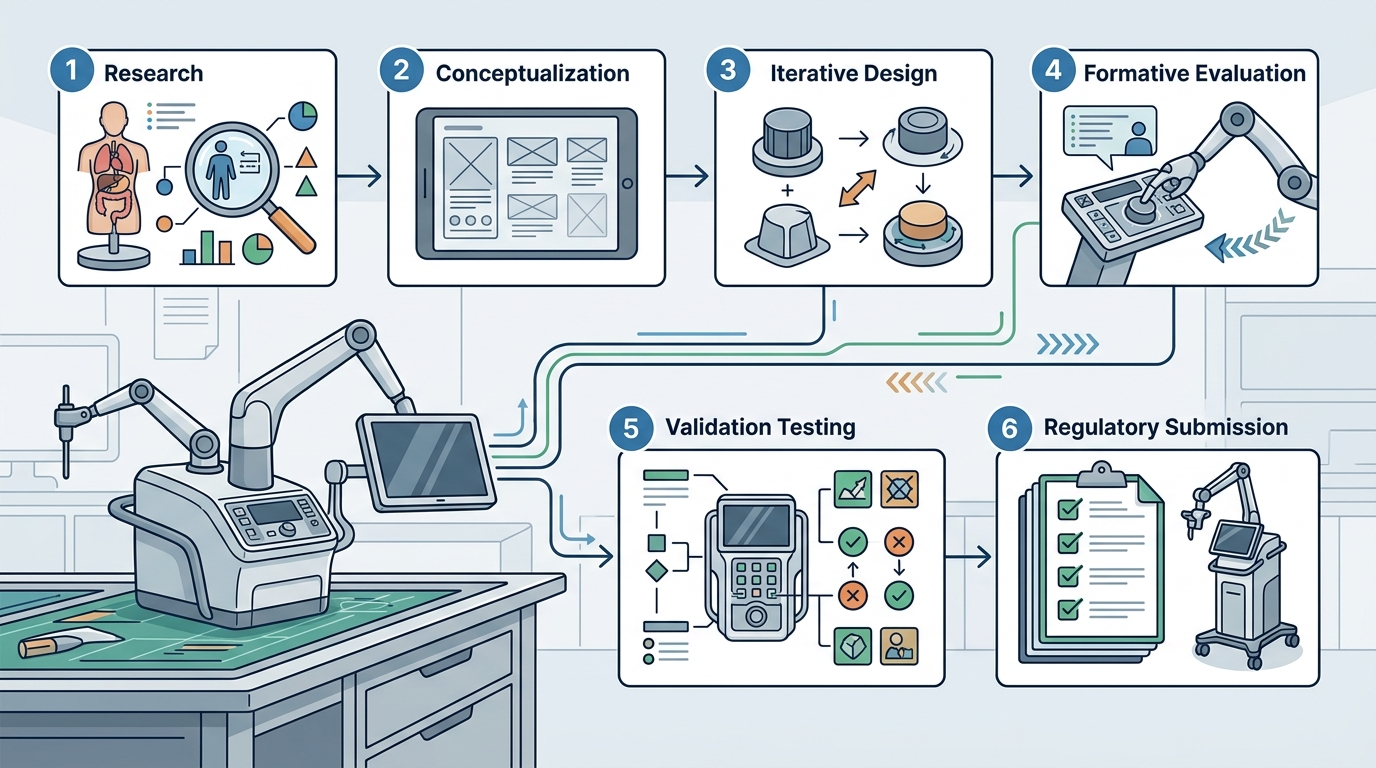
Six-Step Human Factors Engineering Process for Medical Device Usability and Compliance
Human factors engineering is the systematic application of scientific information concerning human capabilities and limitations to the design of systems, equipment, and work environments. In the medical device industry, this discipline is not merely an aesthetic consideration but a critical regulatory requirement. According to the U.S. Food and021, use-related hazards are a leading cause of medical device recalls, with usability issues contributing to a significant percentage of adverse event reports. This reality underscores why a rigorous human factors engineering process is essential for ensuring patient safety and achieving regulatory clearance. (Contact A65 Consulting)
Understanding Human Factors in Medical Devices
Human factors engineering is the scientific study of how people interact with systems and the application of that knowledge to design. For medical devices, this means ensuring that the device can be used safely and effectively by the intended user in the intended environment. The goal is to minimize use-related risks and maximize usability. This process is governed by standards such as IEC 62366-1, which provides a framework for integrating usability engineering into the risk management process. A65 Consulting specializes in navigating these complex regulatory landscapes, helping clients transform device concepts into viable products that meet stringent safety standards.
Step 1: Conducting the Use Analysis
The use analysis is the foundational step in the human factors engineering process. It involves identifying the potential users, use environments, and use-related hazards associated with the device. This step requires a deep understanding of the clinical workflow and the specific tasks the user must perform. By mapping out these elements early, teams can identify potential risks before they become costly design flaws. At A65 Consulting, we emphasize that the use analysis is not a static document but a living artifact that evolves throughout the product lifecycle.
Step 2: Defining Use Conditions
Use conditions define the specific contexts in which the device will be used, including the user characteristics, the environment, and the tasks. This step is critical for ensuring that the device is designed for the right audience. For example, a device used by elderly patients in a home setting will have different usability requirements than one used by surgeons in an operating room. Defining these conditions helps to establish the criteria for success in later testing phases. Our team helps clients articulate these conditions clearly to ensure that the design intent is aligned with real-world usage.
Step 3: Developing Use Scenarios
Use scenarios are detailed descriptions of how the device will be used in specific situations. These scenarios are derived from the use analysis and use conditions and serve as the basis for test protocols. They include both typical use cases and potential misuse scenarios. By developing comprehensive use scenarios, teams can anticipate how users might interact with the device and identify potential points of failure. This proactive approach is essential for mitigating risks and ensuring that the device is robust against user error.
Step 4: Executing Formative Use Testing
Formative use testing is an iterative process used to identify and resolve usability issues during the design phase. This step involves observing representative users interacting with the device or its prototypes. The goal is to gather feedback on the device's usability and to make design improvements based on that feedback. Formative testing is not about proving that the device works; it is about learning how to make it work better. A65 Consulting provides expert support in designing and executing formative tests that yield actionable insights for design refinement.
Step 5: Performing Summative Validation
Summative validation is the final step in the human factors engineering process before the device is released to the market. It involves conducting a formal evaluation to demonstrate that the device can be used safely and effectively by the intended users in the intended environment. This step typically includes a validation study with representative users and a comprehensive report that documents the results. The validation study must be designed to detect use-related hazards that were not identified in earlier steps. Regulatory bodies such as the FDA require rigorous summative validation to ensure that the device meets all usability requirements.
Step 6: Post-Market Surveillance and Monitoring
The human factors engineering process does not end with the release of the device. Post-market surveillance is essential for monitoring the device's performance in the real world and identifying any new use-related risks. This step involves collecting and analyzing data from adverse event reports, customer feedback, and clinical studies. If new risks are identified, the design or labeling may need to be updated. A65 Consulting helps clients establish robust post-market surveillance systems to ensure ongoing compliance and patient safety.
Key Takeaways
- Human factors engineering is a regulatory requirement governed by standards like IEC 62366-1.
- The use analysis is the first step and involves identifying users, environments, and hazards.
- Use conditions define the context of use, including user characteristics and tasks.
- Formative testing is iterative and focuses on identifying and resolving usability issues.
- Summative validation is a formal evaluation to demonstrate safe and effective use.
- Post-market surveillance is critical for monitoring real-world performance and identifying new risks.
- A65 Consulting has helped clients achieve more than $300M of projected new product revenue through effective engineering.
Frequently Asked Questions
What is the difference between formative and summative testing?
Formative testing is iterative and used during the design phase to identify and resolve usability issues. Summative validation is a final, formal evaluation to demonstrate that the device can be used safely and effectively by the intended users.
Why is human factors engineering important for medical devices?
Human factors engineering is crucial for ensuring patient safety and regulatory compliance. It helps to minimize use-related risks and maximize usability, which is essential for the successful adoption of medical devices.
What standards govern human factors engineering in medical devices?
The primary standard is IEC 62366-1, which provides a framework for integrating usability engineering into the risk management process. The FDA also provides guidance documents that outline expectations for human factors submissions.
How long does the human factors engineering process take?
The duration varies depending on the complexity of the device and the regulatory pathway. However, it is typically integrated throughout the entire product development lifecycle to ensure that usability is considered from the outset.
Can A65 Consulting help with human factors engineering?
Yes, A65 Consulting offers expert support in all aspects of human factors engineering, from use analysis to summative validation. Our team has decades of experience in medical device development and can help you navigate the complexities of usability engineering.
What is a use-related hazard?
A use-related hazard is a potential source of harm to the patient, user, or environment that arises from the way the device is used. These hazards are identified during the use analysis and are mitigated through design and testing.
How do I choose the right users for testing?
The right users are those who represent the intended user population in terms of demographics, skills, and experience. A65 Consulting helps clients define user profiles and recruit representative participants for testing.
Partner with A65 Consulting for Your Next Medical Device Project
Navigating the complexities of human factors engineering requires expertise, experience, and a deep understanding of regulatory requirements. A65 Consulting is your trusted partner in transforming device concepts into viable products. We provide engineering leadership and expert support to help teams navigate complex product development with clarity and confidence. Whether you need assistance with a new product concept or require additional engineering resources, we have the expertise to deliver solutions that meet your unique requirements. Book a consultation today to discuss how we can help you achieve your product development objectives.