
The Complete Step-by-Step Process for Designing a Medical Device From Scratch
Medical device development is a high-stakes engineering discipline where precision meets regulatory scrutiny. According to the FDA, the path from a raw concept to a market-ready product involves rigorous validation, risk management, and iterative testing. Statistics indicate that over 50% of medtech startups fail not due to lack of innovation, but because of poor project management and regulatory missteps during the early design phases. This guide outlines the definitive workflow for transforming a concept into a viable, compliant product. (Contact A65 Consulting)
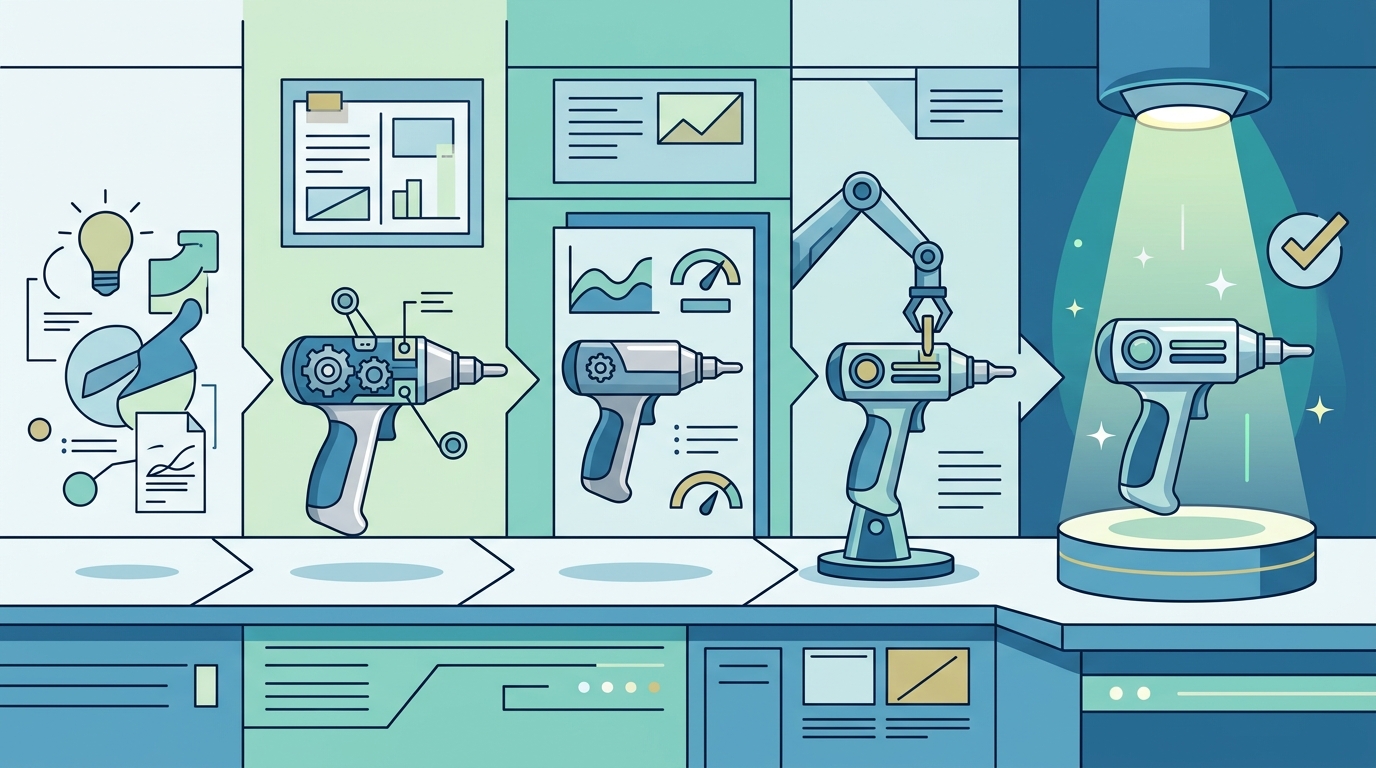
Phase 1: Conceptualization and Feasibility
The journey begins with identifying a genuine clinical need. Industry reports show that 70% of medical devices fail to gain traction because they solve a problem that does not exist or is not prioritized by clinicians. This phase requires you to define the problem statement clearly and assess whether a technical solution is even possible.
Defining the Clinical Need
Start by engaging with end-users, including physicians, nurses, and patients. Research published in health technology journals emphasizes that early clinical engagement reduces the risk of design pivots later in the process. You must document the current workflow and identify the specific pain points your device will address.
Technical Feasibility Assessment
Once the need is defined, evaluate the technical requirements. Can the proposed technology work within the constraints of power, size, and cost? IEEE standards for biomedical engineering provide a framework for assessing the reliability of new technologies in clinical settings. If the technology is unproven, consider a proof-of-concept study before committing to full-scale design.
Phase 2: Design Inputs and Risk Management
With a validated concept, you move into the formal design phase. ISO 13485 standards mandate that every design decision must be traceable to a specific user need or regulatory requirement. This phase is critical for establishing the "Design History File" (DHF), which serves as the legal record of your device's development.
Establishing Design Inputs
Design inputs are the quantifiable requirements that your device must meet. These include performance metrics, material specifications, and environmental conditions. The FDA guidance documents specify that these inputs must be unambiguous and testable. For example, instead of saying "the device must be easy to use," specify "the device must be operable by a user with standard gloves in under 30 seconds."
Integrating Risk Management
Risk management is not a separate activity but a continuous process. ISO 14971 is the global standard for applying risk management to medical devices. You must identify potential hazards, estimate the severity and probability of harm, and implement mitigations. This process should begin in Phase 1 and continue through the device's lifecycle.
Phase 3: Detailed Design and Prototyping
This phase involves creating the actual product architecture. Recent trends in additive manufacturing have accelerated prototyping, allowing for rapid iteration of complex geometries that were previously impossible to produce.
Conceptual to Detailed Design
Start with rough sketches and move to detailed Computer-Aided Design (CAD) models. Industry leaders in CAD software recommend using simulation tools to predict stress, fluid dynamics, and thermal behavior before building physical prototypes. This virtual validation saves significant time and cost.
Building Alpha and Beta Prototypes
Alpha prototypes are functional models used for internal testing. They may not look like the final product but must demonstrate core functionality. Beta prototypes are closer to the final design and are used for early user testing. Studies on human factors engineering show that early usability testing with beta prototypes can uncover critical design flaws that would be expensive to fix later.
Phase 4: Verification and Validation
Verification and validation are often confused, but they serve distinct purposes. The FDA defines verification as confirming that the device meets its design inputs, while validation confirms that the device meets user needs and intended uses.
Verification Testing
Verification involves rigorous lab testing. Every design input must be tested and documented. ASTM International standards provide specific test methods for biocompatibility, electrical safety, and mechanical performance. If a test fails, the design must be revised, and the test repeated. This iterative process ensures that the device is built correctly.
Validation Testing
Validation involves testing the device in real-world or simulated real-world conditions. This often includes clinical evaluations or human factors studies. FDA guidance on human factors requires that you demonstrate that the device can be used safely by the intended users without excessive risk of use error. This phase is critical for regulatory approval.
Phase 5: Design Transfer and Manufacturing
Design transfer is the process of moving the design from the development team to the manufacturing team. ISO 13485 requires that this transfer is controlled and documented to ensure that the manufacturing process can consistently produce devices that meet design specifications.
Design for Manufacturing (DFM)
DFM involves optimizing the design for efficient production. Manufacturing industry reports indicate that DFM can reduce production costs by up to 30% and improve quality. This includes selecting appropriate materials, simplifying assembly, and designing for tolerance stack-up analysis.
Process Validation
Before full-scale production, you must validate the manufacturing process. Regulatory bodies require that critical manufacturing processes, such as sterilization and packaging, are validated to ensure they consistently produce conforming products. This often involves installing equipment, qualifying it, and running pilot batches.
Phase 6: Regulatory Submission and Launch
The final phase involves securing regulatory approval and launching the product. The FDA's 510(k) pathway is the most common route for medical devices, requiring you to demonstrate substantial equivalence to a predicate device. For higher-risk devices, Premarket Approval (PMA) may be required, which involves a more rigorous scientific review.
Preparing the Submission
The submission package includes the design history file, risk management file, verification and validation reports, and clinical data. ISO 14971 and ISO 13485 compliance are essential for a successful submission. Any gaps in documentation can lead to requests for additional information (RFIs) or rejection.
Post-Market Surveillance
Once launched, the device enters the post-market phase. Regulatory agencies require ongoing monitoring of device performance and safety. This includes tracking adverse events, conducting periodic safety updates, and managing any necessary recalls. The design process does not end at launch; it evolves based on real-world feedback.
Key Takeaways
- Early Clinical Engagement: Engaging with end-users in Phase 1 reduces the risk of product failure by ensuring the device solves a real problem.
- Risk Management Integration: ISO 14971 compliance is not optional; it must be integrated into every design decision from the start.
- Verification vs. Validation: Verification ensures you built the device right; validation ensures you built the right device.
- DFM Importance: Designing for manufacturing early can reduce costs by up to 30% and improve quality.
- Regulatory Strategy: Understanding the 510(k) or PMA pathway early helps avoid costly redesigns later.
- Documentation: The Design History File (DHF) is your legal record; maintain it meticulously throughout the process.
- Iterative Prototyping: Using alpha and beta prototypes allows for rapid feedback and reduces the cost of errors.
Frequently Asked Questions
How long does it take to design a medical device?
The timeline varies significantly based on complexity and regulatory pathway. Industry averages suggest that a 510(k) device can take 18 to 24 months, while a PMA device can take 3 to 5 years. Early planning and rigorous risk management can help accelerate this timeline.
What is the difference between 510(k) and PMA?
A 510(k) submission demonstrates substantial equivalence to a predicate device, while PMA requires clinical data to prove safety and effectiveness. The FDA classifies devices based on risk, with Class III devices typically requiring PMA.
Why is risk management critical in medical device design?
Risk management ensures that potential harms are identified and mitigated before the device reaches the market. ISO 14971 is the global standard for this process, and regulatory bodies require it for approval.
How do I choose a medical device engineering partner?
Look for partners with experience in your specific device class and regulatory pathway. A65 Consulting specializes in guiding companies through the complexities of medical device development, from concept to launch.
What is Design for Manufacturing (DFM)?
DFM is the practice of designing products in a way that makes them easy and cost-effective to manufacture. Manufacturing experts note that DFM can significantly reduce production costs and improve quality.
What is the role of human factors in medical device design?
Human factors engineering ensures that the device can be used safely and effectively by the intended users. The FDA requires human factors validation to demonstrate that the device minimizes the risk of use error.
What is a Design History File (DHF)?
A DHF is the compilation of planned and documented results of design activities. Regulatory guidelines require a DHF to demonstrate that the device was designed and developed according to approved procedures.
How do I ensure regulatory compliance?
Compliance requires adherence to standards like ISO 13485 and ISO 14971, as well as specific FDA or EU MDR requirements. ISO 13485 provides a framework for a quality management system specific to medical devices.
Start Your Development Journey
Designing a medical device from scratch is a complex journey that requires expertise in engineering, regulatory affairs, and clinical insight. A65 Consulting provides the engineering leadership and expert support needed to navigate this process with clarity and confidence. Whether you need assistance with a new product concept or require additional engineering resources, our team is ready to help you achieve your product development objectives. Book a consultation today to discuss your project and discover how we can help you bring your medical device to market.