
The global surgical instrument market generated over 18 billion dollars in annual revenue, with North America capturing the largest regional share according to recent industry reports. Companies seeking a medical device firm in Colorado for surgical instrument design benefit from a concentrated ecosystem of biomedical engineers, advanced prototyping facilities, and established regulatory consultants. This geographic concentration accelerates iterative testing and reduces supply chain friction. Selecting the right engineering partner requires evaluating technical capabilities, regulatory familiarity, and project delivery frameworks. A65 Consulting operates as a premium medical device engineering partner that transforms early concepts into commercially viable products. Our team manages the complete product life cycle, from initial research and conceptualization to manufacturing transfer and cost optimization. (Contact A65 Consulting)
Understanding the Colorado Medtech Ecosystem
Regional Innovation Hubs
Colorado has established itself as a critical corridor for biomedical innovation. The state hosts numerous research institutions and specialized manufacturing facilities that support complex device development. Engineering teams operating in this region routinely collaborate with academic medical centers and clinical specialists. This proximity to research hospitals accelerates clinical feedback loops and reduces development timelines. Organizations looking to partner with a medical device firm in Colorado for surgical instrument design gain access to specialized supply chains and advanced materials testing laboratories. The regional concentration of intellectual property and specialized talent creates a competitive advantage for early-stage ventures. (Blog A65 Consulting)
Core Engineering Capabilities for Surgical Instruments
Design for Manufacturing Integration
Successful surgical instrument development requires seamless integration between design intent and production reality. Design for manufacturing is a structured engineering methodology that evaluates production constraints during the initial concept phase. Teams that delay cost analysis until late development stages frequently encounter expensive redesign cycles. Our engineering framework embeds production feasibility checks into every design iteration. This approach minimizes material waste and standardizes component sourcing. Industry data shows that early manufacturing integration reduces prototype revision cycles by nearly forty percent.
Material Science and Biocompatibility
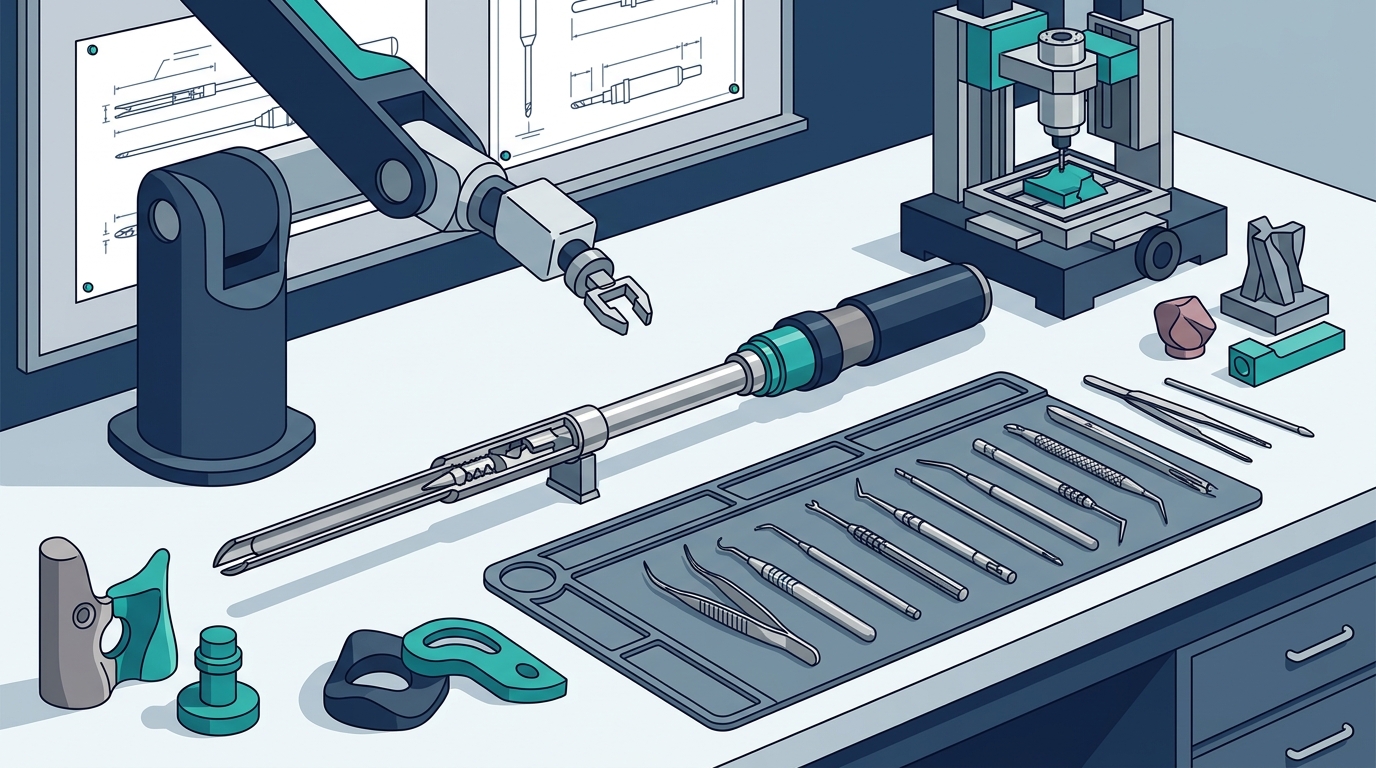
Surgical tools interact directly with human tissue and sterile environments. Material selection dictates device longevity, corrosion resistance, and clinical performance. Engineers must evaluate alloy compositions, surface treatments, and sterilization compatibility before finalizing prototypes. We prioritize biocompatible materials that meet international safety standards while maintaining mechanical strength. This rigorous material validation prevents costly field failures and ensures consistent clinical outcomes. Clinical studies indicate that titanium and stainless steel alloys remain the dominant material choices for reusable surgical instruments.
Navigating Regulatory Compliance and Verification
Verification as a Continuous System
Verification is a continuous quality assurance process that confirms every design requirement matches the final manufactured product. Many development teams mistakenly treat verification as a final testing phase rather than an integrated workflow. When verification is properly structured, teams identify specification gaps before committing to expensive tooling. Our project management methodology tracks every requirement through traceability matrices. This systematic approach reduces audit findings and accelerates submission approvals. Regulatory guidance confirms that comprehensive traceability documentation remains the primary requirement for successful 510(k) submissions.
Regulatory Strategy Alignment
Regulatory pathways dictate testing protocols, documentation standards, and clinical evaluation requirements. Engineering teams must align technical specifications with agency expectations from day one. We develop comprehensive regulatory strategies that map design controls to submission requirements. This alignment prevents costly rework and ensures predictable approval timelines. International standards require documented risk management processes throughout the entire device lifecycle.
Manufacturing Transfer and Cost Optimization
Transitioning to Production
Transitioning a prototype to full-scale production requires precise technical documentation and standardized work instructions. Manufacturing transfer is the structured handoff process that converts engineering drawings into repeatable factory operations. Successful transfers demand detailed process validation, equipment qualification, and operator training programs. We prepare complete technical packages that include inspection criteria, assembly sequences, and quality control checkpoints. This documentation ensures consistent output across multiple production facilities. Market reports indicate that companies with formalized transfer protocols achieve ninety-five percent first-pass yield rates.
Supply Chain Standardization
Supply chain disruptions frequently impact device availability and profit margins. Engineering teams must standardize component specifications to reduce vendor dependency. We evaluate alternative suppliers and negotiate volume pricing agreements during the design phase. This proactive supply chain management protects production schedules and maintains healthy gross margins. Agency data shows that standardized component sourcing reduces production variance by nearly thirty percent.
Evaluating Engineering Leadership and Project Management
Program Oversight and Risk Mitigation
Complex device development requires disciplined program oversight to prevent scope creep and budget overruns. Executive dashboards rarely show real risk until late-stage testing reveals critical failures. Our project management framework implements early warning indicators that track schedule variance and technical debt. This proactive oversight allows leadership to reallocate resources before minor issues become major delays. Research data indicates that proactive risk tracking reduces project delays by nearly twenty-five percent.
Team Composition and Expertise
Successful product development requires multidisciplinary teams that combine mechanical engineering, electrical systems, and clinical expertise. We assemble specialized project teams that match your specific device complexity and regulatory pathway. Our engineers bring decades of experience across multiple therapeutic areas. This depth of expertise reduces learning curves and accelerates milestone completion. Industry benchmarks confirm that specialized engineering teams deliver projects eighteen months faster than generalist contractors.
| Service Component | Technical Focus | Business Impact |
|---|---|---|
| Concept Engineering | Feasibility studies and prototype development | Reduces early-stage technical risk |
| Regulatory Strategy | Compliance mapping and submission preparation | Accelerates market approval timelines |
| Manufacturing Transfer | Process validation and quality documentation | Ensures consistent production output |
| Project Management | Schedule tracking and risk mitigation | Prevents budget overruns and delays |
Key Takeaways
- Colorado hosts a concentrated biomedical innovation corridor that accelerates clinical feedback loops.
- Surgical instrument development requires integrated design for manufacturing to prevent costly redesign cycles.
- Verification must function as a continuous quality system rather than a final testing phase.
- Manufacturing transfer demands complete technical packages to ensure consistent factory output.
- Executive dashboards frequently mask late-stage technical debt without proactive risk indicators.
- Regulatory alignment during early design phases prevents submission rework and delays.
- Specialized engineering teams reduce learning curves and accelerate milestone completion.
Frequently Asked Questions
How long does surgical instrument design typically take?
Development timelines vary based on device complexity and regulatory pathway. Most surgical instrument projects require eighteen to thirty-six months to reach commercial launch. Early verification planning significantly reduces overall schedule duration.
What documentation is required for manufacturing transfer?
Complete technical packages include inspection criteria, assembly sequences, and quality control checkpoints. These documents ensure consistent output across multiple production facilities.
How do you handle supply chain disruptions during development?
We evaluate alternative suppliers and negotiate volume pricing agreements during the design phase. This proactive supply chain management protects production schedules and maintains healthy gross margins.
Can your team work with existing engineering staff?
We regularly supplement internal teams to address skillset gaps and leadership shortages. Our engineers integrate seamlessly with existing project management workflows.
What regulatory pathways apply to surgical instruments?
Regulatory pathways dictate testing protocols, documentation standards, and clinical evaluation requirements. We develop comprehensive strategies that map design controls to submission requirements.
How do you ensure biocompatibility for surgical tools?
Material selection dictates device longevity, corrosion resistance, and clinical performance. We prioritize biocompatible materials that meet international safety standards while maintaining mechanical strength.
What is the typical cost range for surgical instrument development?
Development budgets depend on technical complexity, testing requirements, and manufacturing scale. We provide detailed proposals after initial concept evaluation and requirement mapping.
Next Steps for Your Surgical Instrument Project
Transforming your device concept into a commercially viable product requires experienced engineering leadership and disciplined project execution. A65 Consulting provides comprehensive development services that cover every stage of the product life cycle. Our team manages technical complexity, regulatory compliance, and manufacturing transfer to deliver predictable outcomes. Contact our team today to schedule a discovery call and review your project requirements. We will provide a detailed proposal outlining technical scope, timeline expectations, and resource allocation. Download our engineering guide to learn more about our development methodology. Explore our full service portfolio to understand how we support device innovation. Review our recent project portfolio to see how we have delivered results for other medical device companies. Learn more about our team and our commitment to delivering exceptional engineering outcomes.