
Common Mistakes When Hiring an Engineering Firm for Medical Device Cost Optimization
Medical device development is a high-stakes environment where financial efficiency often clashes with regulatory complexity. Products developed by A65 Consulting contributed to more than 8 FDA 510k submissions and added over $300M of projected new product revenue for clients. This scale of success is rarely accidental. It is the result of rigorous engineering discipline applied from day one. Many organizations fail to realize that cost optimization is not a final step in the manufacturing phase. It is a continuous process that begins during the conceptualization stage. When companies hire engineering partners without a clear strategy, they often encounter expensive tooling changes, failed verification testing, and supplier problems right before launch. These late-stage failures are the most expensive decisions a development program can make. Understanding the common pitfalls in hiring can save your project from unnecessary financial drain and regulatory delays. (About A65 Consulting)
Mistake 1: Treating Design for Manufacturing as a Cost Exercise
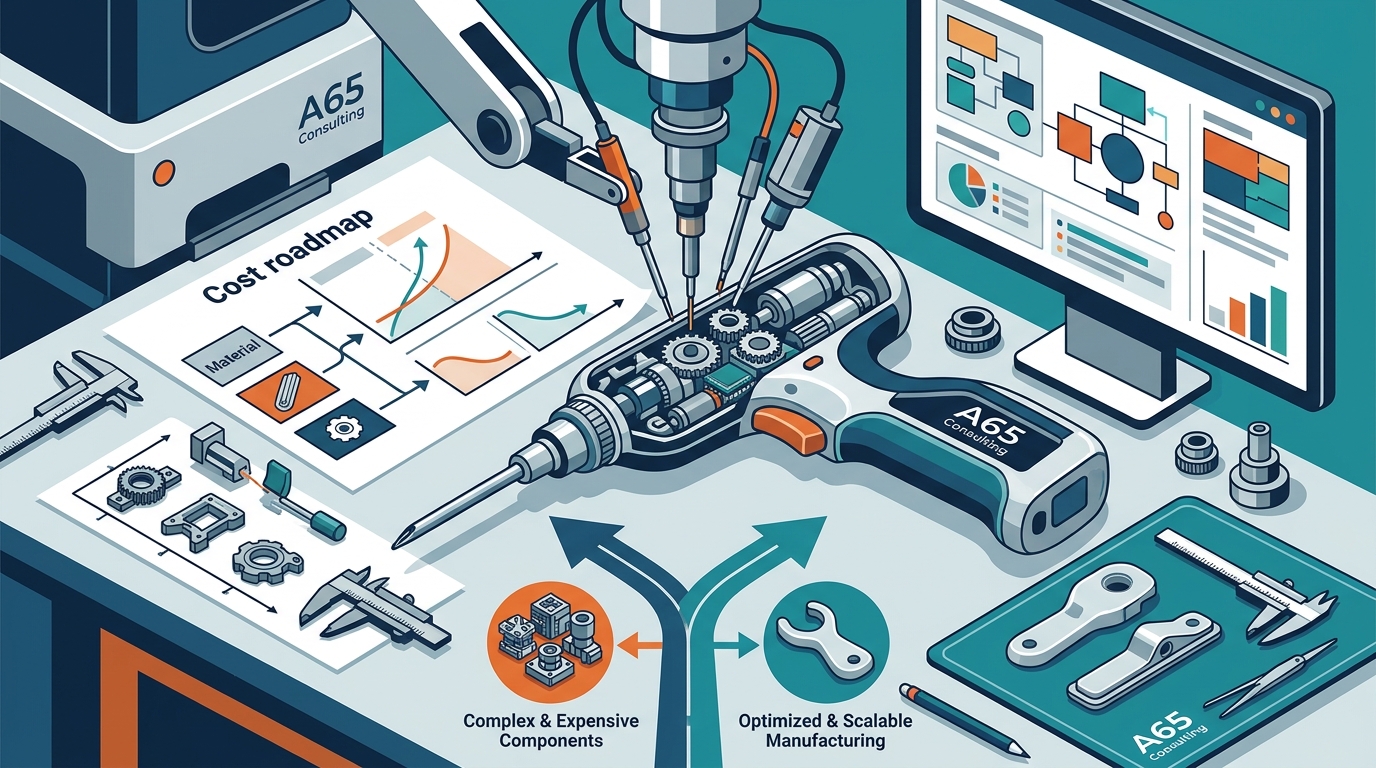
One of the most prevalent errors in medical device development is introducing Design for Manufacturing (DFM) too late in the process. Many teams view DFM strictly as a cost reduction activity. They wait until margins tighten or sourcing changes to evaluate manufacturability. This approach is fundamentally flawed. Design for Manufacturing is a quality exercise, not a cost exercise. When DFM is treated as a quality imperative, it prevents defects before they occur. It ensures that the design can be produced consistently at scale. If you hire an engineering firm that only focuses on aesthetics or basic functionality, you risk missing critical manufacturing constraints. A robust engineering partner integrates DFM reviews early. This integration allows for seamless production transition and reduces the need for expensive tooling modifications later. The goal is to create a viable product that meets performance requirements while remaining economically feasible to produce.
Mistake 2: Ignoring the Gap in Engineering Leadership
Another critical mistake is hiring an engineering firm without assessing their leadership capabilities. Medical device development requires more than just technical execution. It demands strategic oversight to navigate complex regulatory landscapes. Engineering leadership is the bridge between technical feasibility and business viability. Many companies face a gap in engineering capability or team capacity. They hire external resources to fill technical voids but neglect the need for program management. Without strong leadership, programs can drift off track. Milestones slip, and budgets expand. A premium engineering partner provides leadership team support alongside hands-on engineering expertise. This dual approach helps close critical gaps and keeps programs moving forward. It ensures that every decision aligns with the broader product requirements. When evaluating potential partners, look for firms that emphasize program management as a core service. This focus indicates a commitment to delivering results, not just drawings.
Mistake 3: Overlooking Verification as a System
Verification is often misunderstood as a final phase of development. Many teams treat it as a step to confirm that the design meets requirements after the work is done. This mindset is dangerous. Verification is a system, not a phase. When verification is undervalued, failures emerge late in the development cycle. These failures are rarely surprises. They are the result of underlying problems introduced much earlier in the design process. A proper verification plan must be established before testing begins. It should be integrated into the daily workflow of the engineering team. This integration allows for early detection of issues. It also ensures that the design is robust against real-world usage scenarios. Hiring an engineering firm that views verification as a checklist item is a significant risk. Instead, seek a partner who treats verification as a continuous quality assurance process. This approach minimizes the risk of costly rework and regulatory delays.
Mistake 4: Failing to Align on Milestone-Based Pricing
Financial alignment is crucial when hiring an external engineering partner. Some companies attempt to negotiate fixed-price contracts for highly complex and uncertain development projects. This approach often leads to disputes and compromised quality. Cost optimization in engineering requires transparent and flexible financial structures. A more effective model is monthly retainer pricing tied to mutually agreed upon project milestones. This structure allows for adjustments as the project evolves. It also ensures that the engineering team is compensated fairly for their expertise. It aligns the interests of both parties toward successful project completion. When evaluating pricing models, ask potential partners about their experience with milestone-based billing. This question reveals their confidence in their own project management capabilities. It also demonstrates their willingness to share the risk of development. A firm that thrives on challenges will welcome this collaborative financial approach.
Mistake 5: Underestimating the Value of Proprietary Expertise
Finally, many organizations hire engineering firms based solely on cost or general reputation. They fail to evaluate the specific expertise of the team. Medical device development is a specialized field. It requires deep knowledge of regulatory compliance, material science, and precision engineering. Proprietary expertise is the differentiator between a viable product and a failed prototype. A65 Consulting, for example, has a track record of meticulous attention to detail. Their team has decades of medical device development experience under their belts. This experience allows them to anticipate potential pitfalls before they become problems. When hiring, look for firms that can demonstrate specific experience in your device category. Ask for case studies that highlight successful cost optimization outcomes. This due diligence ensures that you are partnering with experts who understand the unique challenges of your project. It also provides confidence that your product will meet the highest standards of excellence.
Comparing Engineering Engagement Models
Choosing the right engagement model is essential for effective cost optimization. Below is a comparison of common approaches to hiring engineering support.
| Engagement Model | Best For | Risk Level | Cost Control |
|---|---|---|---|
| Fixed-Price Contract | Well-defined, low-complexity tasks | High (Scope Creep) | Strict |
| Monthly Retainer | Complex, evolving development programs | Low (Shared Risk) | Flexible |
| Hourly Consulting | Ad-hoc expert advice | Medium | Low |
| Full-Time Hire | Long-term internal capacity building | High (Overhead) | Variable |
Key Takeaways
- Cost Optimization Starts Early: Integrating Design for Manufacturing (DFM) during the conceptualization phase prevents expensive late-stage changes.
- Leadership Matters: Engineering firms must provide both technical execution and strategic program management to keep projects on track.
- Verification is Continuous: Treat verification as an ongoing system rather than a final testing phase to catch errors early.
- Pricing Alignment: Milestone-based retainer models often offer better risk sharing and cost control than fixed-price contracts for complex devices.
- Proven Track Record: Look for partners with specific experience in FDA 510k submissions and successful revenue-generating products.
- Expertise Depth: Decades of specialized experience in medical device development are critical for navigating regulatory complexities.
- Trust and Confidence: The right partner earns trust through meticulous attention to detail and transparent communication.
Frequently Asked Questions
How do you charge for your work?
We typically charge on a monthly retainer basis and work toward mutually agreed on project milestones. This model ensures alignment on goals and flexibility for evolving requirements.
Do you have bandwidth to take on a new project?
Yes, we have a network of engineers that we utilize to bring in with the right discipline experience and to expand our resources as needed. This allows us to scale effectively based on project demands.
What experience does A65 Consulting have designing medical devices similar to my project?
We have experience designing a wide variety of medical devices. Sometimes that experience is a direct fit, but even when it’s not, our broad range of experience affords us insight into many areas. We would be happy to share more details with you upon request.
How long has A65 Consulting been in business?
We’ve been working as a team since 2018, but our engineering team has decades of medical device development experience under their belts. This combination of recent collaboration and deep historical expertise is a key strength.
Why do most risk analyses fail to change the design?
Risk analyses often fail to influence design because they are treated as formal compliance exercises rather than engineering tools. When risk data is not integrated into daily design decisions, it loses its power to prevent defects.
What is the most expensive decision before prototype?
The most expensive decision is often the choice of engineering partner. Selecting a firm without the right expertise can lead to costly rework, regulatory delays, and failed verification testing later in the process.
How can I ensure my verification plan will not fail?
Ensure your verification plan is established before testing begins. It should be treated as a system integrated into the development workflow, not a final phase. Early integration allows for proactive problem solving.
Ready to Optimize Your Medical Device Development?
Avoiding these common mistakes requires a partner who understands both the technical and financial stakes of medical device engineering. A65 Consulting is a premium medical device engineering partner that turns device concepts into viable products. We provide the expertise and leadership needed to navigate complex product development with clarity and confidence. From concept to design and delivery, we help you achieve your product development objectives. Contact us today to request a proposal or schedule a discovery call to discuss your project.