

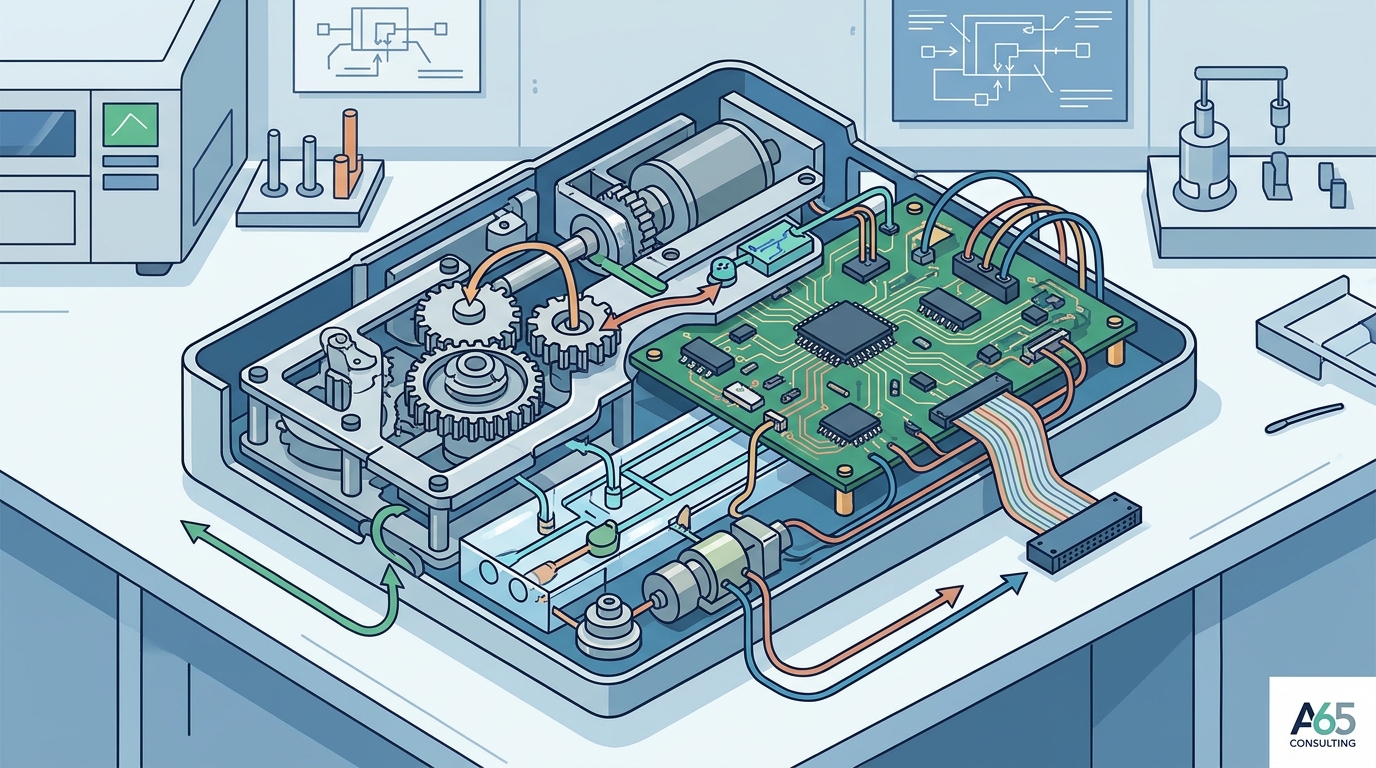
Medical device development fails when a single discipline attempts to solve a complex, multi-domain problem in isolation. A multidisciplinary engineering team integrates mechanical, electrical, systems, and manufacturing expertise to ensure that a device is not only functional but also manufacturable, safe, and compliant. At A65 Consulting, we recognize that the intersection of these specialties is where viable products are born, preventing the costly disconnects that occur when teams work in silos.
The Limitations of Single-Discipline Thinking
Many development programs begin with a strong mechanical or electrical concept, but they stall when the design cannot be manufactured or verified. A mechanical engineer might design a housing that is perfect for performance but impossible to assemble at scale. An electrical engineer might create a circuit that meets power requirements but generates heat that the mechanical enclosure cannot dissipate. This is where the concept of Design for Manufacturing becomes critical. Design for Manufacturing is a quality exercise that ensures a product can be built repeatedly within specification, not merely a cost-cutting measure applied at the end of a project.
When these disciplines operate in parallel rather than in sequence, they catch these conflicts early. For example, a team might discover that a specific sensor placement interferes with the assembly sequence. If this is found during the architectural phase, the fix is a minor CAD adjustment. If it is found during tooling, the fix is a new mold. The implication is clear: multidisciplinary collaboration is a risk mitigation strategy that protects the project timeline and budget.
Integrating Systems and Quality Engineering
Modern medical devices are rarely just mechanical or just electrical; they are systems. Systems Engineering is the discipline that defines how requirements are proven, how evidence is generated, and how learning is fed back into the design. It acts as the glue between the hardware and the regulatory requirements. Without a systems perspective, a team may build a device that works in the lab but fails in the field because the user interface or environmental controls were not considered in the initial architecture.
Quality Engineering is often misunderstood as a review function that checks documentation after the fact. In a high-performing multidisciplinary team, Quality Engineering is an active engineering discipline that shapes the design. It ensures that requirements are written in a way that makes them measurable and verifiable. For instance, a vague requirement like "the device shall be robust" is useless to a test engineer. A quality engineer works with the design team to translate that into specific drop test heights, cycle counts, and acceptance criteria. This integration ensures that the device is not just built to spec, but that the spec is actually testable.
Manufacturing and Process Co-Development
One of the most common failures in medical device development is the "design transfer" gap, where a prototype works but the production version does not. This happens when manufacturing engineering is brought in only after the design is frozen. In a multidisciplinary approach, process development begins as soon as architectural decisions are made. Manufacturing engineers evaluate variability exposure, process capability, and assembly feasibility while the design is still flexible.
Consider a device that requires a specific bonding process. If the manufacturing engineer is not involved in the material selection phase, the design team might choose a material that is easy to machine but difficult to bond consistently. By pairing design and manufacturing engineers, the team can select materials and geometries that are compatible with the intended production process. This co-development ensures that the verification protocols reflect realistic process performance, rather than idealized laboratory conditions. The result is a smoother transition from prototype to mass production, with fewer surprises and lower unit costs.
The Role of Interim Leadership in Bridging Gaps
Even with the right mix of specialties, teams can struggle with coordination and decision-making. This is where experienced engineering leadership becomes essential. Interim Engineering Leadership is the practice of bringing in senior professionals to guide cross-functional teams, remove roadblocks, and ensure that the project stays aligned with business goals. At A65 Consulting, we provide interim R&D and operations leadership to help companies navigate these complex interactions.
A leader with experience across multiple disciplines can see the big picture. They understand the tradeoffs between performance, cost, and manufacturability. They can facilitate difficult conversations between a mechanical engineer who wants a tighter tolerance and a manufacturing engineer who warns that it will reduce yield. This leadership layer ensures that the multidisciplinary team operates as a cohesive unit, rather than a collection of individual contributors. It provides the strategic direction needed to make the right decisions at the right time.
Key Takeaways
- Single-discipline teams often miss critical interactions between design, manufacturing, and verification, leading to costly late-stage changes.
- Design for Manufacturing is a quality discipline that must be integrated early to ensure the product can be built repeatedly within specification.
- Systems Engineering connects technical work with regulatory pathways, ensuring that requirements are testable and verifiable.
- Quality Engineering is an active engineering discipline that shapes design decisions, not just a compliance review function.
- Co-developing the product and the process prevents the "design transfer" gap and ensures a smoother transition to mass production.
- Experienced interim leadership helps coordinate multidisciplinary teams, facilitating tradeoff decisions and removing roadblocks.
Frequently Asked Questions
What is the primary benefit of a multidisciplinary engineering team?
The primary benefit is the early identification and resolution of conflicts between different engineering domains, such as mechanical, electrical, and manufacturing. This prevents costly redesigns and ensures that the final product is viable for production.
How does Quality Engineering differ from traditional QA?
Quality Engineering is an engineering discipline that focuses on how requirements are proven and how evidence is generated. It is involved in the design process to ensure testability, whereas traditional QA often focuses on checking documentation and results after the fact.
When should manufacturing engineering be involved in a project?
Manufacturing engineering should be involved as soon as architectural decisions are made. Early involvement allows for the co-development of the product and the process, ensuring that design choices are compatible with production capabilities.
Can a small team effectively manage multidisciplinary development?
Yes, but it requires strong coordination and leadership. Small teams can benefit from interim leadership or consulting support to ensure that all necessary disciplines are represented and that tradeoffs are managed effectively.
What is the role of Systems Engineering in medical devices?
Systems Engineering defines the overall architecture and ensures that the device meets user needs and regulatory requirements. It acts as the bridge between individual component designs and the final system performance.
Building Your Multidisciplinary Team
Creating a successful medical device requires more than just hiring engineers; it requires building a team that can collaborate across disciplines. At A65 Consulting, we bring together experts in mechanical, systems, manufacturing, and quality engineering to work as a unified team. We help you navigate the complex interactions between these specialties, ensuring that your device is not only innovative but also manufacturable and compliant. To discuss how we can support your development team, to schedule a discovery call.