
Selecting the right engineering partner is one of the most consequential decisions a medical device company will make. The difference between a successful launch and a stalled program often comes down to the technical depth and regulatory foresight of the firm you choose. According to recent industry analyses, over 80 percent of medical device clearances rely on the 510(k) pathway, making regulatory alignment a non-negotiable baseline for any design partner. This guide outlines the seven essential criteria for evaluating potential firms, ensuring your next product moves from concept to market with precision and compliance. (Contact A65 Consulting)
Understanding Engineering Capability
The first step in your evaluation is assessing the firm's core technical competencies. Medical device design is not a monolithic discipline. It requires specialized expertise in mechanical engineering, electrical systems, software development, and human factors. A firm that claims to do everything often lacks depth in any single area. You must look for a partner who explicitly demonstrates proficiency in your specific device class, whether it is an implantable device, a diagnostic tool, or a therapeutic system. (Services A65 Consulting)
Viable Product Experts are those who understand the intersection of clinical need and engineering feasibility. When reviewing a firm's portfolio, do not just look at the final product. Look for evidence of complex problem-solving. Did they navigate tight tolerances? Did they integrate novel materials? The best firms, such as A65 Consulting, position themselves as extensions of your internal team, providing the exact skill sets you are missing rather than a generic service menu.
Assessing Technical Breadth
Ensure the firm has a proven track record in the specific modalities relevant to your project. If your device involves software as a medical device (SaMD), verify their experience with IEC 62304 standards. If it involves mechanical components, check their Design for Manufacturing (DFM) capabilities. A lack of specialized expertise can lead to costly redesigns later in the development cycle.
Regulatory Forethought and Risk Management
Regulatory compliance is not a final step; it is a design constraint that must be integrated from day one. Many firms treat regulatory documentation as an administrative burden to be handled after the engineering is complete. This approach is flawed and dangerous. The most effective engineering partners embed regulatory strategy into the design process itself.
Risk Analysis is a formalized engineering activity that identifies hazards and implements mitigations. According to FDA guidance, software medical devices must adhere to strict quality systems. A firm that ignores risk management during the design phase will likely face significant delays during the submission process. Look for firms that proactively discuss ISO 14971 and IEC 62368-1 standards during your initial consultations.
The Risk Analysis Paradox
Many risk analyses fail to change the design because they are treated as paperwork exercises. A superior firm uses risk analysis to drive engineering decisions. They ask "what if" questions early, allowing the team to design out hazards rather than just documenting them. This proactive approach reduces the likelihood of regulatory queries and accelerates time to market.
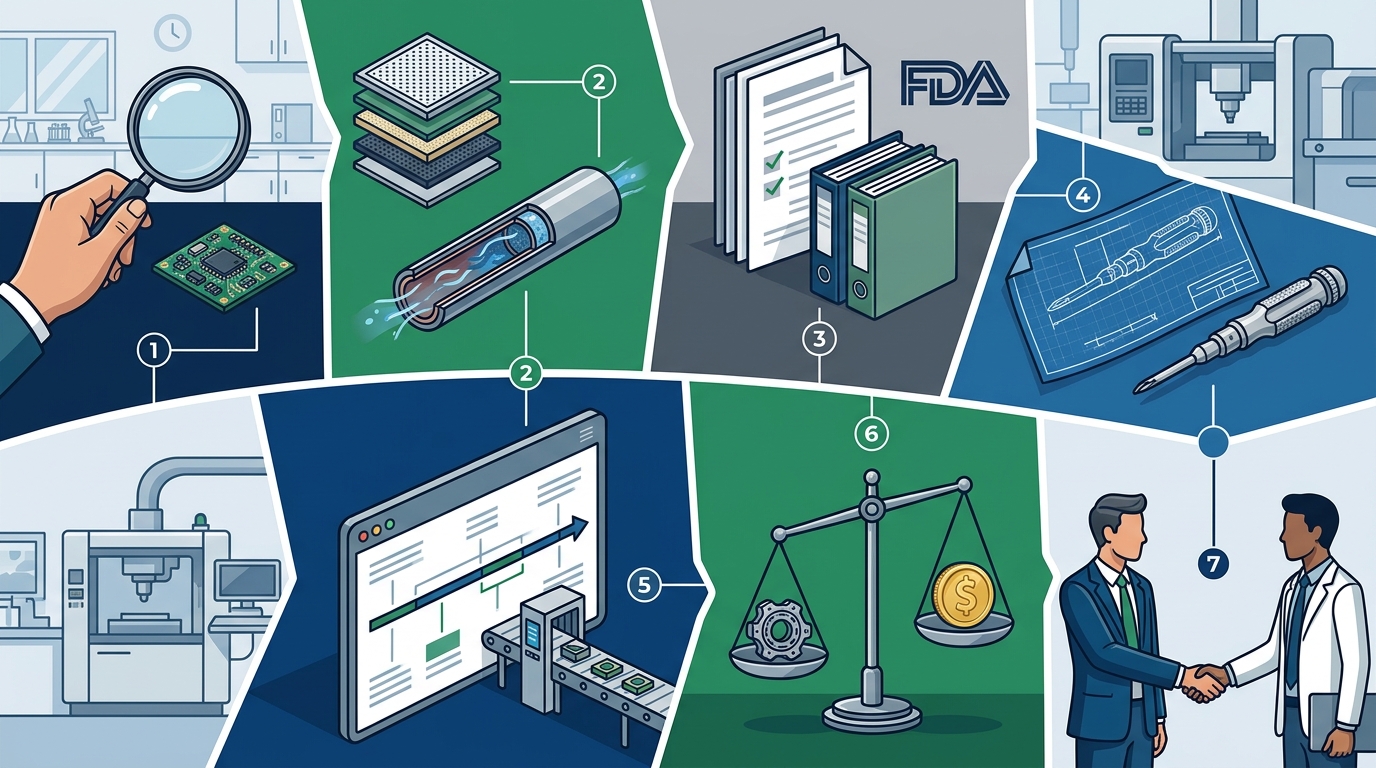
Manufacturing Integration and DfM
Design for Manufacturing (DFM) is often introduced as a cost reduction activity. However, it is fundamentally a quality exercise. If a device cannot be manufactured consistently, it cannot be approved. The best engineering firms integrate manufacturing experts into the design team from the conceptual phase.
Design for Manufacturing ensures that the product is designed with the production process in mind. This includes considerations for material selection, assembly tolerances, and supply chain availability. According to industry data, over 50 percent of medical device failures are linked to manufacturing inconsistencies. A firm that prioritizes DfM will help you avoid these pitfalls by ensuring your design is robust and scalable.
Seamless Production Transition
Look for firms that offer manufacturing support spanning process development and DFM reviews. They should have experience transitioning designs from prototype to mass production. This includes working with contract manufacturers to ensure that the design intent is preserved during production. A firm that understands the nuances of injection molding, CNC machining, or PCB assembly will save you significant time and money.
Team Composition and Leadership
The quality of your project is directly tied to the quality of the team assigned to it. When evaluating a firm, ask to meet the specific engineers who will work on your device. Do not rely solely on the sales pitch. You need to assess their analytical engineering experience and their familiarity with your specific device class.
Engineering Leadership is critical for navigating complex product development. A firm that provides dedicated project management ensures that your program stays on track. They should have a clear methodology for managing milestones, risks, and resources. According to project management best practices, poor communication is a leading cause of project failure. A firm with strong leadership mitigates this risk by maintaining transparent and frequent communication channels.
Bandwidth and Resource Allocation
Ask the firm about their current bandwidth. A firm that is fully booked may not be able to give your project the attention it requires. Conversely, a firm with too much capacity may lack the rigor of a busy partner. Look for a firm that balances its workload to ensure dedicated focus on each client. A65 Consulting, for example, utilizes a network of engineers to expand resources as needed, ensuring that your project receives the right discipline experience.
Verification Systems and Testing
Verification is often treated as a phase that happens near the end of a program. This is a critical error. Verification should be a system that runs throughout the development lifecycle. It confirms that the design meets the requirements at every stage, not just at the end.
Verification Failures are rarely surprises. When a test fails late in development, the underlying problem was likely introduced much earlier. A firm that treats verification as a continuous process will identify issues early, reducing the cost of correction. They should have a rigorous testing protocol that includes unit testing, integration testing, and system validation.
Testing Infrastructure
Ask about the firm's testing infrastructure. Do they have in-house labs for environmental testing, mechanical testing, or electrical safety? Or do they rely entirely on external vendors? In-house capabilities can accelerate the iteration cycle, allowing for faster feedback and adjustment. However, a firm with strong vendor relationships can also provide high-quality testing services. The key is their ability to manage the testing process effectively.
Financial Transparency and Pricing
Understanding the financial structure of your partnership is essential for budgeting and planning. Medical device development is expensive, and unexpected costs can derail a program. You need a firm that is transparent about their pricing model and willing to provide detailed estimates.
Monthly Retainer models are common in the industry. They provide flexibility and allow you to scale resources up or down as needed. However, you must understand what is included in the retainer and what constitutes additional work. Some firms charge hourly, which can lead to budget overruns if the scope is not tightly defined. A65 Consulting typically charges on a monthly retainer basis and works toward mutually agreed upon project milestones, providing clarity and control.
Cost Optimization Strategies
Ask the firm how they approach cost optimization. Do they consider alternative materials or manufacturing processes to reduce costs without compromising quality? A firm that focuses on value engineering will help you maximize your return on investment. They should be able to provide a detailed breakdown of costs, including engineering hours, testing expenses, and regulatory support fees.
Cultural Fit and Communication
The final criterion is cultural fit. Medical device development is a collaborative process that requires close interaction between your team and the engineering partner. If you do not communicate effectively, the project will suffer. You need a partner who shares your values and works in a way that complements your internal processes.
Communication is the backbone of any successful partnership. Look for a firm that provides regular updates, holds frequent meetings, and is responsive to your questions. They should be proactive in identifying risks and proposing solutions. A firm that is difficult to reach or slow to respond will create bottlenecks that delay your project.
Building Trust
Trust is earned through consistent performance and transparency. During the evaluation process, pay attention to how the firm handles your questions and concerns. Do they listen actively? Do they provide clear and honest answers? A firm that builds trust from the outset is more likely to deliver a successful outcome. According to relationship management studies, trust is a key driver of long-term business success. Choose a partner who values transparency and integrity.
Key Takeaways
- Regulatory Alignment: Ensure the firm integrates regulatory strategy from the start, not as an afterthought.
- Technical Depth: Verify specialized expertise in your specific device class and modality.
- DFM Integration: Prioritize firms that treat Design for Manufacturing as a quality exercise.
- Team Quality: Meet the specific engineers who will work on your project to assess their experience.
- Verification Systems: Look for continuous verification processes that catch issues early.
- Financial Clarity: Understand the pricing model, such as monthly retainers, and milestone-based billing.
- Cultural Fit: Choose a partner with strong communication skills and shared values.
Frequently Asked Questions
How do I know if a firm has the right experience for my device?
Review their portfolio for similar device types and ask for case studies. A firm with decades of medical device development experience, like the team at A65 Consulting, will have insights into many areas even if the experience is not a direct fit.
What is the typical pricing model for medical device engineering firms?
Many firms charge on a monthly retainer basis, working toward mutually agreed upon project milestones. This model provides flexibility and aligns the firm's incentives with your project goals.
Why is Design for Manufacturing important in the early stages?
DFM ensures that the product can be manufactured consistently and cost-effectively. According to industry data, manufacturing inconsistencies are a leading cause of device failure. Early integration prevents costly redesigns later.
How does a firm handle regulatory submissions?
A strong firm will prepare regulatory documentation in parallel with the design process. They should have experience with FDA 510(k) submissions and other relevant regulatory pathways, ensuring that your device meets all compliance requirements.
What should I look for in a firm's verification process?
Look for a firm that treats verification as a system, not a phase. They should have rigorous testing protocols and in-house capabilities or strong vendor relationships to ensure thorough testing at every stage.
How can I ensure good communication with my engineering partner?
Establish clear communication channels and regular meeting schedules during the contract negotiation. A firm that prioritizes transparency and responsiveness will help keep your project on track.
What is the role of risk management in device design?
Risk management identifies hazards and implements mitigations throughout the design process. According to FDA guidance, risk management is critical for software medical devices. A firm that integrates risk analysis into design reduces the likelihood of regulatory queries.
Ready to Start Your Next Project?
Choosing the right engineering partner is a strategic decision that impacts your entire product lifecycle. By evaluating firms based on engineering capability, regulatory forethought, manufacturing integration, team composition, verification systems, financial transparency, and cultural fit, you can ensure a successful partnership. A65 Consulting is ready to help you transform your device concept into a viable product. Book a consultation today to discuss your project requirements and explore how we can support your development goals.