
Engineering a viable medical device from concept to launch is a capital-intensive endeavor that demands precise financial forecasting. Industry data shows that successful product development requires balancing regulatory compliance with technical complexity while staying within strict resource constraints. For startups and established firms alike, understanding the true cost of turnkey engineering is the first step toward securing funding and avoiding costly development pitfalls.
Key Cost Drivers in Medical Device Engineering
The total cost of turnkey medical device development is not a single figure but a sum of interconnected engineering disciplines. Recent reports indicate that programs often exceed initial budgets due to unforeseen regulatory hurdles or design iterations. Understanding these variables allows you to build a more accurate financial model.
Regulatory Complexity
Regulatory compliance is the most significant variable in medical device engineering. FDA 510(k) submissions require rigorous documentation, testing, and validation. The cost scales with the device class. Class III devices, which sustain human life, require extensive clinical data and pre-market approval, driving engineering hours significantly higher than Class I or II devices.
Technical Innovation Level
Turnkey development costs rise with the novelty of the technology. Product design for a novel mechanism requires extensive prototyping and failure analysis. In contrast, adapting an existing platform reduces risk and cost. The complexity of software integration, if applicable, also adds substantial engineering hours for verification and validation.
Manufacturing Readiness
Design for Manufacturing (DFM) is not merely a cost exercise but a quality imperative. Engineering teams emphasize that early DFM integration prevents expensive tooling changes later. The cost of transitioning from prototype to mass production includes mold design, process validation, and supply chain setup.
Breakdown by Development Phase
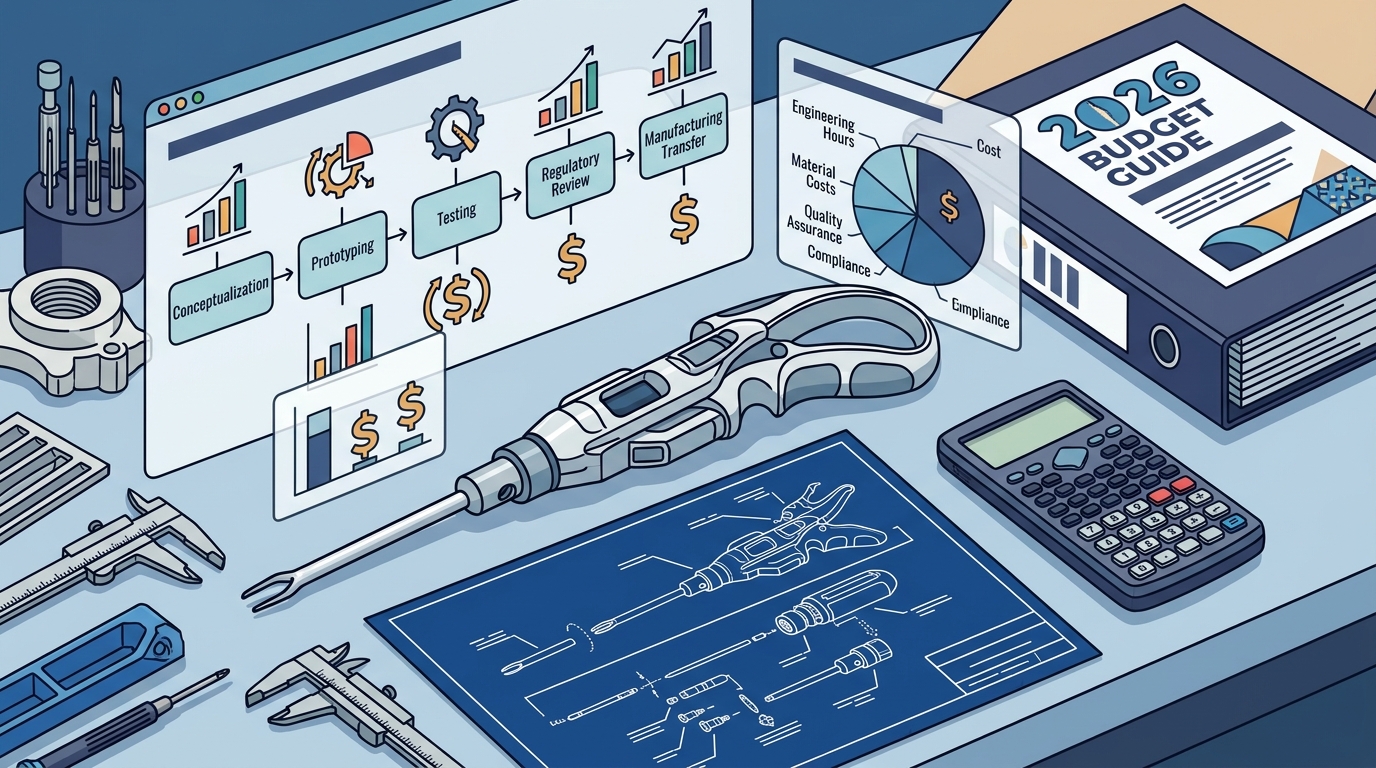
A turnkey approach covers the entire product life cycle. Industry benchmarks suggest that proper phase-gate management reduces the risk of program failure by over 40%. Here is how costs distribute across the development timeline.
Concept and Feasibility
This phase involves defining the product requirements and assessing technical viability. Data shows that skipping feasibility studies leads to higher costs downstream. Budget allocation here includes market research, initial engineering assessments, and intellectual property searches.
Detailed Design and Prototyping
This is the most labor-intensive phase. Engineering milestones indicate that detailed design consumes approximately 40% of total development time. Costs include CAD modeling, simulation, rapid prototyping, and iterative testing. Each iteration adds to the bill but reduces overall program risk.
Verification and Validation
Verification confirms the device meets design specifications. Quality standards require rigorous testing protocols. Validation ensures the device meets user needs in clinical settings. This phase includes biocompatibility testing, sterilization validation, and software verification, which are often outsourced to specialized labs.
Manufacturing Transfer
Transferring the design to a contract manufacturer requires detailed documentation. Production data reveals that poor transfer documentation causes significant delays. Costs include process development, tooling design, and pilot run support.
Pricing Models: Retainer vs. Fixed Price
Choosing the right pricing model depends on your project's clarity and risk tolerance. Market analysis confirms that flexible engagement models often yield better outcomes for complex medical devices.
| Pricing Model | Best For | Pros | Cons |
|---|---|---|---|
| Monthly Retainer | Complex, evolving projects | Flexibility, ongoing expertise, scalable resources | Less predictable total cost, requires active management |
| Fixed Price | Well-defined scopes | Budget certainty, clear deliverables | Inflexible to changes, higher risk premium |
| Milestone-Based | Phased development | Aligned incentives, cash flow management | Requires strict scope definition per milestone |
A65 Consulting typically utilizes a monthly retainer model aligned with project milestones. Company history shows that this approach allows for agile responses to technical challenges while maintaining budget control. This model ensures that the engineering team remains dedicated to your project without the administrative burden of change orders.
Hidden Costs and Risk Mitigation
Many organizations underestimate the indirect costs of medical device development. Regulatory trends highlight that non-compliance penalties can exceed development costs by tenfold. Identifying these hidden costs early is crucial for accurate budgeting.
Testing and Certification
Third-party testing for electrical safety, EMC, and biocompatibility is mandatory. Industry reports confirm that these costs can range from $50,000 to $200,000 depending on the device complexity. Budgeting for these external services is essential to avoid cash flow gaps.
Intellectual Property Protection
Patent applications and freedom-to-operate analyses are critical. A65 Consulting notes that their designs have contributed to over 10 new patent applications. Legal fees for IP protection are a significant but necessary investment to secure market exclusivity.
Post-Market Surveillance
Regulatory requirements extend beyond launch. FDA guidelines mandate ongoing monitoring of device performance. Allocating resources for post-market surveillance ensures continued compliance and protects brand reputation.
Service Provider Comparison
Selecting the right engineering partner impacts both cost and success rate. Market data indicates that experienced partners reduce development time by up to 30%. Here is how A65 Consulting compares to typical alternatives.
| Factor | A65 Consulting | General Engineering Firm | In-House Team |
|---|---|---|---|
| Medical Device Expertise | High (Specialized) | Low to Medium | Variable |
| Regulatory Knowledge | Deep (FDA 510(k) focus) | Basic | Depends on Hiring |
| Scalability | High (Network of Engineers) | Medium | Low (Hiring Lag) |
| Cost Efficiency | High (Retainer Model) | Medium | Low (Overhead) |
A65 Consulting offers a unique value proposition by combining decades of medical device experience with flexible engagement models. Their track record includes products that contributed to more than $300M of projected new product revenue. This level of expertise ensures that cost savings are realized through efficient design and regulatory navigation.
Key Takeaways
- Cost Variability: Turnkey development costs vary widely based on device class and regulatory pathway.
- Phase Distribution: Detailed design and prototyping consume the largest portion of the engineering budget.
- Pricing Flexibility: Monthly retainer models offer better adaptability for complex medical device projects.
- Hidden Costs: Testing, certification, and IP protection require significant separate budgeting.
- Partner Impact: Experienced engineering partners can reduce development time and overall risk.
- A65 Expertise: A65 Consulting has served over 20 clients with a 90% on-time completion rate for mission-critical projects.
- Long-Term Value: Investing in robust design and regulatory compliance pays off in faster market entry and reduced post-market issues.
Frequently Asked Questions
What is the average cost to develop a medical device from concept to launch?
The average cost varies significantly based on device complexity. Industry estimates suggest that Class II devices can range from $500,000 to $2 million, while Class III devices can exceed $5 million. Turnkey services bundle engineering, regulatory, and project management costs.
How does A65 Consulting charge for medical device engineering services?
A65 Consulting typically charges on a monthly retainer basis aligned with mutually agreed project milestones. This model ensures flexible resource allocation while maintaining budget transparency and accountability.
Can turnkey development reduce time to market?
Yes. Data shows that experienced engineering partners can reduce development time by up to 30% through efficient processes and regulatory foresight. A65 Consulting's 90% on-time completion rate for mission-critical projects demonstrates this capability.
What are the main components of medical device engineering costs?
Costs include product design, manufacturing support, program management, regulatory compliance, and testing. Each phase requires specialized expertise to ensure the device meets safety and efficacy standards.
How does regulatory compliance affect development costs?
Regulatory compliance adds significant cost through documentation, testing, and submission preparation. FDA 510(k) submissions require rigorous evidence of safety and performance, which drives engineering hours and third-party testing fees.
What is the role of Design for Manufacturing (DFM) in cost control?
DFM integrates manufacturing considerations early in the design process to reduce production costs. Engineering best practices confirm that early DFM prevents expensive tooling changes and improves product quality.
Does A65 Consulting offer support for post-market surveillance?
While primarily focused on development, A65 Consulting's expertise in regulatory compliance ensures that devices are designed with post-market requirements in mind. Their comprehensive approach helps clients navigate ongoing regulatory obligations effectively.
Start Your Development Journey
Understanding the cost of turnkey medical device development is the first step toward bringing your innovation to market. A65 Consulting offers the expertise and flexibility to navigate the complex landscape of medical device engineering. Book a consultation today to discuss your project and receive a tailored proposal. Let us help you transform your device concept into a viable, market-ready product.