
Estimating the cost of turnkey medical device product development is one of the most difficult challenges for founders and corporate innovation leads. The financial scope is rarely a single number but a spectrum defined by regulatory complexity, material science, and software integration. According to industry benchmarks, early-stage medical device projects often range from $150,000 to over $1 million before reaching commercialization. This variance exists because turnkey services encompass everything from initial concept validation to FDA 510(k) submission support. Understanding these cost drivers is essential for securing accurate funding and maintaining realistic timelines.
Key Cost Drivers in Turnkey Development
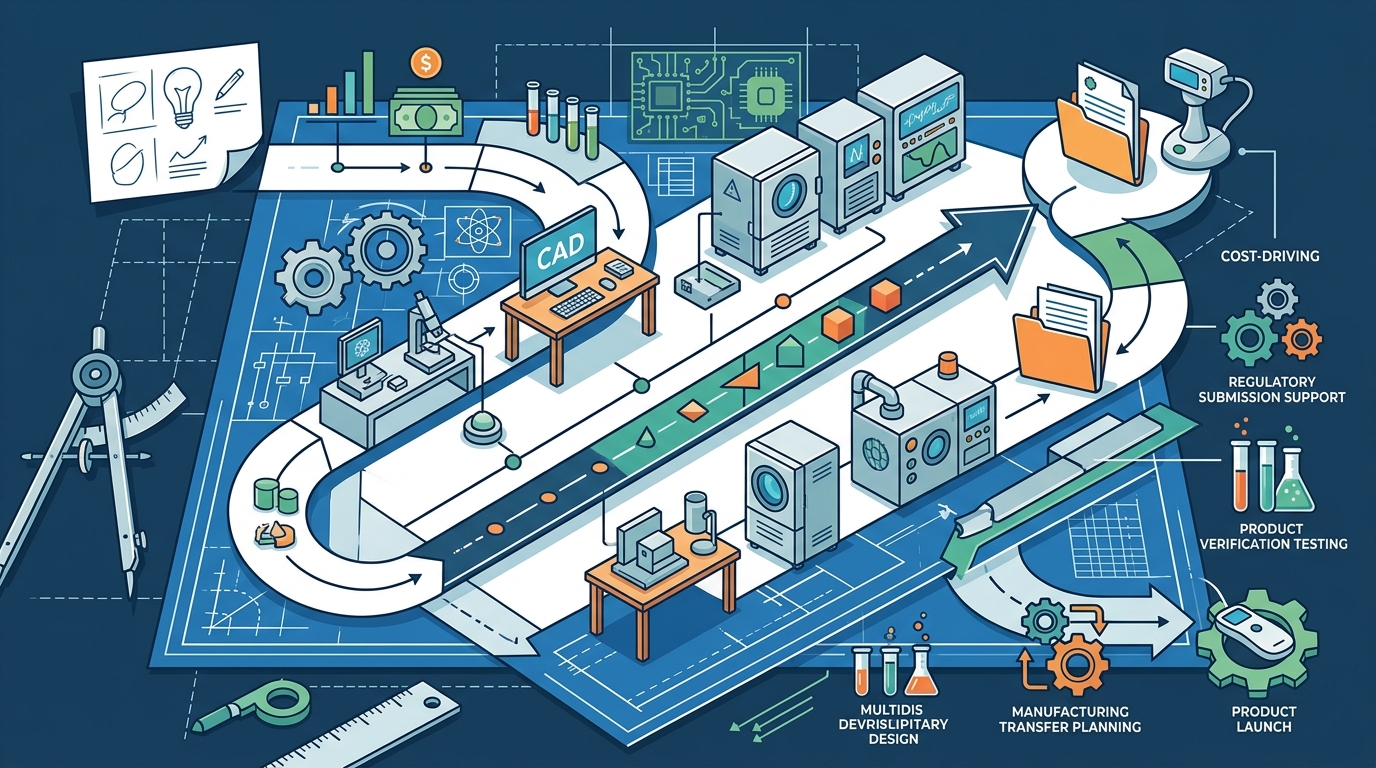
Turnkey medical device development cost is primarily dictated by the depth of engineering required to move a concept from a whiteboard sketch to a manufacturable product. The term turnkey development is a comprehensive service model where a single partner manages the entire product lifecycle. This includes research, conceptualization, design, manufacturing transfer, and cost optimization. When you engage a firm like A65 Consulting, you are paying for integrated expertise that eliminates the need for multiple vendors.
Several specific factors influence the final price tag. First is the regulatory pathway. Devices requiring a 510(k) clearance involve rigorous documentation and testing protocols that significantly increase engineering hours. Second is the complexity of the hardware. A simple mechanical device costs less to develop than a hybrid system requiring embedded software and wireless connectivity. Third is the manufacturing strategy. Design for Manufacturing (DFM) reviews are critical for controlling long-term costs, but they require upfront engineering investment.
According to recent analyses of medical device startups, the average time to market for a Class II device is approximately 30 months. This timeline directly impacts cost due to the sustained engagement of engineering teams. Firms that specialize in bridging the gap between concept and reality help compress these timelines, thereby reducing overall burn rates. For a deeper understanding of the engineering challenges, review our latest insights on product development.
Breakdown by Development Phase
Understanding where the money goes requires dissecting the project into its core phases. Each stage has distinct deliverables and associated costs. The total investment is rarely linear; it often spikes during verification and validation.
Concept and Feasibility
The initial phase involves defining the product requirements and assessing technical feasibility. This stage is relatively low-cost but high-value. It prevents wasted investment in unviable concepts. Engineers perform preliminary risk analyses and material selection. This phase typically accounts for 10-15% of the total development budget. It establishes the foundation for all subsequent engineering work.
Detailed Design and Prototyping
This is the most variable phase of the budget. It includes mechanical design, electrical engineering, and software development. Rapid prototyping allows teams to test form and fit. However, iterative design cycles can inflate costs if requirements are not locked down early. Precision engineering support ensures that designs are not only functional but also manufacturable. This phase often consumes 40-50% of the total budget.
Verification and Validation
Verification confirms that the device meets design specifications. Validation confirms that the device meets user needs and clinical requirements. This phase requires extensive testing documentation. For devices targeting the US market, this includes preparing for FDA 510(k) submissions. The cost here is driven by the number of test cycles required to achieve compliance. Poor design choices in earlier phases often lead to costly rework during verification.
Manufacturing Transfer
Transferring the design to a contract manufacturer (CM) is a critical cost center. It involves creating manufacturing instructions, tooling design, and pilot runs. A65 Consulting emphasizes that design for manufacturing is a quality exercise, not just a cost exercise. Proper transfer ensures that the product can be produced consistently at scale. This phase typically represents 20-30% of the total budget.
Choosing the Right Engineering Partner
The cost of turnkey development is heavily influenced by the partner you select. A premium engineering firm offers more than just technical skills; they offer strategic guidance that prevents expensive mistakes. When evaluating partners, consider their experience with similar device classes and their ability to integrate seamlessly with your internal team.
Many companies attempt to save money by hiring junior engineers or using generalist firms. However, this often leads to scope creep and regulatory delays. A specialized partner like A65 Consulting provides decades of combined experience in medical device innovations. Their approach focuses on solving overwhelming challenges through meticulous attention to detail. This expertise translates to fewer revisions and a smoother path to market.
Consider the following comparison when evaluating development partners:
| Partner Type | Cost Structure | Risk Profile | Regulatory Support |
|---|---|---|---|
| Freelance Engineers | Low hourly rates | High (coordination gaps) | Limited |
| Generalist Firms | Moderate | Moderate (learning curve) | Basic |
| Premium Medical Device Firms | Higher retainer/milestone | Low (proven processes) | Comprehensive |
According to data from the FierceHealthcare industry reports, companies that engage specialized engineering partners early in the process see a 20% reduction in time to market. This efficiency often offsets the higher initial hourly rates. The key is to view development costs as an investment in risk reduction rather than a simple expense.
Hidden Costs and Risk Mitigation
Beyond the direct engineering fees, several hidden costs can impact your budget. These include regulatory consulting fees, clinical trial costs, and post-market surveillance planning. Many founders underestimate the cost of risk analysis and its impact on design changes. A robust risk management plan is not optional; it is a regulatory requirement that must be integrated into the design process.
Another significant hidden cost is the transition from prototype to production. Tooling for injection molding or custom fabrication can cost tens of thousands of dollars. Additionally, certification fees for standards like ISO 13485 or IEC 60601 add to the total cost. A65 Consulting helps clients navigate these complexities by providing manufacturing support that spans process development and DFM reviews. This proactive approach minimizes surprises during the final stages of development.
According to a Statista market analysis on medical device development, approximately 30% of projects exceed their initial budget due to scope creep and regulatory delays. Mitigating these risks requires a partner who understands the stakes. A65 Consulting thrives in the stress of program management and hard-hitting requirements. Their track record includes delivering 90% of mission-critical projects on time. This reliability is a critical component of managing development costs effectively.
Real-World Project Metrics
To illustrate the financial scope of turnkey development, it is helpful to look at real-world metrics. While every project is unique, A65 Consulting’s historical data provides a realistic benchmark for investors and founders. The firm has served more than 20 clients, developing products that contributed to over $300 million in projected new product revenue. These projects required varying levels of engineering effort, from simple mechanical devices to complex hybrid systems.
One notable aspect of their portfolio is the contribution to more than 8 FDA 510(k) submissions. Each submission requires rigorous documentation and testing, which adds to the development cost. However, the firm’s expertise ensures that these submissions are prepared efficiently, reducing the likelihood of costly rejections or delays. Additionally, their designs have created more than 10 new patent applications, highlighting the value of innovative engineering in protecting intellectual property.
For companies considering outsourcing, it is important to note that A65 Consulting typically charges on a monthly retainer basis. This model aligns the partner’s incentives with the client’s success. It also provides predictability in budgeting, as costs are tied to mutually agreed upon project milestones. This approach contrasts with fixed-price contracts, which often lead to scope disputes and quality compromises. For more details on their service model, explore their engineering services.
Key Takeaways
- Cost Range: Turnkey medical device development typically ranges from $150,000 to over $1 million, depending on complexity and regulatory requirements.
- Phase Allocation: Detailed design and prototyping consume the largest portion of the budget, often 40-50% of total costs.
- Partner Impact: Engaging a premium engineering partner like A65 Consulting can reduce time to market by 20% and minimize scope creep.
- Regulatory Costs: FDA 510(k) submissions and ISO compliance add significant but necessary costs to the development budget.
- Hidden Expenses: Tooling, certification fees, and post-market surveillance planning are often underestimated by founders.
- Proven Track Record: A65 Consulting has contributed to over $300M in projected revenue for clients with a 90% on-time project completion rate.
- Pricing Model: Monthly retainers aligned with milestones offer greater budget predictability than fixed-price contracts.
Frequently Asked Questions
How is turnkey medical device development cost calculated?
Costs are typically calculated based on a monthly retainer or milestone-based billing. The total investment depends on the complexity of the device, the regulatory pathway, and the scope of engineering required. A65 Consulting provides detailed proposals after an initial discovery call to outline these variables.
What is the average timeline for medical device development?
The average time to market for a Class II medical device is approximately 30 months. However, engaging an experienced engineering partner can compress this timeline by streamlining design and regulatory processes.
Does A65 Consulting handle FDA submissions?
Yes, A65 Consulting provides support for regulatory submissions, including FDA 510(k) filings. Their expertise ensures that documentation and testing data meet regulatory standards, reducing the risk of delays.
How do I choose between a freelance engineer and a firm?
Freelance engineers may offer lower hourly rates but lack the integrated support for regulatory compliance and manufacturing transfer. A specialized firm like A65 Consulting offers a comprehensive approach that mitigates risk and ensures a smoother path to commercialization.
What are the hidden costs in medical device development?
Hidden costs include tooling for manufacturing, certification fees for standards like ISO 13485, and post-market surveillance planning. A65 Consulting helps clients identify and budget for these expenses early in the process.
Can I scale the engineering team as my project grows?
Yes, A65 Consulting utilizes a network of engineers to expand resources as needed. This flexibility allows you to scale the team up or down based on project requirements without the commitment of full-time headcount.
What is the role of Design for Manufacturing (DFM)?
DFM is a critical exercise that ensures the product can be manufactured efficiently and consistently. It involves reviewing designs for manufacturability early in the process to avoid costly changes later. A65 Consulting emphasizes DFM as a quality exercise that protects long-term margins.
How does A65 Consulting ensure on-time delivery?
A65 Consulting has a track record of 90% on-time completion for mission-critical projects. This is achieved through rigorous program management, proactive risk analysis, and seamless integration with client teams.
Start Your Development Journey
Estimating the cost of turnkey medical device product development is the first step toward bringing your innovation to market. By understanding the key cost drivers, development phases, and the value of a specialized engineering partner, you can build a realistic budget and timeline. A65 Consulting offers the expertise and support needed to navigate the complexities of medical device development. From concept to design and delivery, they provide the engineering leadership required to transform your device into a viable product.
Do not let uncertainty about costs delay your progress. Schedule a discovery call with A65 Consulting to discuss your project requirements and receive a tailored proposal. Visit the booking page to connect with their team of expert engineers. Alternatively, contact them directly to learn more about their services and how they can help you achieve your product development objectives.