
Engineering a viable medical device from concept to launch is a capital-intensive endeavor that demands precise financial planning. According to industry benchmarks, the average cost to bring a Class II medical device to market ranges from $500,000 to over $2 million, depending heavily on regulatory complexity and manufacturing requirements. This figure excludes long-term commercialization costs but highlights the significant upfront investment required for engineering, testing, and compliance. Understanding these financial drivers is critical for founders and corporate innovators who need to secure funding and manage cash flow effectively during the development lifecycle.
Key Cost Drivers in Medical Device Engineering
The total cost of turnkey medical device product development is not a static number. It fluctuates based on several dynamic variables that engineering partners must evaluate during the initial scoping phase. The primary drivers include the classification of the device, the complexity of the hardware and software integration, and the rigor of the required clinical validation.
Regulatory compliance is perhaps the most significant cost multiplier. Devices requiring a Premarket Approval (PMA) from the FDA involve extensive clinical trials and rigorous data analysis, which can double or triple the engineering budget compared to a 510(k) submission. Furthermore, the choice of materials and manufacturing processes impacts the bill of materials (BOM) and the cost of tooling. Complex geometries often require expensive injection molding or CNC machining, while software-heavy devices demand robust cybersecurity and validation protocols.
Another critical factor is the level of engineering support required. Startups often underestimate the need for specialized expertise in areas like human factors engineering, biocompatibility testing, and electromagnetic compatibility (EMC). Engaging a premium engineering partner like A65 Consulting ensures that these complexities are managed proactively, preventing costly redesigns later in the cycle.
Breakdown by Development Phase
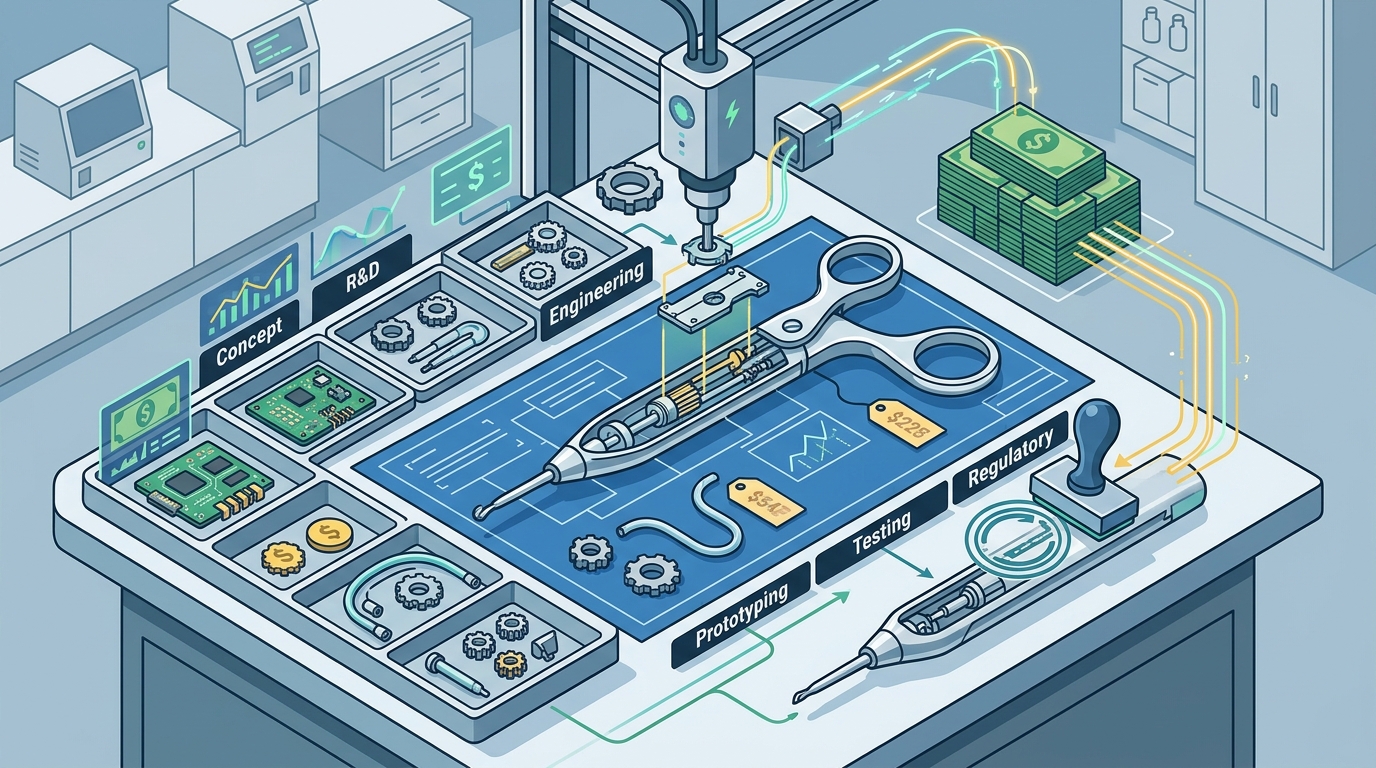
To understand where your capital is allocated, it is essential to break down the development lifecycle into its constituent phases. Each phase has distinct deliverables and associated costs that contribute to the final turnkey price.
Concept and Feasibility
The initial phase involves defining the product requirements and assessing technical feasibility. This stage typically includes market analysis, preliminary design concepts, and risk assessments. Costs here are relatively low but critical for determining whether the project is viable. A65 Consulting emphasizes that skipping thorough feasibility studies often leads to wasted resources in later stages.
Design and Development
This is the most resource-intensive phase. It encompasses detailed engineering, prototyping, and iterative testing. The cost varies significantly based on the number of prototype iterations required. Each iteration involves design changes, new tooling, and re-testing. According to global health standards, rigorous design controls are necessary to ensure patient safety, which adds to the engineering hours required.
Verification and Validation
Verification confirms that the device meets design specifications, while validation ensures it meets user needs. This phase includes bench testing, biocompatibility studies, and usability testing. These activities often require third-party laboratories, which charge premium rates for specialized testing. The cost of this phase is directly proportional to the regulatory pathway chosen.
Manufacturing Transfer
Transitioning from prototype to mass production involves Design for Manufacturing (DFM) reviews and process validation. This phase ensures that the device can be produced consistently at scale. Costs include pilot runs, tooling finalization, and quality management system audits. A65 Consulting notes that DFM is a quality exercise, not just a cost reduction activity, which influences the initial engineering approach.
Engagement Models: Retainer vs. Fixed Price
Engineering firms typically offer two primary pricing structures for medical device development. Understanding the differences is crucial for budgeting and risk management.
| Pricing Model | Description | Best For | Risk Profile |
|---|---|---|---|
| Monthly Retainer | Pay for dedicated engineering hours and expertise on an ongoing basis. | Projects with evolving requirements or long-term development needs. | Client bears the risk of timeline overruns. |
| Fixed Price | A set fee for defined deliverables and milestones. | Projects with clear, stable requirements and scope. | Partner bears the risk of execution delays. |
| Milestone-Based | Payments tied to the completion of specific project phases. | Phased development where cash flow management is critical. | Shared risk based on milestone achievement. |
Many premium engineering partners, including A65 Consulting, prefer a hybrid approach. They often charge on a monthly retainer basis while working toward mutually agreed-upon project milestones. This model provides flexibility for the engineering team to adapt to technical challenges while giving the client visibility into progress and costs. It aligns the partner's incentives with the client's success, ensuring that quality is not compromised for speed.
Hidden Costs Often Overlooked
Beyond the direct engineering fees, several hidden costs can impact your total budget. These are often underestimated by first-time founders and can cause significant cash flow strain if not planned for.
Regulatory consulting fees are a major hidden cost. While engineering firms handle the technical documentation, specialized regulatory consultants may be needed for strategy and submission preparation. These experts charge high hourly rates for their niche knowledge. Additionally, intellectual property costs, including patent filings and searches, can add tens of thousands of dollars to the project. The United States Patent and Trademark Office reports that the average cost to obtain a patent can exceed $10,000 when including attorney fees.
Another overlooked area is the cost of clinical trials. If your device requires clinical data to support regulatory approval, the costs can range from $100,000 to several million dollars. This includes site management, patient recruitment, and data analysis. Finally, post-market surveillance and quality system maintenance require ongoing resources. A65 Consulting advises clients to budget for these long-term obligations from the outset to ensure sustainable product lifecycle management.
Strategies to Optimize Your Development Budget
While medical device development is inherently expensive, there are strategic ways to optimize your budget without compromising quality or compliance. The first step is to engage an engineering partner early in the process. Early involvement allows for better design decisions that reduce downstream costs.
Adopting a modular design approach can also save money. By designing components that can be reused across different product lines, you reduce development time and manufacturing complexity. Additionally, leveraging existing certified components and off-the-shelf software modules can accelerate development and lower costs. A65 Consulting has a track record of helping clients achieve significant cost savings through strategic design choices and efficient project management.
Another key strategy is to prioritize regulatory pathways that minimize clinical data requirements. A 510(k) submission is generally less expensive and faster than a PMA. Working closely with regulatory experts to determine the most efficient pathway can save hundreds of thousands of dollars. Finally, maintaining clear communication with your engineering partner ensures that scope creep is managed effectively, preventing unexpected cost overruns.
Key Takeaways
- Average Costs: The average cost to bring a Class II medical device to market ranges from $500,000 to over $2 million, excluding commercialization.
- Regulatory Impact: PMA submissions can double or triple engineering costs compared to 510(k) pathways due to clinical trial requirements.
- Pricing Models: Monthly retainers with milestone tracking offer flexibility and alignment of incentives for complex projects.
- Hidden Costs: Regulatory consulting, patent filings, and clinical trials are often underestimated in initial budgets.
- Optimization: Early engineering involvement and modular design strategies significantly reduce total development costs.
- Partner Selection: Choosing a premium engineering partner with decades of experience ensures efficient navigation of regulatory and technical challenges.
- Long-Term Planning: Budget for post-market surveillance and quality system maintenance to ensure sustainable product lifecycle management.
Frequently Asked Questions
How much does it cost to develop a medical device from scratch?
The cost varies widely based on complexity, but a typical Class II device ranges from $500,000 to $2 million. This includes engineering, testing, and regulatory support. FDA guidelines emphasize that rigorous development processes are essential for safety, which drives these costs.
What is the difference between a 510(k) and a PMA?
A 510(k) is a premarket submission to demonstrate that a device is substantially equivalent to a legally marketed device. A PMA is a more rigorous process requiring clinical data to prove safety and effectiveness. The FDA states that PMA approvals are required for high-risk devices.
Do you charge by the hour or a fixed price?
We typically charge on a monthly retainer basis and work toward mutually agreed-upon project milestones. This model provides flexibility and ensures alignment with your project goals.
How long does the development process take?
Development timelines vary, but a typical Class II device takes 18 to 24 months from concept to market. Complex devices may take longer. Global health standards suggest that thorough testing and validation are critical for patient safety.
Can you help with regulatory submissions?
Yes, we provide comprehensive regulatory support, including documentation preparation and submission strategy. Our team has experience with over 8 FDA 510(k) submissions.
What is Design for Manufacturing (DFM)?
DFM is an engineering approach that designs products to be easily and cost-effectively manufactured. It is a quality exercise that prevents production issues. A65 Consulting emphasizes DFM to ensure seamless production transition.
How do you handle intellectual property?
We assist with patent applications and IP strategy. Our team has helped create more than 10 new patent applications for clients. The USPTO provides resources for protecting your innovations.
What is your experience with medical devices?
Our engineering team has decades of experience and has served more than 20 clients. We have developed products that contributed to over $300M of projected new product revenue.
Start Your Project
Turning your medical device concept into a viable product requires a trusted engineering partner who understands the complexities of regulatory compliance and technical execution. A65 Consulting is dedicated to helping you navigate this journey with clarity and confidence. We provide the expertise and leadership needed to deliver results that exceed your expectations.
Do not let budget uncertainty stall your innovation. Schedule a discovery call today to discuss your project requirements and receive a tailored proposal. Book your consultation now and take the first step toward bringing your medical device to market.