
Accelerating Medical Device Manufacturing Transfer: A Strategic Guide for Startups
Manufacturing transfer is the critical bridge between a functional prototype and a commercially viable medical device. For startups, this phase is often the most resource-intensive and risky part of the product lifecycle. According to industry benchmarks, successful manufacturing transfers can reduce time-to-market by up to 30 percent when handled with rigorous early-stage planning. Without a structured approach, startups frequently encounter costly delays, regulatory setbacks, and production bottlenecks that threaten their financial runway. This guide outlines the definitive strategies to accelerate this transition while maintaining compliance and quality. (About A65 Consulting)
Understanding the Manufacturing Transfer Lifecycle
Manufacturing transfer is not a single event but a complex sequence of activities that moves a device from the engineering lab to the production floor. Design for Manufacturing is a quality exercise, not just a cost exercise, ensuring that the product can be made consistently at scale. For medical device startups, this lifecycle typically includes process development, design for manufacturability (DFM) reviews, and the seamless transition to production. (Blog A65 Consulting)
The goal is to eliminate the gap between design intent and production reality. Startups often fail here because they treat manufacturing as an afterthought. Instead, the transfer process must be integrated into the development timeline from day one. This involves aligning engineering teams with manufacturing experts who understand the nuances of medical device production, such as cleanroom requirements, sterilization constraints, and regulatory documentation standards.
By viewing manufacturing transfer as a continuous integration process rather than a final handoff, startups can identify potential failures before they become expensive rework cycles. This proactive stance is essential for maintaining the tight deadlines that characterize startup environments.
The Power of Early Supplier Engagement
One of the most effective ways to accelerate manufacturing transfer is to engage contract manufacturers (CMs) and suppliers early in the design phase. Early supplier involvement can reduce prototype iterations by an average of 25 percent by identifying production constraints before finalizing the design. When suppliers are brought in during the conceptual or early design stages, they provide critical feedback on material availability, tooling lead times, and assembly feasibility.
For startups, this collaboration is invaluable. It prevents the common pitfall of designing a device that is theoretically perfect but practically impossible to manufacture efficiently. By leveraging the supplier’s expertise, startups can optimize component geometries, select appropriate materials, and streamline assembly processes. This collaborative approach fosters a partnership rather than a transactional relationship, leading to more flexible problem-solving and faster decision-making.
Furthermore, early engagement allows for the simultaneous development of manufacturing processes. While the engineering team refines the design, the supplier can begin preparing tooling and setting up production lines. This parallel processing significantly compresses the overall timeline, allowing the startup to move from concept to clinical trials or market launch more rapidly.
Integrating Design for Manufacturing (DfM)
Design for Manufacturing (DfM) is the systematic approach to designing products that are easy and cost-effective to manufacture. Integrating DfM principles early in the development cycle can reduce production costs by up to 20 percent while improving product quality and consistency. For medical device startups, DfM is not merely about cost reduction; it is about ensuring that the device can be produced reliably at scale.
Effective DfM involves several key strategies. First, minimize the number of parts in the device. Fewer components mean fewer assembly steps, reduced inventory management, and lower risk of failure. Second, standardize components where possible. Using off-the-shelf parts instead of custom-molded items can drastically reduce lead times and costs. Third, design for tolerance. Over-specifying tolerances can drive up costs unnecessarily, while under-specifying can lead to quality issues. Finding the right balance is crucial.
Startups should also consider the manufacturing process itself. Injection molding, CNC machining, and 3D printing each have their own advantages and limitations. By understanding these processes early, startups can design devices that leverage the strengths of each method. For example, using 3D printing for rapid prototyping and low-volume production, while transitioning to injection molding for high-volume manufacturing, can provide a flexible and scalable production strategy.
Process Validation and Risk Management
Process validation is the documented evidence that a manufacturing process consistently produces a product meeting its predetermined specifications. Proper process validation reduces the risk of regulatory rejection by ensuring that all production steps are controlled and repeatable. For medical devices, this is not optional; it is a regulatory requirement. However, startups often view validation as a bottleneck rather than a value-add.
To accelerate validation, startups should adopt a risk-based approach. Not all processes require the same level of validation rigor. By identifying critical processes and focusing validation efforts there, startups can streamline the overall effort. This involves conducting thorough risk analyses to determine which steps pose the highest risk to product quality and patient safety.
Additionally, leveraging digital tools for validation can significantly speed up the process. Electronic batch records, automated data collection, and real-time monitoring systems can reduce the administrative burden and improve data integrity. These technologies allow for faster identification of deviations and quicker corrective actions, keeping the production line moving.
Furthermore, integrating quality by design (QbD) principles into the development process ensures that quality is built into the product from the start. This reduces the need for extensive post-production testing and rework, further accelerating the time to market.
Technology and Tooling Acceleration
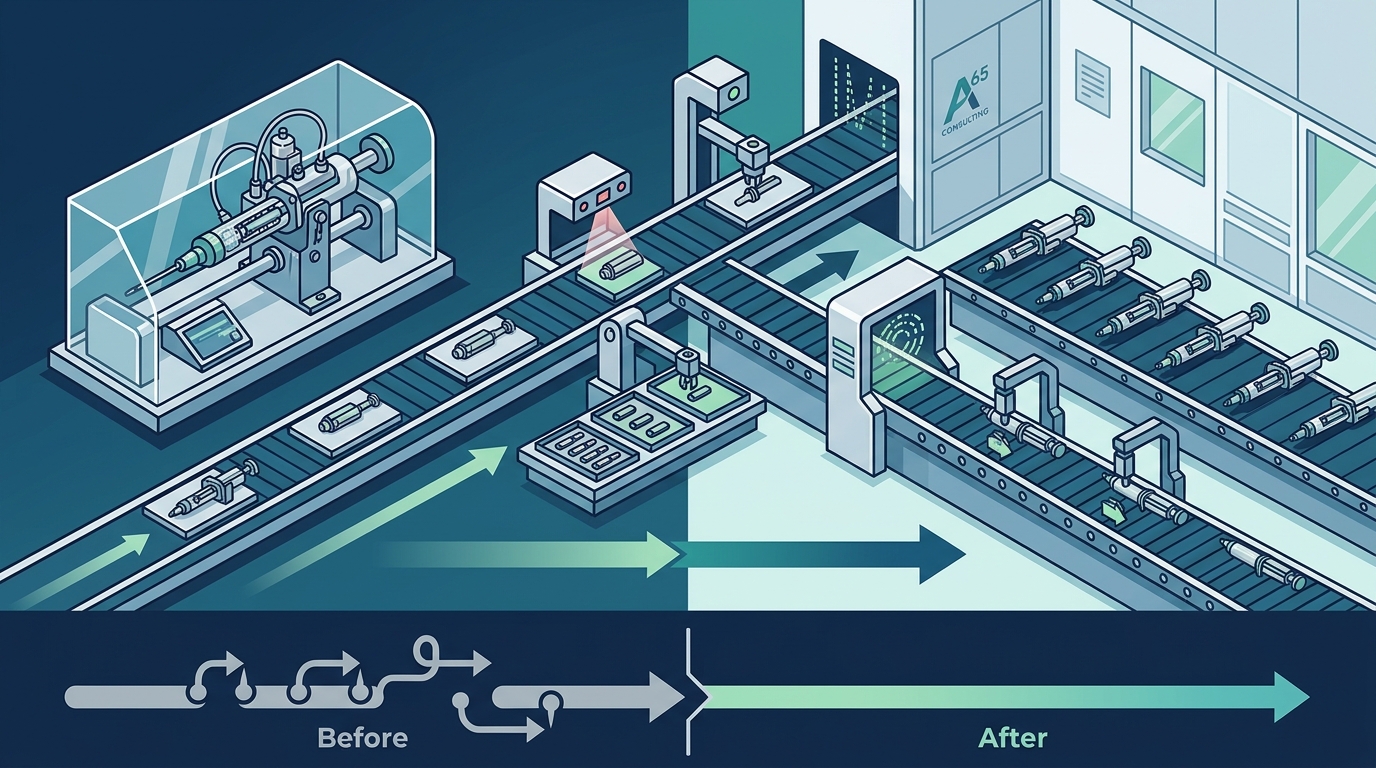
The choice of manufacturing technology and tooling can have a profound impact on the speed of transfer. Using rapid tooling techniques can reduce tooling lead times by up to 50 percent compared to traditional hard tooling methods. For startups, this speed is critical. It allows for faster iteration and testing of production processes without the massive upfront investment of traditional tooling.
Rapid tooling options include soft tooling, silicone molds, and 3D printed molds. These methods are ideal for low-volume production and prototyping, allowing startups to validate their manufacturing processes and gather clinical data while working towards final hard tooling. Once the design is stable and the market demand is confirmed, the startup can transition to hard tooling for high-volume production.
Another key technology is modular manufacturing systems. These systems allow for flexible production lines that can be quickly reconfigured to accommodate different products or changes in volume. For startups, this flexibility is invaluable as they navigate the uncertainties of early-stage growth.
Finally, leveraging cloud-based manufacturing platforms can provide access to a global network of suppliers and manufacturers. This allows startups to find the best partners for their specific needs, whether it is specialized expertise, geographic proximity, or cost efficiency. By diversifying their supplier base, startups can mitigate risks and accelerate the transfer process.
Key Takeaways for Startups
- Early Engagement is Critical: Involve suppliers and manufacturing experts during the design phase to identify constraints and optimize for production.
- DfM Reduces Costs: Integrating Design for Manufacturing principles can reduce production costs by up to 20 percent while improving quality.
- Risk-Based Validation: Focus validation efforts on critical processes to streamline regulatory compliance and reduce time to market.
- Rapid Tooling: Use rapid tooling techniques to reduce lead times by up to 50 percent during the early stages of production.
- Parallel Processing: Align engineering and manufacturing activities to run in parallel, compressing the overall timeline.
- Digital Integration: Leverage digital tools for validation and data management to improve efficiency and accuracy.
- Flexible Manufacturing: Adopt modular manufacturing systems to accommodate changes in volume and product design.
Frequently Asked Questions
What is the biggest challenge in medical device manufacturing transfer?
The biggest challenge is often the gap between design intent and production reality. Startups must bridge this gap by integrating manufacturing expertise early in the design process to ensure the device can be made consistently and efficiently.
How can startups reduce the time to market for their medical devices?
Startups can reduce time to market by engaging suppliers early, using rapid tooling, and implementing parallel processing strategies. These approaches allow for faster iteration and validation, compressing the overall development timeline.
Is Design for Manufacturing (DfM) only for cost reduction?
No, DfM is primarily a quality exercise. It ensures that the product can be manufactured consistently at scale, which is critical for regulatory compliance and patient safety. Cost reduction is a beneficial byproduct of good DfM.
What role does process validation play in manufacturing transfer?
Process validation provides documented evidence that the manufacturing process consistently produces a product meeting its specifications. It is a regulatory requirement that ensures product quality and safety, and a well-planned validation strategy can accelerate the transfer process.
How can startups manage the risks associated with manufacturing transfer?
Startups can manage risks by adopting a risk-based approach to validation, engaging experienced manufacturing partners, and leveraging digital tools for real-time monitoring and data management. This proactive approach helps identify and mitigate issues before they become critical.
What is the benefit of using rapid tooling?
Rapid tooling significantly reduces lead times and costs associated with tooling. It allows startups to validate their manufacturing processes and gather clinical data quickly, providing a flexible path to high-volume production.
Why is early supplier engagement important?
Early supplier engagement allows manufacturers to provide critical feedback on material availability, tooling lead times, and assembly feasibility. This collaboration helps optimize the design for production, reducing the need for costly rework and delays.
Ready to Accelerate Your Medical Device Launch?
Accelerating manufacturing transfer requires more than just technical expertise; it demands a strategic partnership that understands the unique challenges of medical device startups. A65 Consulting specializes in turning device concepts into viable products through expert engineering and rigorous program management. Our team provides the leadership and support needed to navigate complex product development with clarity and confidence.
Whether you need assistance with design for manufacturing, process validation, or overall program management, A65 Consulting is your trusted partner. We integrate seamlessly with your team to help keep your project on time, on budget, and aligned with your product requirements. Contact us today to schedule a discovery call and learn how we can help you achieve your product development objectives.