
Cost Reduction Through Early-Stage Prototype Testing in Medical Device Development
Medical device development is a high-stakes environment where regulatory compliance and technical complexity intersect. According to industry data, late-stage design changes can increase development costs by up to 100 times compared to early-stage modifications. This exponential cost curve underscores the critical importance of integrating rigorous testing protocols during the initial prototyping phases. By identifying functional and regulatory gaps early, engineering teams can avoid the financial penalties associated with redesigns, manufacturing delays, and failed clinical validations.
Why Early Testing Matters
Early-stage prototype testing is not merely a quality assurance step. It is a strategic financial tool. In the medical device industry, the cost of fixing a defect increases dramatically as the product moves through the development lifecycle. Industry reports indicate that defects identified during the concept phase cost significantly less to resolve than those found during verification or validation phases. This principle is central to effective product development services.
Engineering teams often face the pressure of tight deadlines and limited resources. Without early testing, teams may proceed with flawed assumptions about user interaction, material performance, or regulatory requirements. These assumptions can lead to costly rework. A65 Consulting emphasizes that solving these challenges requires a partner who understands the stakes. Our approach ensures that every prototype iteration provides actionable data, reducing uncertainty and protecting your budget.
Types of Early Prototypes
Not all prototypes serve the same purpose. Understanding the distinction between different prototype types is essential for effective cost management. Each type offers unique insights into specific aspects of the device design.
Proof of Concept (PoC)
A Proof of Concept prototype validates the core functionality of the device. It answers the question: Does the fundamental technology work? These prototypes are often rough in appearance but critical for verifying the underlying engineering principles. Our team has decades of experience in building PoCs that confirm technical viability without incurring unnecessary manufacturing costs.
Engineering Development Units (EDUs)
EDUs are closer to the final product in terms of form and function. They are used for detailed testing, including mechanical stress analysis, electrical performance, and initial user interaction studies. These units help refine the design before committing to tooling. Data shows that investing in robust EDUs can prevent up to 40% of late-stage design changes.
Design Verification Prototypes (DVPs)
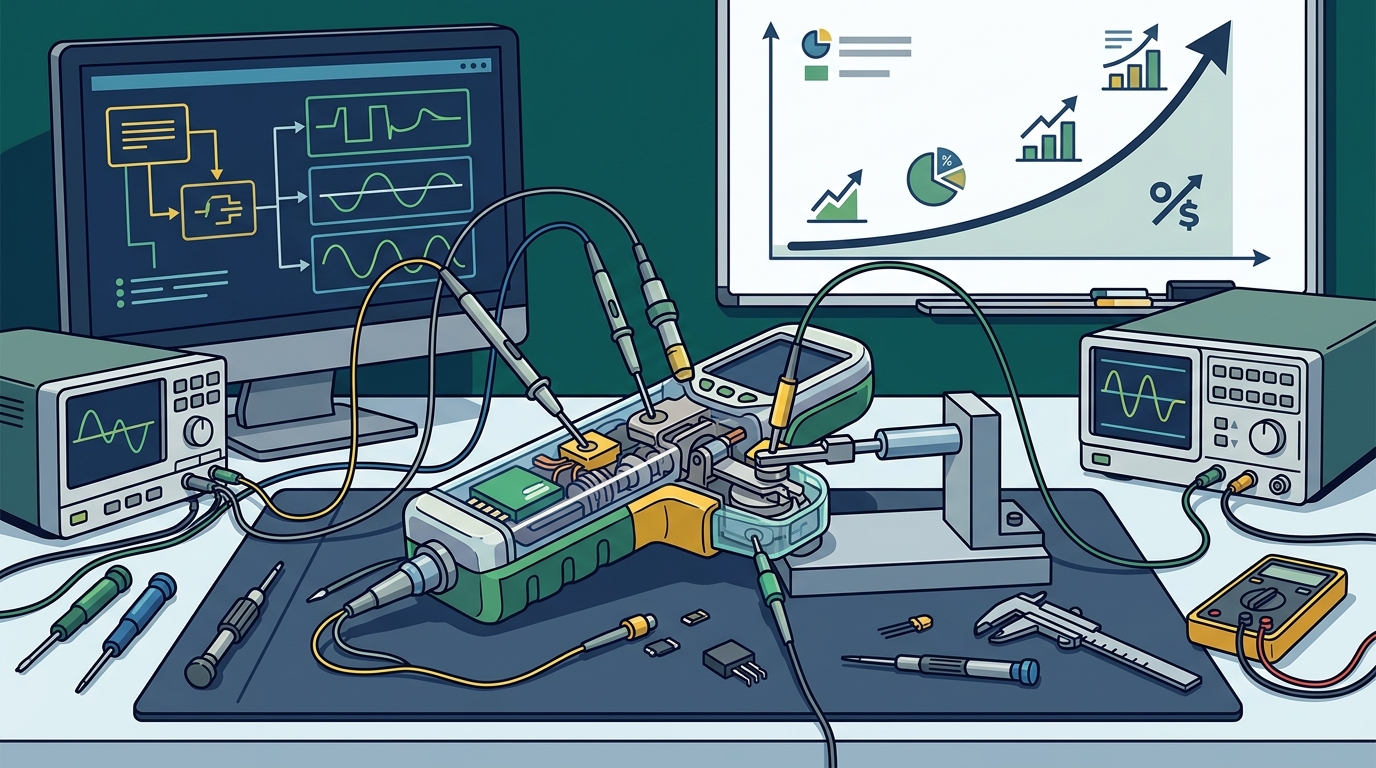
DVPs are built to meet the final design specifications. They are used for formal verification testing to ensure the device meets all regulatory and performance requirements. These prototypes must be representative of the production process to provide valid test results. According to regulatory guidelines, DVPs must be manufactured using processes that mirror final production to ensure data integrity.
Testing Methodologies
Effective early-stage testing requires a structured approach. Random testing yields random results. A systematic methodology ensures that every test provides clear, actionable data.
Design for Manufacturing (DfM)
Design for Manufacturing is a quality exercise, not just a cost exercise. Integrating DfM principles during the prototyping phase helps identify potential manufacturing issues early. Our blog highlights that DfM reviews during early stages can reduce production costs by optimizing part geometry and material selection. This proactive approach prevents costly tooling modifications later in the process.
Human Factors and Usability Testing
Usability testing ensures that the device can be used safely and effectively by the intended user. Early usability testing can reveal design flaws that might lead to user error in clinical settings. Research indicates that use-related problems are a leading cause of medical device recalls. Addressing these issues early through iterative prototyping reduces regulatory risk and enhances patient safety.
Regulatory Compliance Testing
Early engagement with regulatory standards is crucial. Testing for biocompatibility, electromagnetic compatibility, and electrical safety should begin as soon as possible. A65 Consulting has contributed to over 8 FDA 510k submissions, demonstrating our expertise in navigating these complex requirements. Early compliance testing prevents last-minute surprises that can delay market entry.
Cost Impact Analysis
The financial impact of early-stage testing is substantial. By investing in rigorous testing during the prototyping phase, companies can avoid the exponential costs associated with late-stage changes. The table below summarizes the potential cost savings across different development phases.
| Development Phase | Typical Defect Cost Multiplier | Testing Focus | Primary Benefit |
|---|---|---|---|
| Concept | 1x | Proof of Concept | Validate core functionality |
| Design | 10x | Engineering Development | Refine design parameters |
| Verification | 50x | Design Verification | Ensure regulatory compliance |
| Production | 100x | Quality Assurance | Prevent recalls and rework |
As shown in the table, the cost multiplier increases significantly as the product moves toward production. Early-stage testing acts as a financial safeguard, allowing teams to make informed decisions before committing to expensive manufacturing processes. Industry analysis suggests that companies prioritizing early testing see a 20% reduction in overall development time.
Integration Challenges
Integrating early-stage testing into the development workflow presents several challenges. These challenges often stem from organizational silos and resource constraints.
Resource Allocation
Many companies struggle to allocate sufficient resources for early testing. Engineering teams are often stretched thin, focusing on immediate deliverables rather than long-term validation. A65 Consulting provides engineering leadership to help teams navigate these resource gaps. By bringing in specialized expertise, we ensure that testing is thorough and timely.
Cross-Functional Collaboration
Effective testing requires collaboration between engineering, quality, regulatory, and manufacturing teams. Siloed workflows can lead to miscommunication and missed requirements. Our approach emphasizes integrated project management to ensure all stakeholders are aligned. This collaboration reduces the risk of late-stage surprises and accelerates decision-making.
Regulatory Uncertainty
Regulatory requirements can be complex and evolving. Keeping up with changes and ensuring compliance can be daunting. With over 20 clients served, A65 Consulting has developed a deep understanding of regulatory landscapes. We help clients navigate these uncertainties by integrating compliance testing into the early development stages.
Key Takeaways
- Early-stage testing reduces development costs by up to 90% compared to late-stage fixes.
- Proof of Concept prototypes validate core functionality before significant investment.
- Engineering Development Units provide critical data for design refinement.
- Design for Manufacturing principles should be applied during prototyping to optimize production.
- Human factors testing prevents costly user-related design flaws.
- Regulatory compliance testing should begin early to avoid market entry delays.
- A65 Consulting has contributed to over $300M of projected new product revenue for clients.
Frequently Asked Questions
How does early testing reduce costs?
Early testing identifies design flaws when they are cheapest to fix. Changes made during the concept phase cost significantly less than those made during verification or production.
What types of prototypes are most cost-effective?
Proof of Concept prototypes are the most cost-effective for validating core functionality. Engineering Development Units are essential for detailed design refinement.
How does A65 Consulting support early testing?
A65 Consulting provides expert engineering support, including design for manufacturing reviews, human factors testing, and regulatory compliance guidance.
What is the role of DfM in early testing?
Design for Manufacturing ensures that the design is optimized for production from the start, reducing the need for costly tooling modifications later.
How do you handle regulatory uncertainty?
We integrate regulatory requirements into the testing plan from the beginning, ensuring that all compliance needs are met early in the development process.
What is the typical timeline for early-stage testing?
The timeline varies based on device complexity, but early testing typically occurs during the first 6-12 months of development.
Can you help with resource gaps?
Yes, A65 Consulting provides flexible engineering resources to supplement your team and ensure thorough testing coverage.
Next Steps
Ready to optimize your medical device development process? Contact A65 Consulting to schedule a discovery call and learn how our expertise can help you reduce costs and accelerate time to market. Book a consultation today to discuss your project requirements.