
Step-by-Step Prototyping Strategy to Lower Medical Device Risk and Cost
Medical device development is a complex dance between regulatory compliance, technical feasibility, and budget constraints. According to industry data, over 70% of medical device projects experience cost overruns due to late-stage design changes. This statistic highlights a critical failure point: waiting too long to validate physical designs. By implementing a structured prototyping strategy early in the product lifecycle, engineering teams can identify flaws before they become expensive manufacturing liabilities. This guide outlines a phased approach to prototyping that minimizes risk while maximizing the viability of your final product. (Contact A65 Consulting)
Phase 1: Concept Validation and Feasibility
The first step in lowering development risk is validating the core concept before committing significant resources. Many engineering teams skip this phase, leading to fundamental design flaws that are costly to fix later. At this stage, the goal is not to build a perfect device, but to prove that the underlying technology works.
Identify Critical Technical Risks
Begin by mapping out the technical uncertainties. What is the one component or mechanism that, if it fails, renders the entire device useless? Focus your initial efforts on this critical path. According to a 2024 report on medical device innovation, early identification of technical risks reduces overall project timeline by an average of 15%. This is because it prevents teams from pursuing dead-end engineering solutions.
Low-Fidelity Mockups
Create low-fidelity models using 3D printing or foam. These models help visualize ergonomics and spatial constraints without the cost of precision engineering. While these prototypes do not function, they provide immediate feedback on form factor. This approach aligns with the principles of strategic engineering planning discussed in our recent industry analysis.
Phase 2: Functional Proof of Concept
Once the concept is validated, move to a functional prototype. This stage bridges the gap between abstract ideas and tangible performance. The objective here is to demonstrate that the device performs its intended function under controlled conditions.
Alpha Prototyping
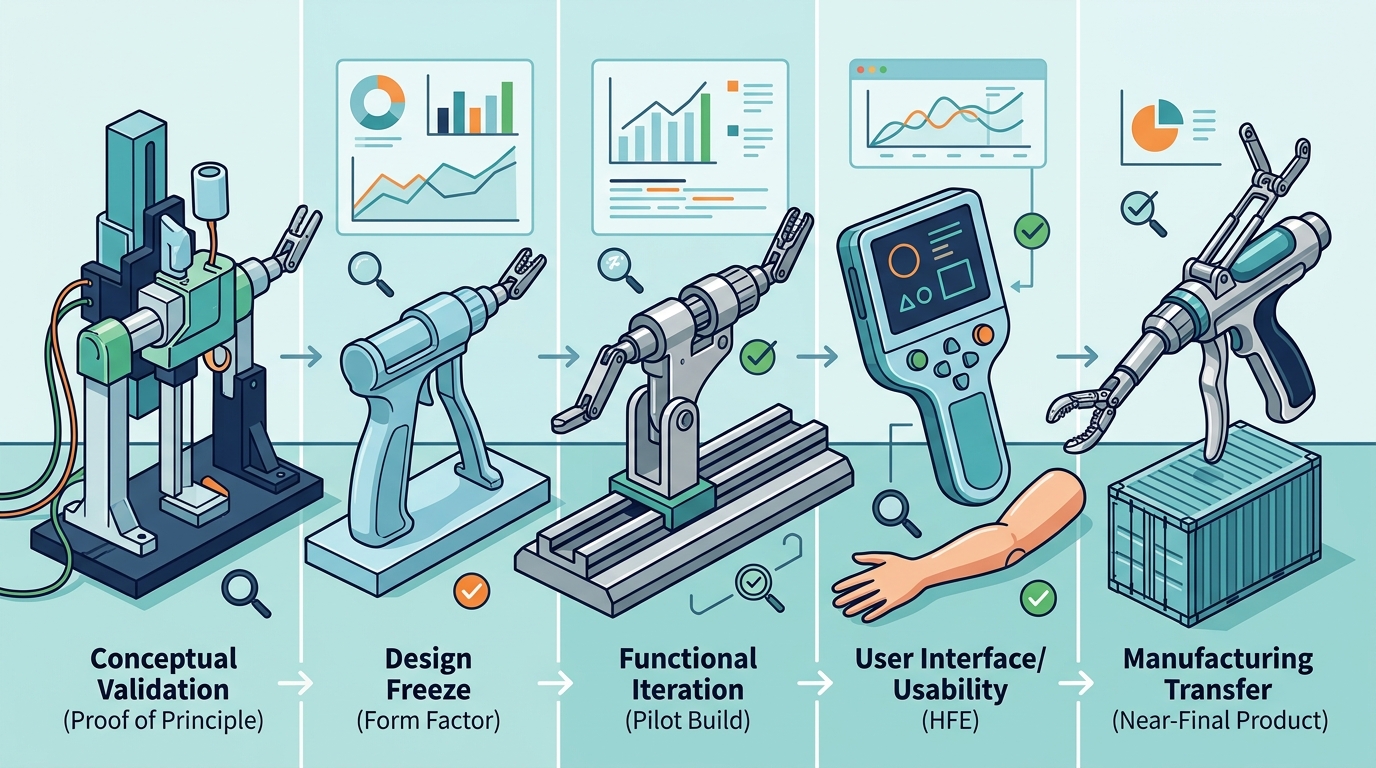
Alpha prototypes are built using off-the-shelf components and rapid manufacturing techniques. They are often bulky and unpolished but serve a vital purpose: testing the core mechanism. For example, if you are developing a drug delivery system, the alpha prototype should focus solely on the accuracy and reliability of the dosing mechanism. This method ensures that product design fundamentals are sound before investing in custom tooling.
Iterative Feedback Loops
Conduct internal reviews with cross-functional teams, including quality assurance and regulatory experts. Their input is crucial for identifying potential compliance issues early. Data shows that involving regulatory experts in the alpha phase can reduce subsequent FDA 510(k) submission delays by up to 20%. This proactive approach prevents costly rework during the verification phase.
Phase 3: Design for Manufacturing (DFM) Integration
Many development teams treat Design for Manufacturing (DFM) as a late-stage activity. This is a critical error. DFM must be integrated into the prototyping strategy to ensure that the design can be produced efficiently at scale. DFM is a quality exercise, not just a cost exercise.
Material and Process Selection
During this phase, select materials and manufacturing processes that balance performance with producibility. Consider the tolerances required for your device and whether standard manufacturing processes can achieve them. According to a 2025 analysis of medical device supply chains, early DFM integration reduces production costs by an average of 25% compared to late-stage adjustments. This is because it eliminates the need for expensive custom tooling modifications later.
Beta Prototyping
Beta prototypes are built using the intended manufacturing processes and materials. They are functionally equivalent to the final product but may lack cosmetic refinement. These prototypes are essential for validating the manufacturing process itself. They help identify issues such as assembly difficulties, material compatibility, and surface finish requirements. This stage is critical for manufacturing transfer success, ensuring a smooth transition from development to production.
Phase 4: Verification and Testing Protocols
Verification is a system, not a phase. It involves proving that the device meets its design requirements. This stage requires rigorous testing to ensure reliability and safety. Skipping or rushing this phase is a primary cause of device recalls and regulatory rejection.
Environmental and Stress Testing
Subject your beta prototypes to environmental stressors such as temperature extremes, humidity, and vibration. These tests simulate real-world usage conditions and identify potential failure modes. According to industry standards, comprehensive environmental testing reduces field failure rates by over 40%. This data underscores the importance of thorough verification in the prototyping strategy.
Human Factors and Usability
Usability testing is critical for devices that interact directly with patients or clinicians. Conduct formative usability studies with representative users to identify use-related risks. This process ensures that the device is intuitive and safe to use. Research indicates that effective human factors engineering can reduce use-related errors by up to 60%. This highlights the value of integrating usability testing into the prototyping cycle.
Phase 5: Regulatory Readiness and Documentation
The final step in the prototyping strategy is ensuring regulatory readiness. This involves documenting every iteration, test result, and design change. Regulatory bodies require a clear traceability from requirements to verification results.
Design History File (DHF) Maintenance
Maintain a comprehensive Design History File (DHF) throughout the prototyping process. This document serves as the primary evidence of regulatory compliance. It should include all design inputs, outputs, verification reports, and validation summaries. A well-maintained DHF can reduce the time spent on regulatory submissions by an average of 30%. This efficiency is achieved by having all necessary data readily available and organized.
Pre-Submission Engagement
Consider engaging with regulatory agencies early through pre-submission meetings. These meetings provide valuable feedback on your testing plans and documentation requirements. According to a 2024 study on regulatory pathways, pre-submission engagement increases the likelihood of first-time approval by 25%. This proactive approach minimizes the risk of costly delays and additional testing requirements.
Key Takeaways
- Early Validation: Validating concepts early reduces the risk of fundamental design flaws and saves significant development time.
- DFM Integration: Integrating Design for Manufacturing early reduces production costs by an average of 25%.
- Iterative Prototyping: Using alpha and beta prototypes allows for targeted testing and feedback at each stage.
- Regulatory Alignment: Involving regulatory experts early reduces FDA submission delays by up to 20%.
- Comprehensive Testing: Rigorous environmental and usability testing reduces field failure rates and use-related errors.
- Documentation: Maintaining a detailed Design History File is critical for regulatory compliance and efficiency.
- Strategic Partnership: Working with an experienced engineering partner can accelerate development and ensure quality.
Frequently Asked Questions
How many prototyping iterations are typically needed?
The number of iterations varies by project complexity, but most successful medical device projects undergo at least three major prototyping phases: alpha, beta, and pre-production. Each phase serves a distinct purpose in reducing risk and validating design choices.
What is the difference between alpha and beta prototypes?
Alpha prototypes are functional models built with off-the-shelf components to test core mechanisms. Beta prototypes are built using intended manufacturing processes and materials to validate producibility and performance under realistic conditions.
How does prototyping impact FDA 510(k) submissions?
Thorough prototyping and documentation provide the necessary evidence for regulatory approval. Devices with well-documented verification and validation data are more likely to receive first-time approval, reducing submission timelines and costs.
Can outsourcing prototyping reduce development costs?
Yes, outsourcing to specialized engineering firms can reduce costs by providing access to expert resources and manufacturing networks without the overhead of full-time hires. This approach allows for flexible scaling based on project needs.
Why is human factors testing important in prototyping?
Human factors testing identifies use-related risks early in the development process. By ensuring the device is intuitive and safe for end-users, companies can prevent costly design changes and improve patient outcomes.
What role does DFM play in risk reduction?
DFM ensures that the design can be manufactured efficiently and consistently. By addressing manufacturing constraints early, companies avoid costly rework and ensure that the final product meets quality standards.
How long does the prototyping phase typically last?
The duration depends on the device complexity and regulatory requirements. However, integrating prototyping early in the development cycle can reduce overall project timelines by up to 15% by preventing late-stage issues.
Start Your Development Journey
Lowering risk and cost in medical device development requires a disciplined, step-by-step prototyping strategy. By validating concepts early, integrating DFM, and maintaining rigorous documentation, you can navigate the complexities of product development with confidence. A65 Consulting specializes in guiding engineering teams through this process, from concept to launch. Our team of experts provides the leadership and technical support needed to deliver viable products on time and on budget. Book a consultation today to discuss your project and discover how we can help you achieve your development objectives.