
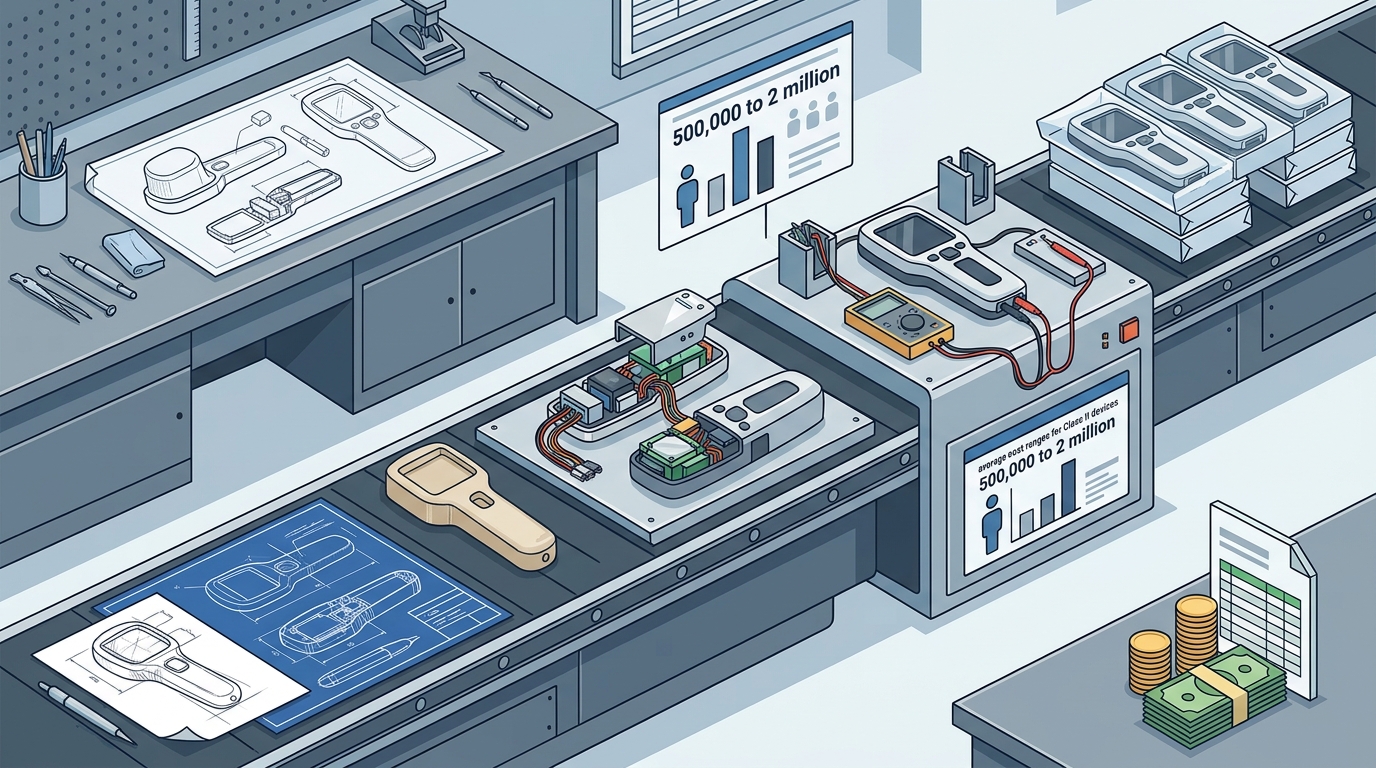
Engineering a viable medical device from concept to launch is a capital-intensive endeavor that demands precise financial planning. According to industry benchmarks, the average cost to develop a Class II medical device ranges from $500,000 to $2 million, depending on complexity and regulatory pathways. This figure excludes long-term manufacturing costs but includes the critical engineering phases that determine product viability. Understanding these financial drivers is essential for founders and corporate innovation leads who must balance technical ambition with fiscal reality. (Blog A65 Consulting)
Key Cost Drivers in Medical Device Engineering
The total cost of turnkey medical device product development is not a static number. It fluctuates based on the regulatory class, the complexity of the hardware, and the depth of software integration. Regulatory complexity is the primary multiplier of cost. A Class I device with minimal risk requires a fraction of the documentation and testing budget compared to a Class III implantable device.
Another significant driver is the state of the initial concept. If you are starting with a rough idea, the early phases of research and conceptualization require substantial engineering hours. Conversely, if you have a fully defined specification, the project moves faster into the design and prototyping stages. At A65 Consulting, we observe that clients with well-defined requirements often see a 20% reduction in overall development time because the engineering team can focus on execution rather than discovery.
Material selection and manufacturing transfer also play pivotal roles. Devices requiring specialized biocompatible materials or custom tooling will incur higher upfront costs. However, these investments are often justified by long-term manufacturing efficiency. Design for Manufacturing (DFM) is a quality exercise, not just a cost exercise. Integrating DFM early in the process prevents expensive redesigns later in the supply chain.
Breakdown by Development Phase
To understand the total investment, you must break down the costs by the specific phases of the product life cycle. Each phase has distinct deliverables and resource requirements.
1. Concept and Feasibility
This initial stage involves defining the problem, identifying the user, and assessing technical feasibility. Costs here are relatively low but critical for de-risking the project. This phase typically includes market analysis, preliminary technical assessments, and initial risk management planning. Skipping this phase often leads to costly pivots later in the development cycle.
2. Design and Prototyping
The design phase is the most resource-intensive part of the engineering lifecycle. It includes industrial design, mechanical engineering, electrical engineering, and software development. Prototyping costs vary wildly based on the method used. 3D printed prototypes are inexpensive for form and fit checks, but functional prototypes requiring injection-molded parts or custom PCBs can cost tens of thousands of dollars per unit.
During this phase, engineering teams also begin the formal verification process. Verification is a system, not a phase, meaning testing activities start early to ensure the design meets requirements. This iterative process of design, test, and refine is where the bulk of the engineering budget is consumed.
3. Regulatory and Quality Assurance
Regulatory compliance is non-negotiable in medical device development. Costs include quality management system setup, design history file (DHF) creation, and regulatory submission fees. For FDA 510(k) submissions, the preparation of technical documentation can account for 15-20% of the total engineering budget. A65 Consulting has contributed to more than 8 FDA 510k submissions, demonstrating our ability to navigate these complex regulatory landscapes efficiently.
4. Manufacturing Transfer
Transitioning from engineering prototypes to production-ready devices requires rigorous process validation. This phase includes Design Verification Testing (DVT), Design Validation Testing (DVT), and production validation. The cost here includes tooling, process qualification, and initial production runs. Products developed by our team have contributed to more than $300M of projected new product revenue, highlighting the value of a smooth manufacturing transition.
Pricing Models: Retainer vs. Fixed Fee
When engaging an engineering partner, you will typically encounter two primary pricing structures. Understanding the pros and cons of each is vital for budget management.
| Pricing Model | Description | Best For | Risk Profile |
|---|---|---|---|
| Monthly Retainer | Pay for dedicated engineering hours and expertise on a recurring basis. | Projects with evolving requirements or long-term development needs. | Client bears the risk of scope creep; high flexibility. |
| Fixed Fee / Milestone | Agreed upon price for specific deliverables or phases. | Well-defined projects with clear specifications and timelines. | Partner bears the risk of execution; lower flexibility. |
| Hybrid Model | Combines retainer for core team with fixed fees for specific milestones. | Complex devices requiring both ongoing support and defined deliverables. | Balanced risk; requires strong project management. |
At A65 Consulting, we typically charge on a monthly retainer basis and work toward mutually agreed upon project milestones. This model allows for the flexibility needed in medical device development, where requirements often evolve as testing reveals new insights. It also ensures that you have access to a dedicated team of experts without the overhead of full-time hires.
Hidden Costs and Risk Mitigation
Beyond direct engineering fees, several hidden costs can impact your budget. These include regulatory submission fees, clinical trial costs (if required), and post-market surveillance obligations. Executive dashboards rarely show real risk because they often focus on schedule and budget adherence rather than technical debt or regulatory hurdles.
Another significant hidden cost is the opportunity cost of delayed time-to-market. In the medical device industry, being first to market can capture significant market share. Delays caused by poor engineering planning or regulatory missteps can cost millions in lost revenue. According to data from the U.S. Food and Drug Administration, the average time to market for a Class II device is approximately 180 days, but complex devices can take significantly longer. Efficient engineering partners help mitigate these delays.
Additionally, intellectual property costs should not be overlooked. Filing for patents to protect your device design can cost between $10,000 and $30,000 per application. Designs created by our team have generated more than 10 new patent applications, underscoring the importance of protecting your innovation from the outset.
Strategies to Optimize Development Spend
Optimizing your development budget does not mean cutting corners on quality. It means making strategic decisions that maximize value. Here are three key strategies:
- Early Engagement of Manufacturing Experts: Involve manufacturing engineers early in the design process. This approach, known as Concurrent Engineering, helps identify potential production issues before they become costly redesigns. Design for Manufacturing is a quality exercise, not a cost exercise, as it ensures the product can be built consistently and reliably.
- Leverage Off-the-Shelf Components: Where possible, use commercial off-the-shelf (COTS) components rather than custom designs. This reduces development time, testing requirements, and supply chain complexity. However, ensure that COTS components meet all regulatory and performance requirements.
- Phased Development Approach: Break the project into manageable phases with clear go/no-go decision points. This allows you to validate assumptions and adjust the budget before committing to the next phase. It also provides investors with clear milestones and progress updates.
Partnering with an experienced engineering firm can also optimize costs. A65 Consulting has a track record of 90% on-time completion of mission-critical projects. This reliability ensures that your development stays on schedule, avoiding the financial penalties associated with delays.
Key Takeaways
- The average cost to develop a Class II medical device ranges from $500,000 to $2 million, excluding manufacturing.
- Regulatory complexity is the primary driver of cost, with Class III devices requiring significantly more resources.
- Monthly retainer models offer flexibility for evolving requirements, while fixed fees provide budget certainty for well-defined scopes.
- Early integration of Design for Manufacturing (DFM) reduces long-term costs and improves product quality.
- A65 Consulting has served more than 20 clients and contributed to over $300M in projected new product revenue.
- Intellectual property protection is critical, with patent applications costing $10,000 to $30,000 each.
- Partnering with an experienced engineering firm can improve on-time completion rates and reduce regulatory risks.
Frequently Asked Questions
How much does it cost to develop a simple medical device?
A simple Class I or low-risk Class II device can cost between $100,000 and $300,000 to develop. This includes basic engineering, prototyping, and regulatory documentation. However, costs can escalate quickly if custom components or complex software are required.
What is the difference between a retainer and a fixed-fee contract?
A retainer contract charges for time and expertise on a monthly basis, offering flexibility for projects with evolving requirements. A fixed-fee contract charges a set price for specific deliverables, providing budget certainty but less flexibility. A65 Consulting typically charges on a monthly retainer basis to accommodate the dynamic nature of medical device development.
How long does the development process take?
The timeline varies significantly based on device complexity. A simple device may take 6-12 months, while a complex Class III device can take 2-5 years. Our team has decades of medical device development experience and strives to keep programs moving forward efficiently.
Do I need to hire a full-time engineering team?
No. Engaging a specialized engineering partner like A65 Consulting allows you to access expert resources without the cost and commitment of full-time headcount. This model provides scalability and specialized expertise on demand.
What are the hidden costs of medical device development?
Hidden costs include regulatory submission fees, clinical trial expenses, intellectual property filings, and post-market surveillance. Executive dashboards rarely show real risk, so it is crucial to budget for these contingencies from the start.
How does A65 Consulting ensure quality?
We integrate rigorous quality management systems into every phase of development. Our team has contributed to more than 8 FDA 510k submissions and maintains a 90% on-time completion rate for mission-critical projects.
Can I start with a prototype before full development?
Yes. Starting with a proof-of-concept prototype is a common strategy to validate technical feasibility and secure funding. This approach minimizes risk and allows for iterative feedback before committing to full-scale development.
Start Your Development Journey
Turning your medical device concept into a viable product requires a partner who understands both the engineering challenges and the financial implications. Contact A65 Consulting today to schedule a discovery call. We will help you define a realistic budget, timeline, and development strategy that aligns with your goals. Let us help you navigate the complex dance of product development with clarity and confidence.