
Where to Find a Medical Device Product Development Firm in Colorado for Surgical Instrument Design
Colorado has emerged as a critical hub for advanced medical device engineering, particularly for firms specializing in complex surgical instruments. According to recent industry analyses, the state's proximity to major research hospitals and its concentration of specialized engineering talent have made it a preferred location for companies seeking to bridge the gap between conceptual design and regulatory compliance. For founders and product managers, locating a partner that understands both the technical nuances of surgical tools and the rigorous demands of FDA 510(k) submissions is essential for success. (Contact A65 Consulting)
Understanding the Colorado Medical Device Ecosystem
The landscape of medical device development in Colorado is defined by a unique convergence of academic research, clinical innovation, and engineering precision. Medical device product development is the systematic process of transforming a clinical need into a viable, regulated product. This process requires more than just mechanical engineering; it demands a deep understanding of human factors, materials science, and manufacturing scalability.
Colorado's engineering firms often operate as premium partners, focusing on high-complexity devices rather than mass-market consumer electronics. This specialization ensures that surgical instrument designers receive attention from engineers who have navigated the complexities of Class II and Class III device regulations. The state's regulatory environment, while aligned with federal FDA standards, benefits from a local network of quality assurance experts who understand the specific documentation requirements for surgical tools.
When searching for a firm in this region, it is crucial to look for organizations that emphasize viable product expertise. This term refers to the ability to not only design a device but to ensure it can be manufactured reliably, tested effectively, and brought to market within a realistic timeline. Firms that lack this holistic view often deliver designs that are difficult to produce or fail to meet clinical usability standards.
Key Criteria for Selecting a Surgical Instrument Partner
Selecting the right engineering partner for surgical instruments requires evaluating several high-signal factors. Surgical tools operate under extreme physical stress and require precise tolerances. Therefore, the firm must demonstrate robust capabilities in Design for Manufacturing (DFM). DFM is a method of designing products that are easy and cost-effective to manufacture. Without early DFM integration, surgical instruments often face costly redesigns during the prototyping phase.
Another critical criterion is the firm's experience with human factors and usability. Human factors is the scientific discipline concerned with the understanding of interactions among humans and other elements of a system. For surgical instruments, this means the device must be intuitive for surgeons to use under high-pressure conditions. A firm that prioritizes usability testing can prevent use-related errors that might lead to regulatory rejection or clinical complications.
Finally, consider the firm's track record with program management. Program management is the application of knowledge, skills, tools, and techniques to project activities to meet project requirements. In medical device development, this translates to rigorous milestone tracking, risk mitigation, and transparent communication. Look for partners who thrive in the stress of tight deadlines and can provide leadership support when internal teams are overwhelmed.
The Engineering Phase: From Concept to DFM
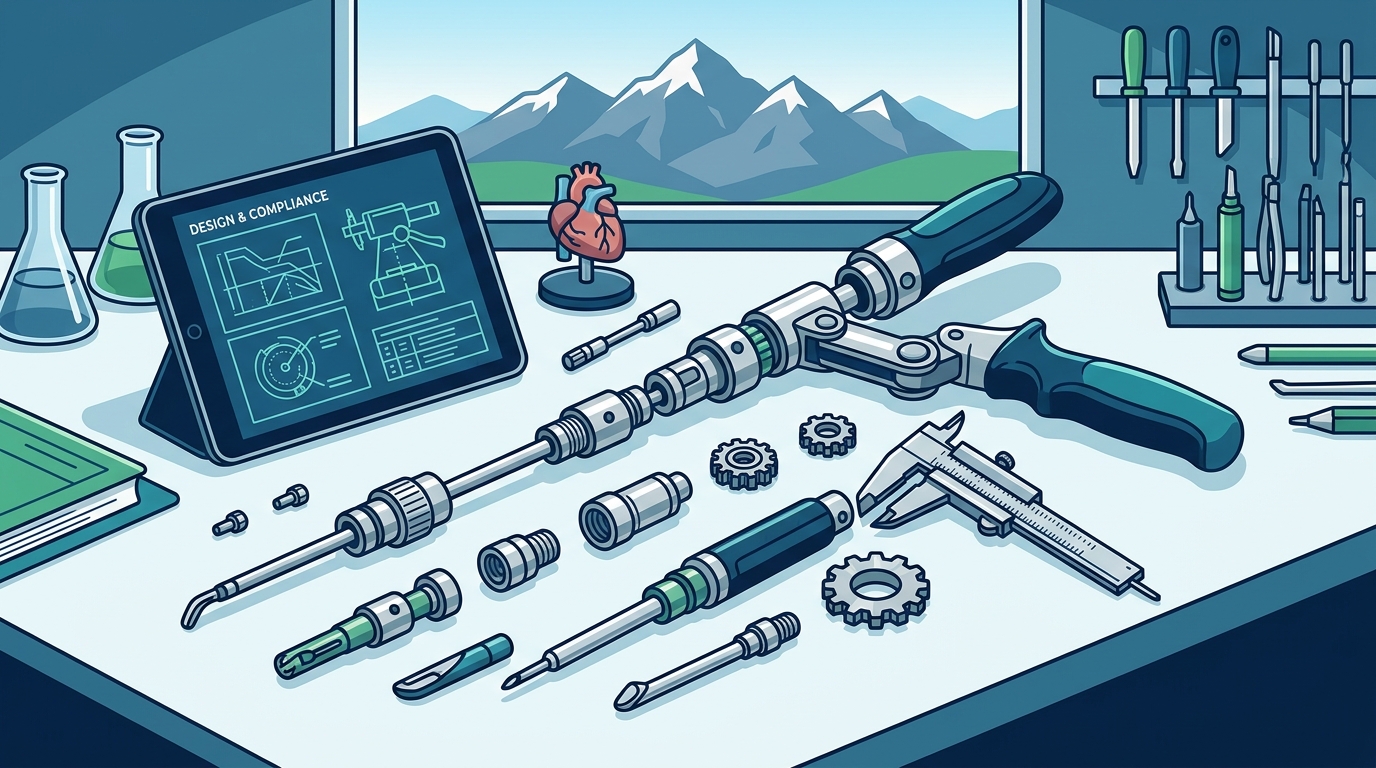
The journey from concept to a manufacturable surgical instrument involves several distinct engineering phases. The first phase is product design, where precision engineering support is provided for complex mechanisms. This includes mechanical design, material selection, and initial prototyping. For surgical instruments, materials such as stainless steel, titanium, or specialized polymers must be chosen based on sterilization requirements and mechanical strength.
The second phase is manufacturing support. This spans process development, DFM reviews, and seamless production transition. During this stage, the engineering firm works closely with contract manufacturers to ensure that the design can be produced at scale. This includes creating detailed drawings, specifying tolerances, and defining inspection criteria. A firm with strong manufacturing expertise can identify potential production bottlenecks early, saving months of development time.
The third phase is verification and validation. Verification is the process of ensuring that the design outputs meet the design inputs. Validation is the process of ensuring that the device meets the user's needs and intended uses. For surgical instruments, this often involves rigorous mechanical testing, biocompatibility studies, and clinical evaluations. A robust verification plan is not just a phase but a continuous system that runs parallel to development.
Regulatory Compliance and Risk Management
Regulatory compliance is a non-negotiable aspect of medical device development. In the United States, the FDA regulates medical devices through the 510(k) submission process. This process requires demonstrating that a new device is substantially equivalent to a legally marketed predicate device. For surgical instruments, this often involves detailed technical files, biocompatibility data, and clinical evaluation reports.
Risk management is another critical component. Risk management is the systematic application of management policies, procedures, and practices to the tasks of analyzing, evaluating, and controlling risk. For surgical instruments, this includes hazard analysis, risk-benefit assessment, and risk control measures. A firm that integrates risk management into the design process can identify potential failures early and implement mitigations that do not compromise device performance.
Colorado-based firms often have extensive experience with FDA submissions. According to industry data, firms with a proven track record in regulatory strategy can significantly reduce the time to market. This is because they understand the nuances of FDA feedback and can anticipate questions before they arise. When evaluating a firm, ask about their history with 510(k) submissions and their success rate in achieving clearance.
Comparison of Engagement Models
Medical device firms typically offer different engagement models to suit the needs of their clients. Understanding these models is essential for budgeting and planning. The following table compares common engagement structures.
| Engagement Model | Description | Best For | Pros | Cons |
|---|---|---|---|---|
| Monthly Retainer | Fixed monthly fee for ongoing engineering support and project management. | Long-term development programs requiring flexible resource allocation. | Predictable costs, immediate access to expertise. | Less defined scope for specific deliverables. |
| Fixed-Price Milestones | Project divided into phases with fixed costs for each milestone. | Well-defined projects with clear requirements. | Budget certainty, clear deliverables. | Less flexibility for scope changes. |
| Time and Materials | Billing based on actual hours worked by engineers. | Early-stage research or highly uncertain development phases. | Maximum flexibility, pay only for work done. | Costs can escalate if scope is not managed. |
| Consulting Leadership | Senior engineers provide strategic guidance and team augmentation. | Teams needing specialized expertise or leadership support. | High-level strategic insight, knowledge transfer. | Does not include full execution of design tasks. |
For surgical instrument design, a hybrid approach is often most effective. This might involve a monthly retainer for core engineering support combined with fixed-price milestones for specific deliverables like DFM reviews or regulatory submissions. This model balances flexibility with cost control.
Key Takeaways
- Colorado's Strategic Advantage: The state offers a dense network of specialized engineering talent and proximity to clinical research centers, making it ideal for complex device development.
- DFM is Critical: Design for Manufacturing must be integrated early to avoid costly redesigns and ensure surgical instruments can be produced at scale.
- Regulatory Experience: Firms with a history of successful FDA 510(k) submissions can significantly accelerate time to market.
- Human Factors: Usability testing is essential for surgical instruments to prevent use-related errors in the clinical environment.
- Engagement Flexibility: Monthly retainers and milestone-based contracts offer different benefits depending on project certainty and resource needs.
- Risk Management: Integrating risk analysis into the design process prevents design failures and ensures patient safety.
- Partner Selection: Look for firms that emphasize viable product expertise and have a track record of delivering results on time and on budget.
Frequently Asked Questions
How do I verify a firm's experience with surgical instruments?
Ask for case studies or references from previous clients who have developed similar devices. Look for specific examples of mechanical complexity, material selection, and regulatory success. A firm with decades of experience in medical device development will have a robust portfolio of relevant projects.
What is the typical timeline for developing a surgical instrument?
Timelines vary based on complexity, but a typical development cycle ranges from 18 to 36 months. This includes concept design, prototyping, verification, validation, and regulatory submission. Early engagement with an engineering partner can help compress this timeline by identifying risks sooner.
Does the firm handle FDA submissions?
Many premium engineering firms provide regulatory strategy support and documentation preparation for FDA submissions. However, the ultimate responsibility for submission lies with the sponsor. Ensure your partner has a clear understanding of 510(k) requirements and can provide technical data that meets FDA standards.
How are engineering firms in Colorado priced?
Pricing models typically include monthly retainers, fixed-price milestones, or time and materials. Retainers are common for ongoing support, while fixed-price is used for well-defined phases. Rates reflect the seniority of the engineers and the complexity of the work.
Can a firm help with manufacturing transfer?
Yes, manufacturing transfer is a critical service. This includes process development, DFM reviews, and production validation. A firm with strong manufacturing expertise can ensure a smooth transition from prototype to mass production, minimizing defects and costs.
What is the role of human factors in surgical instrument design?
Human factors ensure that the device is safe and effective for the user. This involves usability testing with surgeons to identify potential use errors and improve ergonomics. Ignoring human factors can lead to regulatory rejection or clinical failures.
Why is risk management important in device design?
Risk management identifies potential hazards and implements controls to mitigate them. This is required by regulatory bodies and is essential for patient safety. A proactive risk management approach prevents design changes late in the development cycle.
Next Steps
Choosing the right engineering partner is a pivotal decision for your medical device project. A65 Consulting offers premium engineering support tailored to the unique challenges of surgical instrument design. Our team brings decades of experience in product development, regulatory strategy, and manufacturing transfer. We thrive on solving complex engineering challenges and delivering viable products that meet clinical needs.
Ready to move your device from concept to reality? Book a consultation with our team to discuss your project requirements and explore how we can help you achieve your product development objectives. Visit our services page to learn more about our expertise across every phase of development.