
Accelerating Medical Device Manufacturing Transfer: A Strategic Guide for Startups
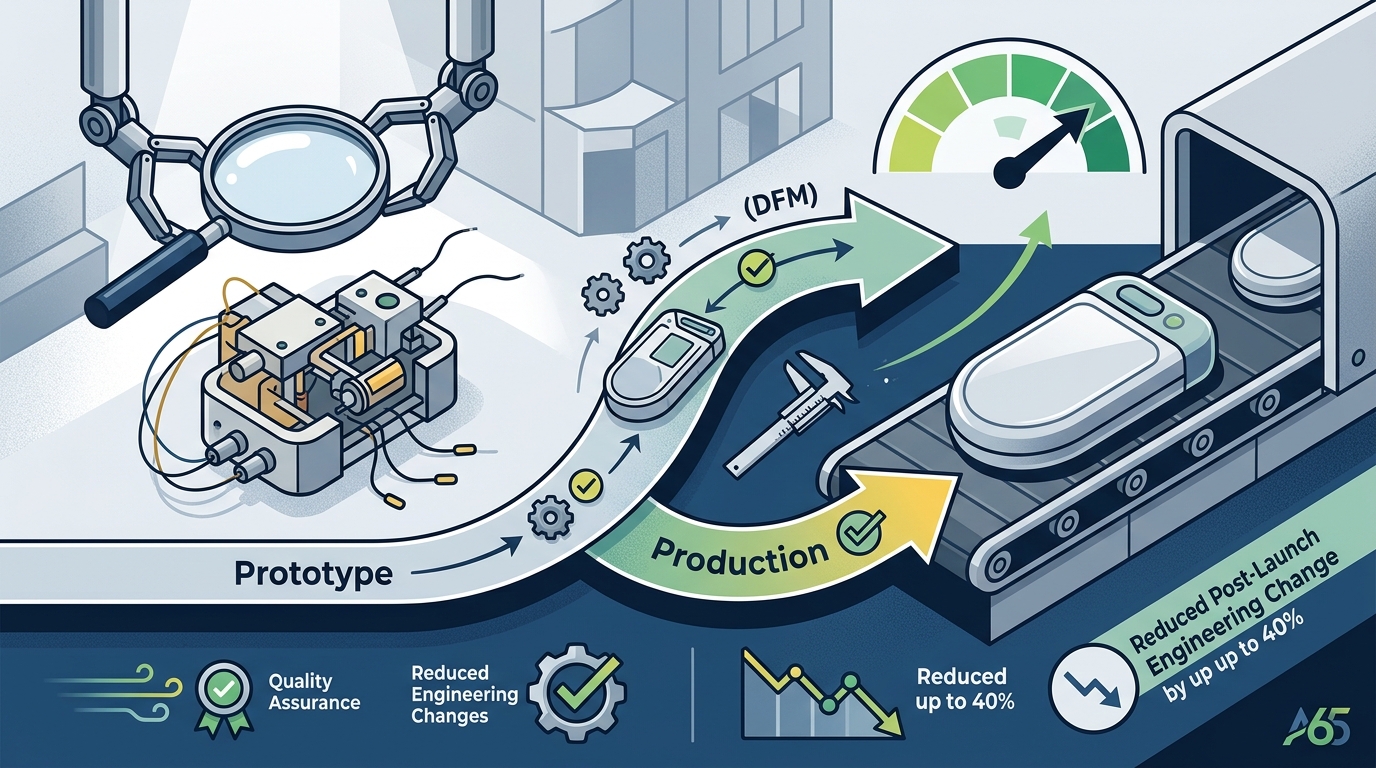
Manufacturing transfer is the critical bridge between a functional prototype and a commercially viable medical device. For startups, this phase is often where cash flow bleeds out and timelines collapse. Design for Manufacturing (DFM) is not merely a cost-reduction exercise but a fundamental quality assurance strategy that must begin during the conceptualization phase. According to industry benchmarks, startups that integrate DFM early in the product life cycle reduce post-launch engineering change orders by up to 40 percent. This guide details how to navigate the complex dance of regulatory compliance, technical complexity, and resource constraints to deliver results that exceed expectations. (Contact A65 Consulting)
Understanding the Manufacturing Transfer Process
Manufacturing transfer involves moving the production of a medical device from the development lab to a manufacturing environment, whether that is an internal cleanroom or an external contract manufacturer. This process requires rigorous documentation, process validation, and quality system adherence. The goal is to ensure that every unit produced meets the exact specifications defined in the design history file.
Startups often underestimate the complexity of this transition. The gap between a lab-built prototype and a mass-produced device is vast. Factors such as material consistency, tooling tolerances, and assembly ergonomics play a decisive role in final product performance. A65 Consulting specializes in bridging this gap by providing engineering leadership and expert support to help teams navigate complex product development with clarity and confidence.
The transfer process typically spans several months. During this time, the engineering team must work alongside the manufacturing team to resolve technical challenges. This collaboration ensures that the design is not only functional but also manufacturable at scale. The result is a smoother transition to production and a faster time to market.
Design for Manufacturing as a Quality Exercise
Many development leaders mistakenly view Design for Manufacturing (DFM) as a late-stage cost-cutting activity. This approach is flawed. Design for Manufacturing is a quality exercise that must be integrated into the early stages of product development. When DFM is treated as an afterthought, teams often discover critical design flaws only after tooling has been commissioned, leading to expensive rework and delays.
Effective DFM involves analyzing the design for manufacturability before finalizing the engineering drawings. This includes evaluating the complexity of assembly, the availability of raw materials, and the capabilities of the manufacturing equipment. By addressing these factors early, startups can avoid the common pitfall of designing a product that is difficult or impossible to produce reliably.
At A65 Consulting, we emphasize that DFM is about creating a robust process, not just a cheap product. This mindset shift is crucial for startups aiming to build a sustainable business. Our team conducts thorough DFM reviews to identify potential issues and propose design modifications that enhance both quality and efficiency. This proactive approach ensures that the product is ready for seamless production transition.
Verification as a System, Not a Phase
Verification is often misunderstood as a final checkpoint before release. In reality, verification is a system that must be planned and executed throughout the development lifecycle. Treating verification as a single phase near the end of the program leads to undervalued testing and increased risk of failure.
A robust verification plan defines the criteria for accepting each design requirement. It includes detailed test protocols, acceptance criteria, and traceability matrices linking requirements to test results. When verification is treated as a system, teams can identify and resolve issues early, reducing the likelihood of late-stage failures.
For startups, this systemic approach is vital for managing tight deadlines and limited resources. By integrating verification into the daily workflow, teams can maintain momentum and ensure that the product meets all regulatory and performance standards. A65 Consulting provides rigorous program management to support this process, ensuring that verification activities are aligned with project milestones and budget constraints.
Risk Management and Regulatory Alignment
Risk management is a core component of medical device development. Risk analysis is one of the most formalized engineering activities in regulated product development. It involves identifying potential hazards, estimating the associated risks, and implementing mitigation strategies. This process is critical for ensuring patient safety and regulatory compliance.
Many risk analyses fail to change the design because they are treated as a documentation exercise rather than a design tool. Effective risk management requires continuous engagement with the design team. Hazard analyses must be updated as the design evolves, and risk matrices must be populated with accurate data. This dynamic approach ensures that risk mitigation strategies are integrated into the product design.
Regulatory submissions, such as FDA 510(k) applications, rely heavily on the quality of the risk management file. A65 Consulting has contributed to more than 8 FDA 510k submissions, demonstrating our expertise in aligning risk management with regulatory requirements. Our team works closely with quality groups to ensure that all risk documentation is complete and accurate, facilitating a smoother regulatory review process.
Choosing the Right Engineering Partner
For startups, deciding whether to build an internal engineering team or outsource to a partner is a critical strategic decision. Outsourcing can accelerate development by providing immediate access to specialized expertise and scalable resources. However, it requires careful management to ensure alignment with the startup's vision and timeline.
When evaluating potential partners, startups should look for firms with a proven track record in medical device engineering. Key factors include the partner's experience with similar devices, their understanding of regulatory requirements, and their ability to integrate seamlessly with the startup's team. A65 Consulting offers a network of engineers with the right discipline experience to expand resources as needed, providing flexibility without the cost of full-time headcount.
Our approach is built on trust and transparency. We provide engineering leadership and expert support to help teams navigate complex product development. Whether you need assistance with a new product concept or require additional engineering resources, we have the expertise to deliver solutions that meet your unique requirements. Learn more about our team and our commitment to delivering results.
Key Takeaways
- DFM is Quality First: Design for Manufacturing must be treated as a quality exercise from the start, not a cost-cutting measure at the end.
- Verification is Continuous: Treat verification as a system integrated throughout development, not a final phase.
- Risk Drives Design: Effective risk analysis must actively influence design decisions to ensure safety and compliance.
- Partner Selection Matters: Choose an engineering partner with deep regulatory experience and a proven track record.
- Scalability is Key: Leverage external engineering networks to scale resources without the burden of full-time hiring.
- Documentation is Critical: Maintain rigorous documentation for regulatory submissions and quality assurance.
- Proactive Management: Address potential issues early to avoid costly delays and rework.
Frequently Asked Questions
How long does the manufacturing transfer process typically take?
The duration varies based on device complexity, but it typically spans several months. Early integration of DFM and verification can significantly reduce this timeline by preventing late-stage issues.
What is the role of Design for Manufacturing (DFM) in startups?
DFM ensures that the design is manufacturable at scale. It identifies potential production issues early, reducing costs and improving product quality. It is a quality exercise, not just a cost reduction activity.
How can startups manage regulatory risks during transfer?
Startups should integrate risk management into the design process from the beginning. This includes continuous hazard analysis and updating risk mitigation strategies as the design evolves. A65 Consulting has experience with over 8 FDA 510k submissions.
When should a startup consider outsourcing engineering?
Outsourcing is beneficial when internal capacity is limited or specialized expertise is needed. It allows startups to access top talent and scale resources flexibly. A65 Consulting provides this flexibility through our network of engineers.
What are the common pitfalls in manufacturing transfer?
Common pitfalls include treating DFM as an afterthought, siloing verification efforts, and inadequate risk management. These issues can lead to costly rework and regulatory delays.
How does A65 Consulting support startups?
We provide engineering leadership, DFM reviews, verification planning, and regulatory support. Our goal is to help startups navigate complex product development with clarity and confidence.
What is the cost structure for engineering consulting?
We typically charge on a monthly retainer basis and work toward mutually agreed upon project milestones. This model provides predictability and aligns our incentives with your success.
Next Steps
Accelerating your manufacturing transfer requires strategic planning and expert execution. A65 Consulting is ready to help you transform your device concept into a viable product. We offer a comprehensive suite of services, from product design to manufacturing support, tailored to your specific needs.
Do not let engineering gaps slow down your launch. Book a consultation today to discuss your project and discover how we can help you achieve your product development objectives. Our team is committed to delivering results that exceed your expectations.