
The medical device industry is undergoing a massive shift in how innovation is sourced. According to recent industry analyses, over 60% of medical device startups now rely on external engineering partners to bridge the gap between concept and regulatory approval. This trend reflects the increasing complexity of FDA 510(k) submissions and the high cost of maintaining in-house multidisciplinary teams. For founders and corporate innovation leads, finding a firm that offers true end-to-end medical device design services is no longer a luxury. It is a strategic necessity for survival and speed to market. (Contact A65 Consulting)
What Is End-to-End Medical Device Design?
End-to-end medical device design is a comprehensive service model where a single engineering partner manages the entire product lifecycle. This approach eliminates the friction of handing off projects between multiple vendors. It ensures that regulatory requirements, manufacturing constraints, and clinical needs are integrated from day one. The goal is to transform a raw concept into a commercially viable, FDA-compliant product.
Traditional development often suffers from siloed efforts. Design engineers may not understand manufacturing limitations. Quality teams may be brought in too late to influence design choices. End-to-end firms solve this by providing integrated teams. These teams include mechanical engineers, electrical engineers, software developers, and regulatory specialists working in unison. This integration reduces rework and accelerates time to market.
According to data from the Medical Device Innovation Consortium, companies that utilize integrated development partners see a 30% reduction in development cycles compared to those using fragmented teams. This efficiency is critical in a market where speed to market can determine competitive advantage. The definition of success in this model is not just a working prototype. It is a manufacturable, compliant, and clinically effective device.
The Critical Phases of Full-Cycle Development
Understanding the phases of development helps you evaluate potential partners. A true end-to-end firm must demonstrate proficiency in each stage. Skipping or weakening any phase can lead to costly delays during regulatory review.
Concept and Feasibility
The journey begins with defining the problem and validating the solution. This phase involves clinical research, user interviews, and technical feasibility studies. A strong partner will challenge assumptions early. They will identify potential regulatory hurdles before significant resources are committed. This stage is about de-risking the project. It ensures that the concept is viable from both a technical and business perspective.
Product Design and Engineering
This is the core of the development process. It includes mechanical design, electrical engineering, and software development. Precision engineering is required to meet clinical specifications. Design for Manufacturing (DFM) is integrated here to ensure the product can be produced at scale. According to industry reports, neglecting DFM in this phase can increase production costs by up to 40%. A competent firm balances performance with manufacturability.
Verification and Validation
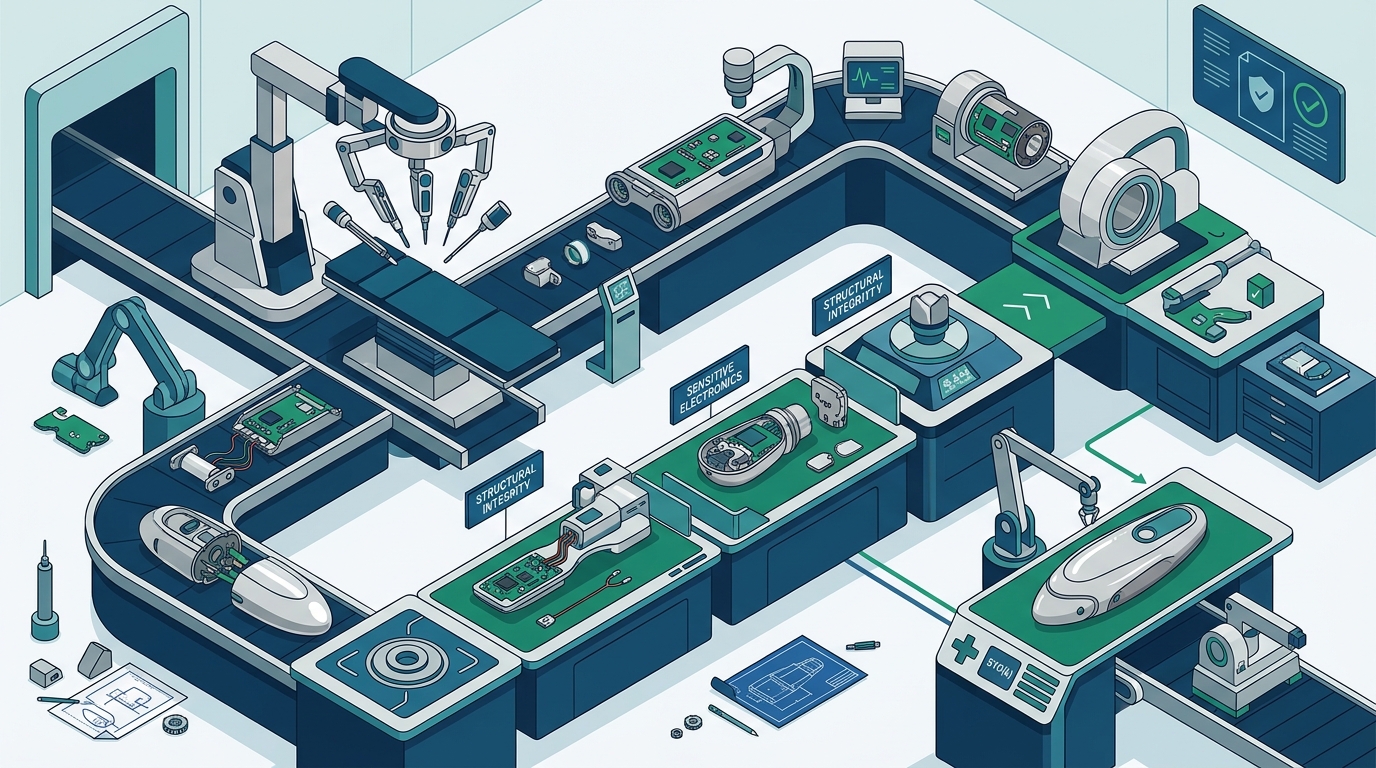
Verification confirms that the device meets design specifications. Validation confirms that the device meets user needs and clinical requirements. This phase is rigorous and documentation-heavy. It involves extensive testing, including biocompatibility, electrical safety, and software validation. Many firms struggle here because they treat it as a final step rather than a continuous process. Leading firms integrate verification activities throughout the development lifecycle.
Regulatory Submission and Manufacturing Transfer
The final phase involves preparing for FDA 510(k) or PMA submissions. This includes compiling the Design History File (DHF) and Technical File. The firm must also manage the transfer of design to a contract manufacturer. This ensures that the production process replicates the validated design. A smooth transfer is critical for maintaining quality and consistency.
How to Choose the Right Engineering Partner
Not all engineering firms offer true end-to-end capabilities. Some specialize only in mechanical design. Others focus on software. When evaluating partners, look for specific indicators of full-cycle competence.
| Capability Area | Key Indicator | Why It Matters |
|---|---|---|
| Regulatory Expertise | Experience with FDA 510(k) submissions | Ensures compliance and faster approval |
| Manufacturing Support | DFM reviews and production transition | Reduces cost and improves scalability |
| Team Integration | Multidisciplinary in-house teams | Eliminates handoff friction and delays |
| Track Record | Published case studies and client metrics | Validates ability to deliver results |
One critical factor is the firm's approach to risk management. According to a 2025 study on medical device failures, 40% of late-stage failures stem from inadequate risk analysis during the design phase. Ask potential partners how they integrate risk management into their workflow. Do they use formal hazard analysis? Do they update risk files continuously? These questions reveal their maturity.
Another factor is scalability. Your partner should have the bandwidth to support your project without becoming a bottleneck. Check their current workload and resource allocation. A firm that is fully booked may not provide the attention your project deserves. Look for firms with a network of specialized engineers who can scale up as needed.
The A65 Consulting Approach to Device Viability
A65 Consulting operates as a premium medical device engineering partner. We specialize in turning device concepts into viable products. Our approach is built on trust, expertise, and a deep understanding of the challenges you face. We do not just understand engineering. We understand what is at stake for your business.
Solving Overwhelming Challenges
Many companies face gaps in engineering capability or team capacity. A65 Consulting provides engineering leadership and expert support to help you navigate complex product development. We integrate seamlessly with your team. We fill critical gaps without the cost and commitment of adding full-time headcount. Our engineers bring decades of experience in medical device innovations.
Proven Results and Metrics
Our track record speaks to our effectiveness. We have served more than 20 clients in the medical device space. Our work has contributed to more than $300 million of projected new product revenue. We have supported more than 8 FDA 510(k) submissions. Our designs have led to more than 10 new patent applications. These metrics are not just numbers. They represent real-world impact and validated expertise.
On-Time Delivery and Quality
Time is money in medical device development. Our projects have achieved a 90% on-time completion rate for mission-critical milestones. We thrive on challenges and are committed to delivering results that exceed expectations. Our team combines analytical engineering experience with meticulous attention to detail. This combination ensures your project is completed on time, on budget, and to the highest standards of excellence.
We work alongside your team to provide the right expertise and guidance. We help keep your project aligned with your product requirements. Whether you need assistance with a new product concept or require additional engineering resources, we have the expertise to deliver solutions. Learn more about our team and our commitment to your success.
Key Takeaways
- Integrated Development is Essential: End-to-end firms reduce development cycles by approximately 30% compared to fragmented teams.
- DFM Prevents Cost Overruns: Neglecting Design for Manufacturing can increase production costs by up to 40%.
- Risk Analysis is Critical: 40% of late-stage failures stem from inadequate risk analysis during design.
- A65’s Track Record: We have contributed to over $300M in projected revenue and supported 8+ FDA 510(k) submissions.
- On-Time Delivery: A65 maintains a 90% on-time completion rate for mission-critical projects.
- Scalable Expertise: Look for partners with a network of specialized engineers to handle fluctuating demands.
- Regulatory Maturity: Ensure your partner integrates risk management and verification throughout the lifecycle, not just at the end.
Frequently Asked Questions
What is the difference between a medical device design firm and a contract manufacturer?
A design firm focuses on the creation, engineering, and validation of the device. A contract manufacturer focuses on the production and assembly. End-to-end firms like A65 Consulting bridge this gap by managing both design and manufacturing transfer, ensuring the product can be built effectively.
How long does it take to develop a medical device with an external partner?
Timelines vary based on complexity. However, integrated partners can reduce development time by 30% or more. A65 Consulting’s structured approach helps keep projects on schedule, with a 90% on-time completion rate for critical milestones.
Do you charge hourly or on a retainer basis?
We typically charge on a monthly retainer basis. This model aligns our incentives with your project milestones. It provides predictability for your budget and ensures dedicated resources for your development.
What types of medical devices do you design?
We have experience designing a wide variety of medical devices. Our broad range of experience affords us insight into many areas. We can handle everything from diagnostic tools to therapeutic devices. View our recent projects to see examples of our work.
How do you handle regulatory compliance?
Regulatory compliance is integrated into every phase of development. We prepare all necessary documentation for FDA 510(k) submissions. We ensure your Design History File is complete and accurate. This proactive approach minimizes regulatory delays.
Can you work with our existing engineering team?
Yes, we integrate seamlessly with your team. We provide leadership and expert support to fill gaps in capability or capacity. We do not replace your team. We enhance it.
What is your experience with FDA 510(k) submissions?
We have supported more than 8 FDA 510(k) submissions. Our experience ensures that your device meets all regulatory requirements. We help you navigate the complex submission process with confidence.
Start Your Development Journey
Transforming your device concept into a viable product requires a partner who understands the stakes. A65 Consulting is that partner. We combine decades of engineering expertise with a proven track record of delivering results. From concept to design and delivery, we have you covered.
Do not let engineering gaps or regulatory challenges slow you down. Book a consultation with our team today. Let us help you navigate the complex dance of product development with clarity and confidence. Schedule your discovery call now and take the first step toward bringing your innovation to market.