
A Strategic Guide to Accelerate Medical Device Development
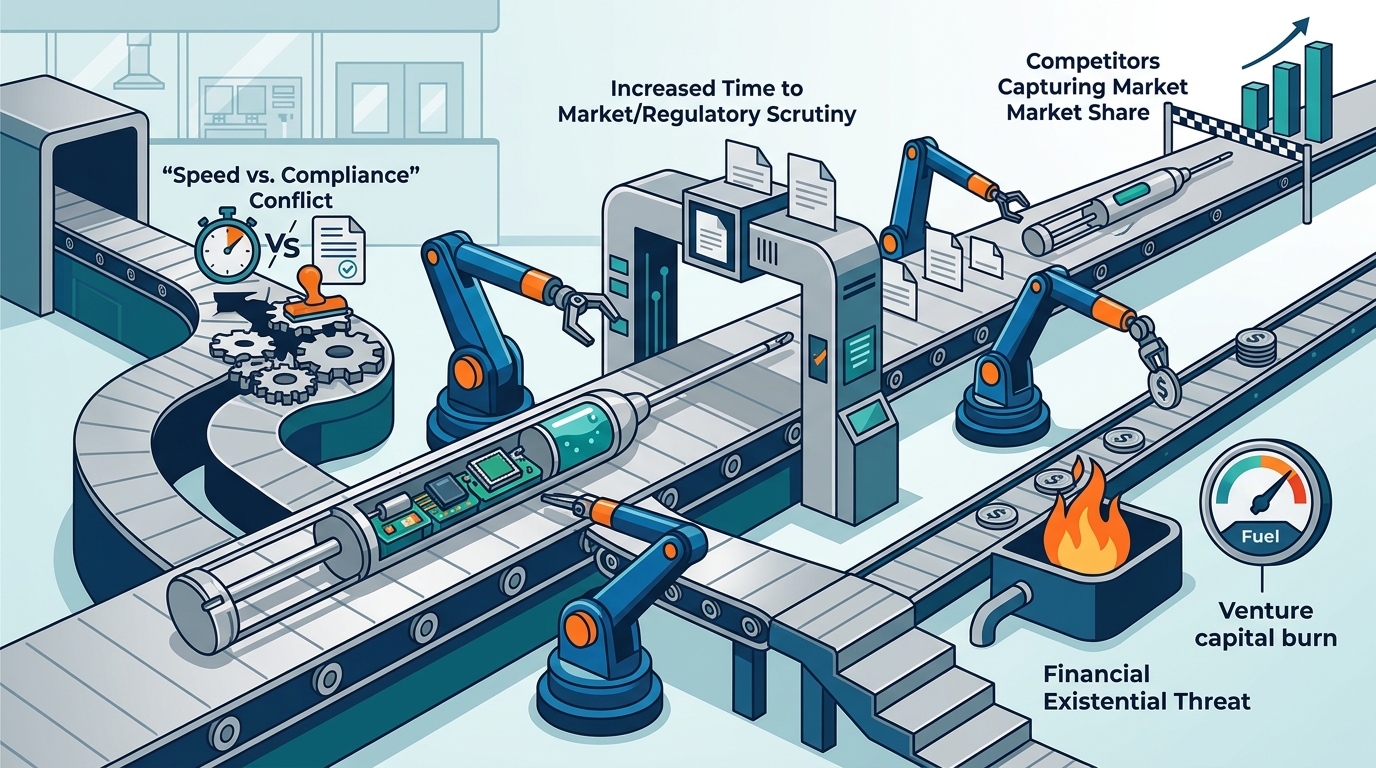
Medical device startups face a brutal reality where speed often conflicts with the rigorous demands of regulatory compliance. Recent industry analysis indicates that the average time to market for Class II devices has increased by 15% over the last decade due to heightened scrutiny on clinical evidence and design controls. This delay is not merely a logistical hurdle but a financial existential threat. For early-stage companies, every month of delay burns through venture capital while competitors capture market share. The solution lies not in rushing the work, but in engineering the process with precision from day one. By integrating design for manufacturing early, adopting rigorous verification protocols, and leveraging specialized engineering partnerships, startups can compress timelines without compromising safety or efficacy.
Understanding the Bottlenecks in Medical Device Development
Most development teams treat verification as something that happens near the end of a program. It is planned, scheduled, and executed as a step to confirm that the design meets requirements. In that model, verification is undervalued and often becomes a bottleneck that halts progress. When Treated as a Phase, Verification Is Undervalued because it is seen as a gate rather than a continuous feedback loop. This approach leads to late-stage failures that require costly redesigns.
Another common bottleneck is the disconnect between engineering and manufacturing. Design for Manufacturing is often introduced as a cost reduction activity. It shows up when margins tighten, when sourcing changes, or when a program is already under pressure. At that point, teams look for ways to make the product cheaper to produce. However, this reactive approach often results in manufacturability issues that delay production readiness. Integrating manufacturing insights early ensures that the design is not just functional, but also producible at scale.
Regulatory compliance is another significant hurdle. The FDA 510(k) submission process requires extensive documentation and evidence of substantial equivalence. FDA guidelines emphasize the need for a robust Design History File (DHF). Startups that fail to maintain rigorous documentation throughout the development cycle often face lengthy review periods or requests for additional information (RFIs). This delays market entry and increases costs. By treating regulatory compliance as an integral part of the engineering process, rather than an afterthought, startups can streamline the submission process.
Strategic Engineering Partnerships
One of the most effective ways to accelerate development is by partnering with experienced engineering firms. A65 Consulting specializes in turning device concepts into viable products with expert teams and attention to detail. Their approach focuses on solving overwhelming challenges related to tight deadlines, missing critical knowledge, and skillset gaps. By leveraging external expertise, startups can access specialized skills without the long lead times associated with hiring full-time employees.
Engineering outsourcing can accelerate development when managed correctly. If a program needs more speed, adding external resources can provide the necessary capacity. If specialized expertise is missing, bringing in a partner can fill critical knowledge gaps. However, outsourcing can also slow down development if communication and project management are not handled effectively. The key is to choose a partner who understands the regulatory landscape and can integrate seamlessly with your internal team.
A65 Consulting offers a range of services including product design, manufacturing support, and program management. Their team brings together decades of expertise in medical device innovations and product development. This breadth of experience allows them to anticipate potential issues and provide proactive solutions. For startups, this means fewer surprises and a smoother path to market. Explore their service offerings to see how they can support your specific project needs.
Design for Manufacturing as a Quality Exercise
Design for Manufacturing (DFM) is often misunderstood as a cost-cutting measure. In reality, it is a quality exercise that ensures the product can be produced consistently and reliably. When DFM is integrated early in the design process, it helps identify potential manufacturing issues before they become costly problems. This proactive approach reduces the need for redesigns and accelerates the transition to production.
DFM involves analyzing the design for manufacturability, considering factors such as material selection, tolerances, and assembly processes. By working closely with manufacturing experts, engineers can optimize the design for ease of production. This not only reduces costs but also improves product quality and reliability. For medical devices, where consistency is critical, DFM is essential for ensuring that every unit meets the required specifications.
At A65 Consulting, DFM is treated as a core component of the development process. Their manufacturing support spans process development, DFM reviews, and seamless production transition. This comprehensive approach ensures that the design is not only functional but also ready for high-volume manufacturing. By prioritizing DFM, startups can avoid the delays and cost overruns associated with late-stage manufacturing issues.
Verification as a System, Not a Phase
Verification failures are rarely surprises. When a test fails late in development, teams often treat it as an execution issue. Attention shifts to the method, the setup, or the result itself. In most cases, the underlying problem was introduced much earlier. Many verification plans fail because they are not aligned with the design requirements or do not account for the full range of use cases. A robust verification plan is essential for ensuring that the device meets all safety and performance criteria.
Verification should be viewed as a system that runs throughout the development cycle. This involves continuous testing and validation at each stage of the design process. By integrating verification into the daily workflow, teams can identify and address issues early, reducing the risk of late-stage failures. This approach also ensures that the design evolves in a controlled manner, with each iteration building on the previous one.
A65 Consulting emphasizes the importance of rigorous program management to keep projects on time and on budget. Their approach includes detailed verification planning and execution, ensuring that all design requirements are met. By treating verification as a continuous process, startups can accelerate development while maintaining high standards of quality and safety.
Risk Management That Drives Design
In regulated product development, risk analysis is one of the most formalized engineering activities. Hazard analyses are created, risk matrices are populated, and mitigation tables are carefully maintained. Yet many design problems are not identified through risk analysis alone. The Risk Analysis Paradox is that while risk analysis is critical, it often fails to change the design if it is not integrated into the engineering process. Risk analysis must be a living document that evolves with the design.
Effective risk management involves identifying potential hazards early and implementing mitigations that do not compromise the device's functionality. This requires a deep understanding of the clinical environment and the users who will interact with the device. By involving clinical experts and end-users in the risk analysis process, startups can ensure that the device is safe and effective in real-world scenarios.
A65 Consulting has experience contributing to more than 8 FDA 510(k) submissions, demonstrating their expertise in regulatory compliance. Their risk management approach is aligned with FDA guidelines and international standards such as ISO 14971. By integrating risk management into the design process, startups can reduce the likelihood of regulatory delays and ensure a smoother path to market.
Human Factors and Usability
Most development teams believe they understand their users. Human factors activities are completed, documented, and validated. Yet use-related problems still emerge once devices enter real clinical environments. These failures are rarely random. They typically stem from a lack of empathy for the user and a failure to test the device in realistic conditions. Human factors engineering is essential for ensuring that the device is intuitive and safe to use.
Human factors design involves understanding the user's needs, abilities, and limitations. This includes considering the physical environment in which the device will be used, the tasks the user will perform, and the potential for user error. By conducting usability testing with representative users, developers can identify and address potential issues before the device is released. This not only improves patient safety but also enhances the user experience.
A65 Consulting offers expertise in human factors and usability engineering. Their approach involves designing devices for clinical reality, ensuring that the device meets the needs of both the patient and the healthcare provider. By prioritizing human factors, startups can reduce the risk of use-related errors and improve the overall effectiveness of the device.
Key Takeaways
- Integrate DFM Early: Treat Design for Manufacturing as a quality exercise to avoid late-stage production issues.
- Continuous Verification: View verification as a system that runs throughout the development cycle, not just a final phase.
- Leverage Expert Partners: Partner with firms like A65 Consulting to access specialized skills and accelerate development.
- Dynamic Risk Management: Keep risk analysis as a living document that evolves with the design to identify hazards early.
- Human-Centric Design: Prioritize human factors and usability testing to ensure the device is safe and intuitive for users.
- Regulatory Alignment: Align engineering processes with FDA guidelines and international standards to streamline submissions.
- Proactive Program Management: Use rigorous program management to keep projects on time and on budget.
Frequently Asked Questions
How can medical device startups reduce development time?
Startups can reduce development time by integrating design for manufacturing early, adopting continuous verification protocols, and partnering with experienced engineering firms that understand the regulatory landscape.
What is the role of engineering outsourcing in medical device development?
Engineering outsourcing provides access to specialized skills and additional capacity, allowing startups to accelerate development without the long lead times of hiring full-time employees. However, it requires careful management to ensure effective communication and project alignment.
Why is design for manufacturing important for medical devices?
Design for manufacturing ensures that the device can be produced consistently and reliably at scale. It helps identify potential manufacturing issues early, reducing the need for costly redesigns and accelerating the transition to production.
How does A65 Consulting support medical device startups?
A65 Consulting provides expert engineering support across the entire product development lifecycle, including product design, manufacturing support, program management, and regulatory compliance. They help startups overcome skillset gaps and accelerate time to market.
What are the common causes of verification failures in medical device development?
Verification failures are often caused by a lack of alignment between the verification plan and the design requirements, insufficient testing of edge cases, and treating verification as a final phase rather than a continuous process.
How important is human factors engineering in medical device design?
Human factors engineering is critical for ensuring that the device is safe and intuitive to use. It involves understanding the user's needs and limitations and testing the device in realistic conditions to identify and address potential use-related errors.
What is the significance of risk management in medical device development?
Risk management is essential for identifying potential hazards and implementing mitigations that ensure patient safety. It must be integrated into the design process to be effective and should evolve as the design progresses.
How can startups ensure regulatory compliance during development?
Startups can ensure regulatory compliance by aligning their engineering processes with FDA guidelines and international standards, maintaining rigorous documentation, and engaging with regulatory experts early in the development cycle.
Next Steps
Accelerating your medical device development cycle requires a strategic approach that balances speed with precision. By integrating design for manufacturing, adopting continuous verification, and leveraging expert engineering partnerships, you can reduce time to market without compromising quality. A65 Consulting is ready to help you navigate the complexities of medical device development. Contact us today to schedule a discovery call and discuss how we can support your project.