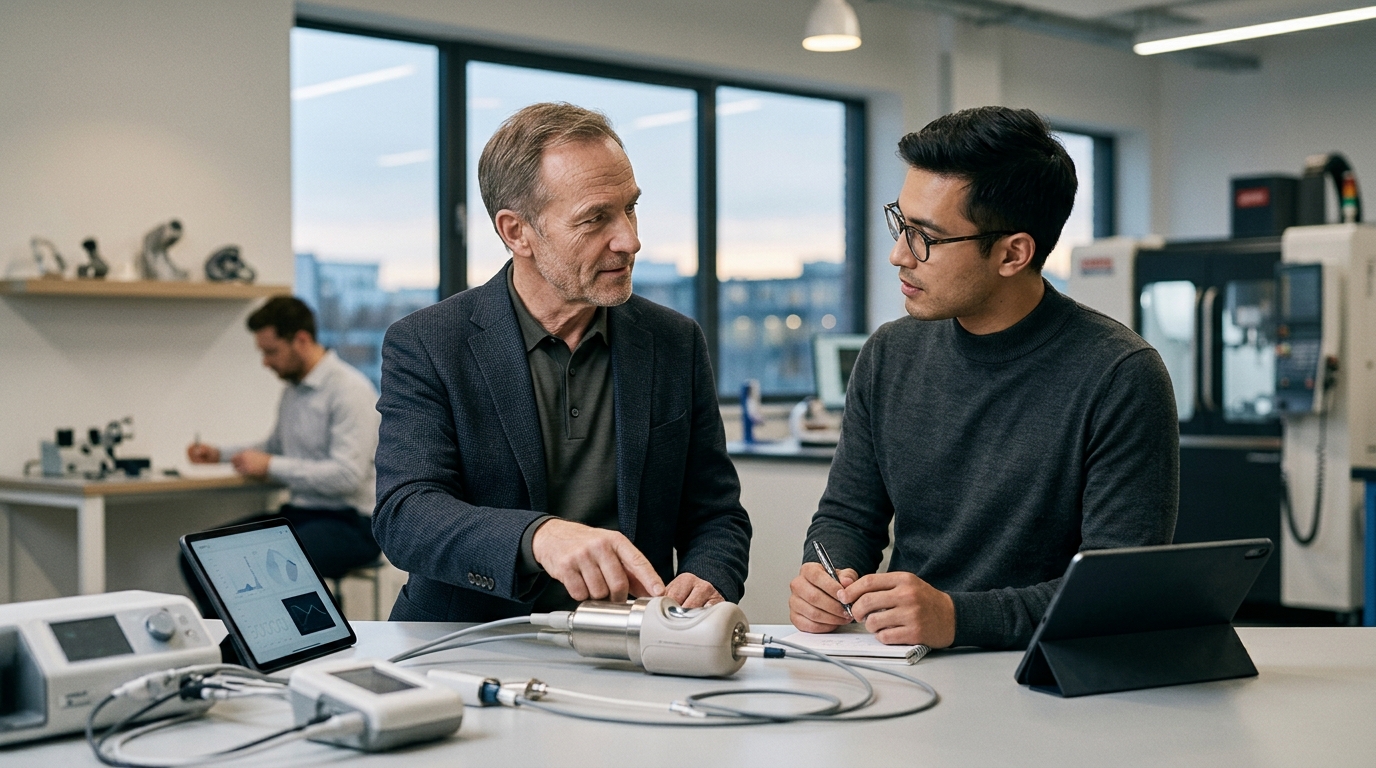
Medical device engineering consultancies help healthcare innovators turn technically ambitious ideas into safe, manufacturable, and commercially viable products. Their work may begin with early research and concept development, continue through mechanical or systems engineering, and extend into verification, quality, regulatory readiness, manufacturing transfer, and post-launch improvement.
That breadth matters because medical device development is not a linear exercise in creating a prototype. A successful product must satisfy user needs, perform consistently, manage foreseeable risks, fit within a controlled quality system, and transition reliably into production. In the United States, developers must also understand the FDA framework for medical devices, including device classification, design controls, and applicable premarket pathways. The FDA's medical device resources provide an important starting point for understanding these obligations: FDA medical device regulations and guidance.
This guide explains the services a full-service consultancy may provide, when each service is useful, what deliverables to expect, and how to determine whether a partner such as A65 Consulting fits your program.
Executive summary
- Medical device engineering consultancies can support the complete product lifecycle, from early concept definition through launch and post-market changes.
- Common services include mechanical engineering, systems integration, prototyping, design verification, human factors, quality engineering, risk management, regulatory support, manufacturing transfer, and program management.
- The best engagement model depends on the project's maturity, risk profile, regulatory pathway, internal capabilities, and timeline.
- External engineering teams are especially valuable when a company needs specialized expertise, additional capacity, objective technical review, or interim leadership without making permanent hires.
- A strong consultancy integrates technical work with documentation, quality processes, supplier coordination, and commercialization requirements.
What does a medical device engineering consultancy do?
A medical device engineering consultancy supplies specialized people, processes, and technical leadership to help develop or improve healthcare products. Unlike a general product design firm, a medical device consultancy typically works within a regulated development environment and understands the relationship between design decisions, risk controls, manufacturing processes, verification evidence, and regulatory documentation.
Depending on the project, a consultancy may act as a complete outsourced development team, an extension of an established research and development organization, or a fractional leadership resource. A65 Consulting describes its role as supporting clients from concept through design and delivery, with expertise spanning product design, manufacturing, program management, and quality and regulatory activities. Its medical device engineering services page outlines examples of the disciplines and support models available.
Consultancies may work on disposable devices, instruments, electromechanical systems, robotic platforms, enclosures, fluidic products, surgical tools, diagnostic equipment, and other complex medical technologies. The exact scope should be tailored to the intended use, user population, device classification, production volume, and business objectives.
1. Research, requirements, and concept development
Many projects benefit from engineering support before detailed computer-aided design begins. Early decisions about intended use, user needs, architecture, materials, interfaces, and performance targets can determine whether a product is practical to manufacture and straightforward to validate.
Typical activities
- Reviewing the clinical or commercial problem the device is intended to solve.
- Defining intended use, indications, users, environments, and foreseeable misuse.
- Translating user needs into measurable engineering requirements.
- Generating and comparing multiple technical concepts.
- Evaluating competing architectures, materials, mechanisms, and interfaces.
- Identifying technical, regulatory, supplier, and schedule risks.
- Creating early development plans, budgets, milestones, and resource estimates.
A consultancy can add value by challenging assumptions while changes are still inexpensive. For example, a proposed handheld device may appear feasible until engineers evaluate grip forces, battery volume, cleaning requirements, sealing, drop performance, and assembly access. Addressing those constraints during concept selection is generally more efficient than discovering them after tooling or formal verification has begun.
2. Product design and engineering
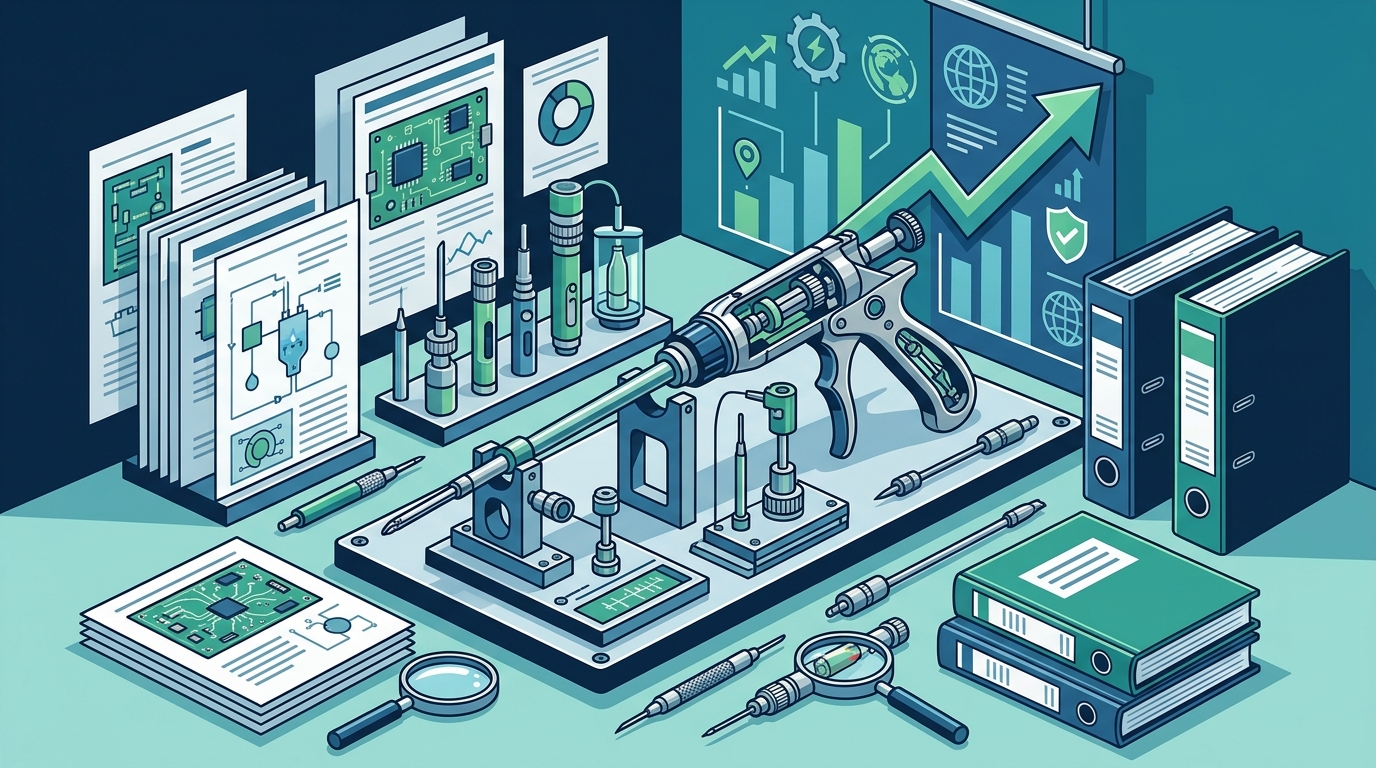
Product engineering converts a selected concept into a defined design. This work may be primarily mechanical, or it may require coordinated mechanical, electrical, software, fluidic, optical, and systems engineering.
Mechanical engineering
Mechanical engineers develop the physical structures and mechanisms that enable a device to function safely and reliably. Services may include precision mechanism design, high-volume disposable device design, electromechanical hardware, complex robotic systems, electronic enclosures, tolerance analysis, materials selection, and design changes intended to improve cost or performance.
Systems engineering
Systems engineering connects subsystems and disciplines around a common set of requirements. It may include architecture definition, interface control, requirements allocation, subsystem trade studies, performance modeling, integration planning, and traceability between requirements and test evidence.
Design outputs
Depending on the development phase, deliverables may include three-dimensional CAD models, two-dimensional drawings, bills of materials, specifications, interface definitions, engineering calculations, requirements documents, design review materials, and prototype build packages. A consultancy should also explain how these outputs will be controlled within the client's quality system.
For examples of how A65 Consulting applies analysis, prototyping, and classical engineering principles to device challenges, review its recent medical device engineering projects.
3. Engineering analysis, prototyping, and design iteration
Prototypes help teams learn, but a prototype alone does not demonstrate that a commercial device is ready. Engineering consultancies use prototypes and analysis together to answer focused questions about performance, risk, manufacturability, and user interaction.
Common analysis services
- Finite element analysis, or FEA, for stress, strain, deformation, fatigue, and structural performance.
- Classical calculations for mechanisms, loads, pressure, thermal behavior, and component sizing.
- Fluidics, flow, pressure-drop, and system-level analytical modeling.
- Tolerance stack-up analysis and sensitivity studies.
- Design of experiments and parameter optimization.
- Failure analysis and root-cause investigation.
- Test fixture and measurement-system development.
Prototype support
- Proof-of-concept prototypes for feasibility questions.
- Appearance and ergonomic prototypes for user feedback.
- Engineering prototypes for bench testing and design review.
- Representative prototypes for verification planning.
- Prototype build documentation and test reports.
Design iteration is most effective when each prototype has a defined purpose. A mechanism prototype may answer whether a required force is achievable; a usability prototype may reveal whether clinicians can operate the device while wearing gloves; and a production-representative build may expose variation that would not appear in a one-off laboratory model.
4. Human factors and usability engineering
Medical devices are used by people working under different levels of training, time pressure, fatigue, and environmental constraint. Human factors engineering examines how users interact with a product and how the design can reduce use-related hazards.
Consultancy support may include user research, use-environment analysis, task analysis, user-interface development, formative usability evaluations, use-related risk analysis, labeling input, and summative evaluation planning. For a device used in a high-pressure clinical environment, details such as connector orientation, alarm interpretation, display hierarchy, grip geometry, and setup sequence may directly affect safety.
Human factors should not be treated as a cosmetic review performed at the end of engineering. User needs and foreseeable use errors should influence requirements, architecture, risk controls, prototype planning, and validation activities from the beginning.
5. Quality engineering, risk management, and regulatory support
Quality and regulatory activities provide the framework that makes development evidence credible. ISO 13485:2016 is an internationally recognized quality management standard for organizations involved in the design and manufacture of medical devices, while ISO 14971:2019 addresses risk management across the device lifecycle. The relevant standards and guidance should be applied according to the product, market, and regulatory strategy.
Quality engineering services
- Quality management system design and implementation.
- Development of FDA-aligned procedures and records.
- Supplier audits and supply-chain quality assessments.
- Internal audits and inspection-readiness assessments.
- CAPA and nonconformance management support.
- Quality documentation for design and regulatory activities.
- Fractional, embedded, or project-based quality engineering.
A65 Consulting provides quality engineering support for medical device organizations that need practical quality-system structure and development oversight.
Risk management
Risk management typically includes hazard identification, hazardous-situation analysis, risk estimation, risk-control selection, residual-risk evaluation, and production and post-production feedback. Risk controls should be reflected in design requirements and verified through appropriate evidence. Risk management is not a single workshop; it is an ongoing activity that evolves as the design, manufacturing process, and use assumptions become better understood.
Regulatory and submission support
Regulatory support may include device classification, regulatory pathway assessment, submission planning, technical documentation, responses to agency questions, and coordination of engineering evidence. In the United States, possible pathways can include 510(k), De Novo, or Premarket Approval, depending on the device's risk, classification, intended use, and available predicate or clinical evidence. The FDA explains that its device oversight is risk-based and that higher-risk devices generally face more stringent controls and evidence requirements.
For devices subject to FDA design controls, development activities may include design planning, design inputs and outputs, design reviews, risk analysis, verification, validation, design transfer, change control, and design-history documentation. A consultancy can help ensure that engineering work is performed in a way that supports these obligations rather than creating disconnected technical files after the fact.
Engineering consultancies do not replace the legal or regulatory responsibility of the device manufacturer. Instead, they provide technical and quality expertise that helps the responsible organization make informed decisions and assemble defensible evidence.
6. Design for manufacturing and manufacturing transfer
A device that works in a prototype lab may still be unsuitable for commercial production. Design for manufacturing and design for assembly evaluate whether the product can be built repeatedly, inspected effectively, and scaled at an acceptable cost.
Manufacturing-focused services
- Design for manufacturing and assembly reviews.
- Material, component, and process selection.
- Tolerance and capability analysis.
- Assembly sequence and labor-content analysis.
- Tooling and fixture requirements.
- Supplier identification and qualification support.
- Manufacturing process development.
- Pilot builds and production-readiness assessments.
- Manufacturing documentation and work instructions.
- Design transfer from engineering specifications to production processes.
Early manufacturing input can prevent avoidable cost drivers such as excessive part count, unnecessarily tight tolerances, difficult inspection methods, complex assembly steps, or materials that are difficult to source consistently. It can also expose process risks that need validation before commercial release.
Manufacturing transfer is more than sending CAD files to a contract manufacturer. It requires clear specifications, controlled drawings, acceptance criteria, process understanding, supplier communication, and evidence that the production process can reliably create conforming devices.
7. Program management and interim engineering leadership
Medical device programs often involve executives, product managers, clinicians, quality professionals, regulatory specialists, designers, engineers, suppliers, manufacturers, and testing laboratories. Program management coordinates their work around the critical path.
Program management responsibilities may include
- Integrated schedules and milestone planning.
- Resource planning and identification of capability gaps.
- Risk, issue, and dependency tracking.
- Cross-functional meeting leadership.
- Design review planning and follow-up.
- Budget and scope monitoring.
- Supplier and test-laboratory coordination.
- Executive reporting and stakeholder communication.
- Change control and decision documentation.
Some companies need an interim Director of Engineering, project manager, systems lead, or quality leader while they recruit or restructure. An embedded consultant can provide immediate continuity, establish practical processes, and help internal teams build the capabilities they need for long-term ownership.
A65 Consulting emphasizes flexible integration with client teams, providing leadership and hands-on engineering expertise without requiring the client to add permanent full-time headcount. This model can be particularly useful for startups, companies entering a new device category, and established manufacturers managing an unusually demanding program.
8. Cost optimization, sustaining engineering, and post-market support
Engineering support does not necessarily end when a device receives clearance or enters production. Products may require cost reductions, supplier changes, obsolescence responses, corrective actions, field investigations, or design updates prompted by new requirements.
Cost optimization
Cost-reduction engineering can examine materials, component specifications, part count, manufacturing processes, assembly time, packaging, tooling, and supplier strategy. The objective is not simply to make a part cheaper; it is to reduce total product cost without undermining performance, reliability, quality, or regulatory commitments.
Sustaining engineering
- Engineering change assessment and documentation.
- Component obsolescence and alternate-source evaluation.
- Supplier or material changes.
- Manufacturing yield improvement.
- Field-return and failure-data analysis.
- Corrective design changes.
- Verification and validation planning for modifications.
- Support for regulatory impact assessments.
Post-market surveillance support
Depending on the firm's capabilities and the client's responsibilities, a consultancy may also support complaint trending, adverse-event investigation, field-service data analysis, CAPA inputs, and design changes associated with post-market findings. These activities should be coordinated with the manufacturer's quality and regulatory procedures.
How to choose the right medical device engineering consultancy
The right partner is not necessarily the firm with the longest service list. It is the team that can provide the expertise, documentation discipline, communication style, and availability your program actually requires.
Evaluate technical fit
Ask whether the team has experience with comparable mechanisms, materials, manufacturing processes, clinical environments, sterilization methods, software or electronics, and device risk profiles. Direct experience is valuable, but strong fundamentals and the ability to reason across adjacent technologies also matter.
Confirm lifecycle coverage
If your project is moving toward commercialization, confirm that the consultancy understands manufacturing transfer, supplier quality, verification evidence, change control, and sustaining engineering—not only early-stage ideation or prototype design.
Review quality and documentation practices
Ask how the team manages requirements, design outputs, risk files, test protocols, reports, traceability, configuration control, and client-owned records. Engineering creativity must be paired with documentation that can withstand internal review, audit, and regulatory scrutiny.
Understand the engagement model
Common arrangements include fixed-scope projects, time-and-materials work, monthly retainers, milestone-based engagements, fractional leadership, and embedded team support. The best model depends on how clearly the scope is defined and how much flexibility the program needs.
Assess communication and ownership
Request examples of reporting cadence, decision logs, escalation practices, and cross-functional collaboration. A technically capable consultancy should make responsibilities clear and should identify problems early rather than allowing schedule or quality surprises to accumulate.
Look for evidence, not only claims
Ask for relevant case studies, representative deliverables, references, and examples of how the team handled technical uncertainty. A65 Consulting's company background describes experience across research, conceptualization, product development, manufacturing transfer, and cost optimization.
When should a company hire a consultancy?
External support is often most effective when brought in before a major decision point. Examples include:
- The concept is promising but requirements or intended use are not yet defined.
- The internal team lacks a specific discipline such as mechanical analysis, systems engineering, or quality engineering.
- A prototype works, but the design is difficult to manufacture or expensive to assemble.
- The program is approaching verification and documentation is incomplete.
- A supplier transition or manufacturing transfer is creating schedule risk.
- An engineering leader is needed temporarily during hiring, fundraising, acquisition, or organizational change.
- A product requires a redesign, cost reduction, or sustaining-engineering response.
Hiring earlier does not guarantee a faster project, but it can make critical decisions more deliberate and reduce the chance that avoidable design or documentation problems appear late in the program.
Key takeaways
- Medical device engineering consultancies can support the entire lifecycle, from research and concept selection through manufacturing and post-market changes.
- Core offerings commonly include mechanical and systems engineering, analysis, prototyping, human factors, quality, risk management, regulatory support, manufacturing transfer, and program leadership.
- FDA design controls connect requirements, risk analysis, design outputs, verification, validation, transfer, change control, and design-history documentation.
- ISO 13485 provides a quality management framework for medical device organizations, while ISO 14971 provides the foundation for medical device risk management.
- Early design-for-manufacturing input can help avoid unnecessary cost, tooling, tolerance, supplier, and assembly problems.
- External teams can provide specialized expertise and scalable capacity without the long-term cost of building every capability internally.
- The strongest partners combine engineering execution with clear communication, controlled documentation, and practical commercialization experience.
- A65 Consulting offers medical device design, engineering, manufacturing, program management, and quality and regulatory support for organizations that need a flexible product development partner.
Frequently asked questions
What is the difference between a medical device engineering consultancy and a contract manufacturer?
An engineering consultancy primarily helps define, design, analyze, document, verify, and transfer a device. A contract manufacturer primarily produces the device, although some manufacturers also provide engineering or process-development services. A company may use both partners, and the responsibilities should be clearly defined in the project plan and quality agreements.
Can a consultancy support only one phase of development?
Yes. A consultancy may be engaged for a targeted activity such as a design review, FEA study, prototype build, manufacturing assessment, risk analysis, supplier audit, verification test, or cost-reduction project. It may also provide a complete team for a concept-to-launch program.
What deliverables should I expect from a medical device engineering consultant?
Deliverables depend on scope but may include requirements, risk-management records, CAD models, drawings, bills of materials, analytical models, prototypes, test fixtures, verification protocols, test reports, manufacturing documentation, supplier assessments, project schedules, design-review records, and regulatory-support documentation.
Can an engineering consultancy help with an FDA 510(k)?
Many consultancies can contribute engineering, risk, verification, validation, and technical-documentation support for a 510(k). The appropriate pathway depends on the device and its regulatory strategy. The responsible manufacturer remains accountable for the submission and should ensure that all regulatory work is coordinated with qualified regulatory professionals.
How are consultancy projects priced?
Pricing may use hourly or daily rates, fixed project fees, monthly retainers, milestone payments, or a blended model. Fixed pricing is easier when scope and deliverables are well defined. Retainers and time-and-materials arrangements can be more appropriate when priorities are expected to change or when the consultancy is embedded with an internal team.
Can a consultancy provide interim engineering leadership?
Yes. Experienced consultants may serve as interim engineering directors, program managers, systems leads, or functional leaders. This can help maintain momentum while a company recruits, restructures, expands into a new product category, or addresses a temporary capacity gap.
How long does medical device development take?
There is no universal timeline. Duration depends on device complexity, intended use, classification, regulatory pathway, clinical evidence requirements, software or electronics content, manufacturing readiness, supplier lead times, and the maturity of the starting concept. A consultancy can create a more credible schedule after reviewing the product definition, risks, deliverables, and available resources.
How long has A65 Consulting's team worked in medical device development?
A65 Consulting states that its team has worked together since 2018 and that its engineers bring decades of medical device development experience. The company's work spans concept development, product engineering, manufacturing transfer, quality, regulatory support, and leadership.
Move your medical device program forward
Whether you need to evaluate an early concept, add experienced engineers to an active program, improve manufacturability, strengthen quality documentation, or fill a temporary leadership gap, the right consultancy can help turn uncertainty into an actionable development plan.
Contact A65 Consulting to request a proposal, or schedule a discovery call to discuss your product, timeline, technical challenges, and desired outcomes.