
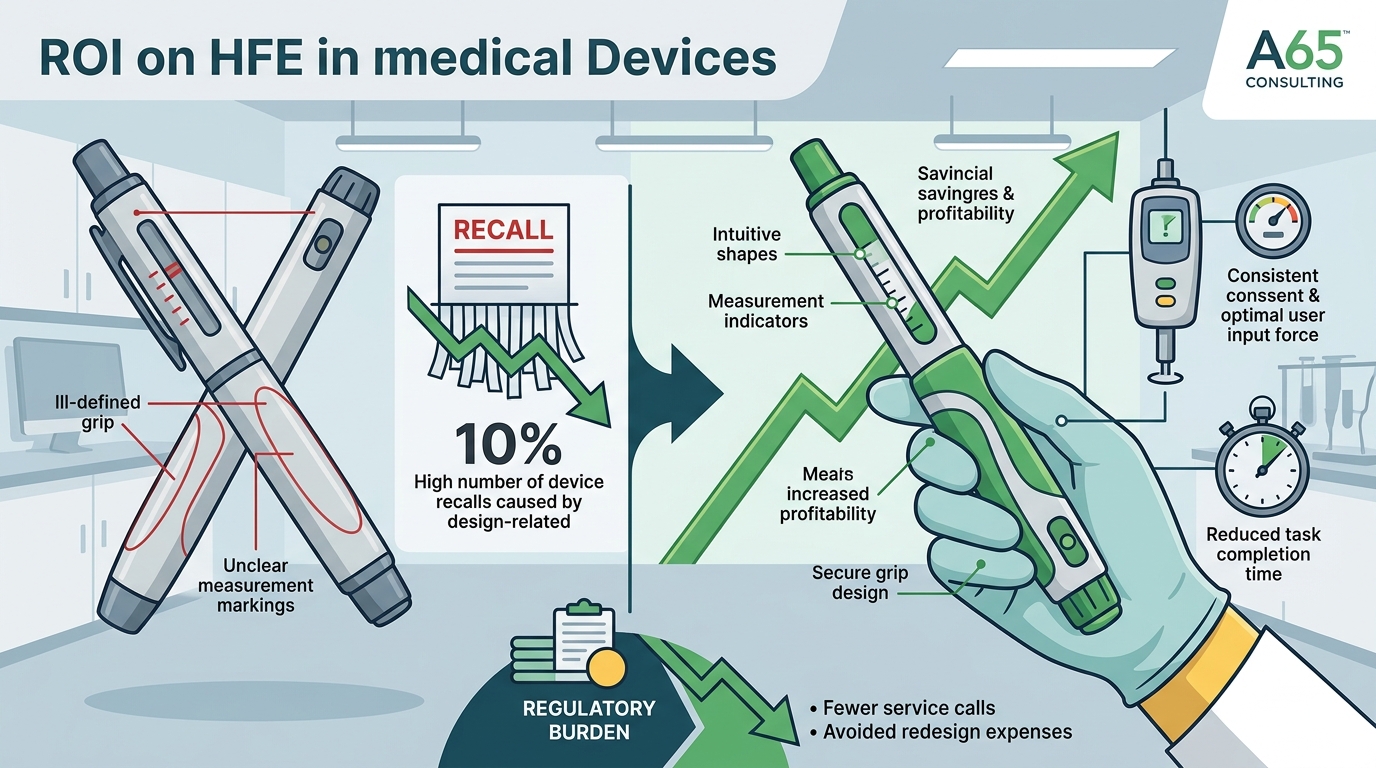
Human factors engineering is the systematic application of psychological and physiological principles to the design of products and systems. For medical device manufacturers, this discipline is not merely a regulatory checkbox but a critical financial lever. Recent industry analysis indicates that design-related usability issues are responsible for approximately 60% of all medical device recalls. This statistic underscores a fundamental truth: investing in human factors engineering directly protects revenue streams and brand integrity. When devices are intuitive and safe, the cost of post-market surveillance drops significantly while market adoption accelerates. (About A65 Consulting)
Understanding the Cost of Poor Usability
The financial impact of inadequate human factors engineering extends far beyond the initial design phase. When a device fails to meet user expectations in a clinical setting, the consequences are severe. Design for Manufacturing is a quality exercise, not a cost exercise, a principle that applies equally to usability. If a device is difficult to use, healthcare providers will make errors, leading to adverse events and potential litigation. (Blog A65 Consulting)
Consider the lifecycle costs of a medical device. Early integration of human factors reduces the need for costly redesigns during the verification and validation phases. According to industry data, fixing a usability issue after the design is finalized can cost up to 100 times more than addressing it during the conceptual phase. This exponential cost increase is why leading firms prioritize early user research and iterative testing.
Furthermore, poor usability directly impacts market penetration. Clinicians are increasingly selective about the tools they use. If a device requires extensive training or causes cognitive overload, adoption rates will stagnate. A65 Consulting emphasizes that solving these challenges early ensures that the product aligns with clinical reality, thereby securing a stronger return on investment from day one.
Regulatory Compliance as a Financial Asset
Regulatory bodies such as the FDA and international counterparts like the EMA have tightened their requirements for human factors documentation. Compliance is no longer optional; it is a prerequisite for market entry. The FDA guidance on medical device usability requires manufacturers to demonstrate that their devices can be used safely by intended users under normal and foreseeable use conditions.
Meeting these standards is not just about avoiding rejection letters. It is about building a defensible design history file that accelerates review times. Devices with robust human factors data often experience smoother regulatory pathways because the agency can clearly see the risk mitigation strategies in place. This speed to market is a direct contributor to ROI, as it allows the company to begin generating revenue sooner.
Additionally, a strong human factors program serves as a shield against post-market regulatory scrutiny. When audits occur, having a comprehensive usability engineering file demonstrates due diligence. This reduces the likelihood of warning letters or mandatory corrective actions, which are expensive and time-consuming to resolve. By treating compliance as an asset rather than a burden, companies can leverage their human factors work to build trust with regulators and investors alike.
Reducing Development Cycle Time
One of the most tangible returns on investment in human factors engineering is the reduction of development cycle time. Traditional development models often treat usability testing as a late-stage activity. This approach leads to the "verification paradox," where teams discover critical usability flaws only after significant engineering resources have been expended. At that stage, redesigning the interface or workflow can delay launch by months.
By integrating human factors early, teams can identify and resolve issues in rapid iterations. This agile approach to usability ensures that the final product is closer to market-ready from the start. A65 Consulting’s approach to program management highlights the importance of aligning engineering efforts with user needs to avoid these costly delays. When the design is validated against user requirements continuously, the final verification phase becomes a confirmation rather than a discovery process.
This efficiency extends to manufacturing as well. Devices designed with human factors in mind are often easier to assemble and service. This reduces production errors and warranty claims, further improving the overall financial performance of the product. The synergy between usability and manufacturability creates a compounding effect on ROI, where savings in one area reinforce gains in another.
Enhancing Clinical Outcomes and Adoption
The ultimate goal of any medical device is to improve patient outcomes. Human factors engineering ensures that the device performs as intended in the hands of the end-user. When clinicians can operate a device intuitively, they spend less time on logistics and more time on patient care. This efficiency is highly valued in healthcare systems that are under constant pressure to optimize resources.
Moreover, user-friendly devices foster greater confidence among healthcare providers. This confidence translates into higher adoption rates and stronger word-of-mouth recommendations. In competitive markets, usability can be a key differentiator. A device that is perceived as easier to use than its competitors will often win the bid, even if the technical specifications are similar. This competitive advantage is a direct result of strategic human factors investment.
From a risk management perspective, reducing use errors minimizes the likelihood of adverse events. This not only protects patients but also shields the company from the financial and reputational damage associated with medical errors. The cost of a single major recall can exceed the total budget of a human factors program by orders of magnitude. Therefore, the preventive nature of human factors engineering offers a high-probability return on investment.
Strategic Partnership Model
Building an in-house human factors team can be resource-intensive and slow. Many medical device companies find that partnering with specialized engineering firms offers a more agile and cost-effective solution. External partners bring decades of experience across various device classes, providing insights that an internal team might lack.
A65 Consulting operates as a premium medical device engineering partner, providing expert support to help teams navigate complex product development. This model allows companies to access top-tier human factors expertise on a flexible basis, scaling resources up or down as needed. This flexibility is crucial for managing cash flow and optimizing project budgets.
Furthermore, external partners often have established relationships with testing facilities and regulatory consultants. This network can accelerate the validation process and ensure that all requirements are met efficiently. By leveraging these external capabilities, companies can focus their internal resources on core innovation and commercialization strategies. This strategic allocation of resources maximizes the overall return on investment for the product development lifecycle.
Key Takeaways
- Design-related usability issues contribute to approximately 60% of medical device recalls, making human factors a critical risk mitigation strategy.
- Fixing usability issues after design finalization can cost up to 100 times more than addressing them during the conceptual phase.
- Robust human factors documentation accelerates regulatory review times, leading to faster market entry and earlier revenue generation.
- Early integration of human factors reduces development cycle time by preventing costly late-stage redesigns.
- User-friendly devices drive higher clinical adoption rates and serve as a key competitive differentiator in the marketplace.
- Partnering with specialized engineering firms provides flexible access to expert human factors resources without the overhead of full-time hiring.
- A65 Consulting has helped clients develop products that contributed to more than $300M of projected new product revenue through efficient engineering practices.
Frequently Asked Questions
How does human factors engineering impact the FDA approval process?
Human factors engineering impacts the FDA approval process by providing the necessary evidence that a device can be used safely by its intended users. A comprehensive usability engineering file demonstrates that risks associated with use have been identified and mitigated, which is a requirement for 510(k) submissions and premarket approvals.
What is the typical return on investment for human factors testing?
The return on investment is often measured by the avoidance of costly redesigns and recalls. While direct financial returns vary, the cost savings from preventing a single major recall or regulatory delay typically far exceed the investment in human factors activities. Additionally, faster time to market accelerates revenue generation.
Can small medical device startups benefit from human factors engineering?
Yes, small startups benefit significantly because they often have limited resources to absorb the costs of late-stage failures. Early human factors work ensures that their limited development budget is spent on a viable product, reducing the risk of project failure and attracting investors who value regulatory readiness.
How does A65 Consulting approach human factors in product development?
A65 Consulting integrates human factors throughout the entire product development lifecycle, from concept to manufacturing transfer. They provide expert teams that work alongside client staff to ensure usability requirements are met, leveraging decades of experience in medical device innovations to solve complex challenges.
What are the consequences of ignoring human factors in medical device design?
Ignoring human factors can lead to increased use errors, higher rates of adverse events, regulatory delays, and costly product recalls. It can also result in poor market adoption due to lack of clinician confidence, ultimately jeopardizing the commercial success of the device.
Is human factors engineering only relevant for patient-facing devices?
No, human factors engineering is relevant for all medical devices, including those used by healthcare professionals. Clinicians are also users who require intuitive interfaces to perform tasks efficiently and safely under pressure. Usability issues in professional devices can lead to serious clinical errors.
How does A65 Consulting help with regulatory compliance?
A65 Consulting helps with regulatory compliance by ensuring that all engineering activities, including human factors, are documented according to international standards such as IEC 62366. Their expertise in program management and engineering ensures that the design history file is robust and ready for regulatory review.
Next Steps
Securing a strong return on investment in your medical device development requires a strategic approach to human factors engineering. By integrating usability testing early and partnering with experienced engineering experts, you can reduce risks, accelerate time to market, and enhance clinical outcomes. A65 Consulting is ready to help you navigate these complexities with precision and expertise.
Discover how our engineering team can transform your device concept into a viable product. Contact us today to schedule a discovery call and learn more about our services. We look forward to helping you achieve your product development objectives with clarity and confidence.