
Design controls are the systematic processes required to ensure a medical device meets its intended use and safety requirements. Under FDA regulations, these controls mandate specific documentation and verification steps from concept through production. A65 Consulting helps device companies navigate these complex regulatory frameworks by integrating engineering expertise with strict compliance protocols. Understanding these requirements early prevents costly redesigns and regulatory delays.
The Regulatory Framework for Design Controls
Design controls are defined by the U.S. Food and Drug Administration (FDA) in 21 CFR 820.30. This regulation applies to Class I, Class II, and Class III medical devices. Class I devices are generally exempt from design controls unless they meet specific criteria, such as being reusable or providing information for diagnosis. Class II and Class III devices must implement a full design control system. This framework ensures that the device is safe and effective for its intended use.
The FDA requires manufacturers to establish a design and development plan. This plan outlines the project scope, responsibilities, and milestones. It serves as the roadmap for the entire development process. Without this plan, teams often struggle with scope creep and missed deadlines. A65 Consulting utilizes this planning phase to align engineering goals with regulatory expectations from the start.
Planning and Input Requirements
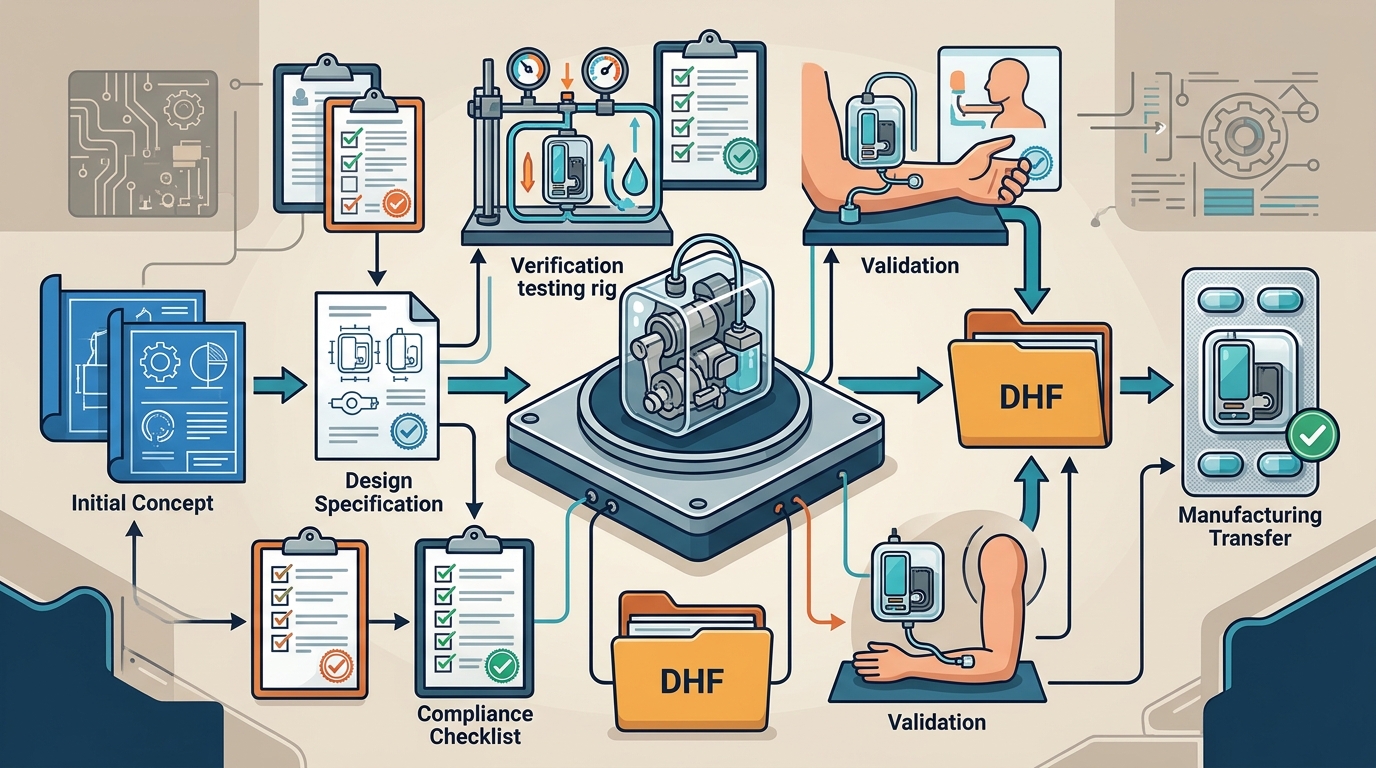
Design inputs are the requirements that the device must meet. These inputs include functional, performance, and safety requirements. They also include regulatory requirements and user needs. Every input must be documented and traceable. For example, a surgical instrument must have inputs for sterilization compatibility and ergonomic handling. A65 Consulting ensures that all design inputs are clearly defined and approved before engineering begins.
Design Output and Verification
Design output is the result of the design process. It includes drawings, specifications, and software code. The output must be sufficient to procure and manufacture the device. It must also allow for verification and validation. This means the output must be detailed enough to test against the original inputs.
Design verification is the process of confirming that the design output meets the design input. It is often summarized as "Did we build the product right?" Verification activities include testing, inspection, and analysis. For instance, a battery-powered device must be verified to ensure it meets the specified runtime. A65 Consulting performs rigorous verification testing to ensure that every design requirement is met before moving to the next phase.
Validation and Design Transfer
Design validation is the process of confirming that the device meets user needs and intended use. It is often summarized as "Did we build the right product?" Validation is performed on the final design or a representative model. It includes usability testing and clinical evaluation. This step ensures that the device is safe and effective in real-world conditions.
Design transfer is the process of converting the design into production specifications. It includes manufacturing instructions, quality control plans, and packaging requirements. The goal is to ensure that the production device is identical to the validated design. Any changes made during transfer must be documented and re-verified. A65 Consulting manages this transition to minimize risk and ensure consistent quality in mass production.
Design Changes and Documentation
Design history File (DHF) is the collection of records that describes the design of a device. It includes all design control documentation. The DHF must be maintained for the life of the device. It is a critical document for FDA inspections. A65 Consulting maintains comprehensive DHFs to ensure that all design decisions are traceable and defensible.
Key Takeaways
- Design controls are mandatory for Class II and Class III medical devices under 21 CFR 820.30.
- Design planning establishes the project roadmap and defines responsibilities.
- Design inputs must be documented and traceable to ensure all requirements are met.
- Design verification confirms that the output meets the inputs.
- Design validation confirms that the device meets user needs and intended use.
- Design transfer ensures that the production device matches the validated design.
- Design changes must be evaluated and documented to maintain compliance.
Frequently Asked Questions
What is the difference between design verification and design validation?
Design verification confirms that the design output meets the design input. Design validation confirms that the device meets user needs and intended use. Verification is often internal, while validation is often external.
Are Class I devices exempt from design controls?
Most Class I devices are exempt from design controls. However, they are not exempt if they are reusable, provide information for diagnosis, or are used for blood administration.
What is a Design History File (DHF)?
A Design History File is a collection of records that describes the design of a device. It includes all design control documentation and must be maintained for the life of the device.
How does A65 Consulting help with design controls?
A65 Consulting integrates engineering expertise with regulatory compliance. We manage the entire design control process, from planning to transfer, ensuring that all FDA requirements are met.
What are the consequences of non-compliance with design controls?
Non-compliance can result in FDA warning letters, product recalls, and legal liability. It can also delay market entry and damage the company's reputation.
Conclusion
Design controls are a critical component of medical device development. They ensure that the device is safe, effective, and compliant with regulatory requirements. By following a structured design control process, companies can reduce risk and accelerate time to market. A65 Consulting provides expert guidance and engineering support to help you navigate these requirements. to discuss your project and learn how we can help you achieve your product development objectives.