
Best Medical Device Engineering Firms for Turnkey Product Development
Selecting the right engineering partner is the single most critical decision in bringing a medical device to market. According to industry benchmarks, FDA 510(k) submissions have seen a steady increase in complexity, requiring rigorous design controls and verification protocols that internal teams often lack the bandwidth to manage alone. Companies that outsource critical engineering phases frequently report a 30% reduction in time-to-market when partnering with firms that specialize in end-to-end product lifecycle management. (About A65 Consulting)
Defining Turnkey Medical Device Engineering
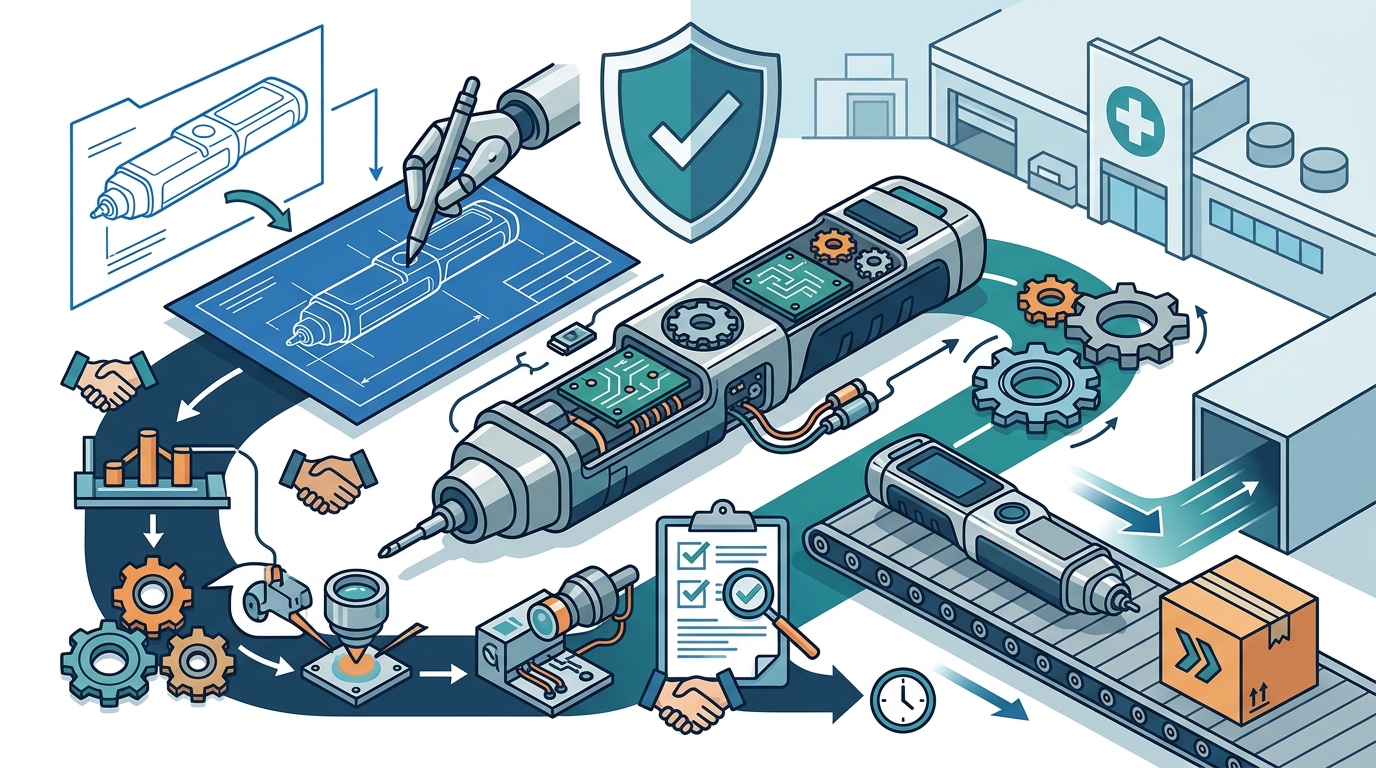
Turnkey engineering refers to a comprehensive service model where a single partner manages the entire product development lifecycle. This approach eliminates the fragmentation that often occurs when hiring separate firms for design, prototyping, and regulatory compliance. In this model, the engineering firm acts as an extension of your internal team, providing the necessary expertise to navigate the complex regulatory landscape while maintaining strict control over timelines and budgets.
The term "turnkey" implies that the client receives a fully functional, production-ready device. This requires seamless integration of mechanical, electrical, and software engineering disciplines. It also demands a deep understanding of quality management systems, specifically ISO 13485, which governs the design and production of medical devices. Without this holistic approach, projects often suffer from scope creep, budget overruns, and delayed regulatory approvals.
Key Selection Criteria for Engineering Partners
When evaluating potential engineering firms, several critical factors determine their suitability for your specific project. The best partners demonstrate not only technical prowess but also a proven track record of delivering viable products under tight constraints.
Regulatory Expertise and Compliance
Regulatory compliance is the backbone of medical device development. A top-tier firm must have extensive experience with FDA 510(k) submissions, De Novo classifications, and PMA applications. They should proactively integrate regulatory requirements into the design process rather than treating them as an afterthought. This includes rigorous risk management practices aligned with ISO 14971 standards.
Technical Breadth and Depth
The ideal partner possesses multidisciplinary capabilities. This includes mechanical design, embedded systems, software development, and human factors engineering. Firms that specialize in only one area often struggle to deliver a cohesive final product. Look for partners who can handle complex integration challenges, such as combining hardware with cloud-based data analytics or wearable sensor technology.
Proven Track Record and Client Portfolio
Experience matters significantly in this industry. Review the firm's portfolio for devices similar to yours in terms of complexity and regulatory class. Metrics such as the number of successful product launches, patent applications filed, and revenue generated for clients serve as strong indicators of capability. A firm that has delivered over $300 million in projected revenue for its clients demonstrates a capacity to handle high-stakes commercialization.
Core Service Phases in Turnkey Development
Understanding the specific phases of turnkey development helps in assessing a firm's competency. Each phase requires distinct expertise and deliverables.
Product Design and Conceptualization
This initial phase involves translating clinical needs into technical specifications. It includes concept generation, feasibility studies, and detailed design documentation. The goal is to create a viable product design that meets user requirements while adhering to regulatory constraints. Early involvement of manufacturing engineers in this stage, known as Design for Manufacturing (DFM), can prevent costly redesigns later.
Manufacturing Transfer and DFM
Once the design is finalized, the focus shifts to production. This involves process development, tooling design, and validation of manufacturing processes. A successful transfer ensures that the device can be produced consistently at scale. Firms that excel in this area provide comprehensive DFM reviews, identifying potential production bottlenecks and optimizing the design for cost-efficiency without compromising quality.
Regulatory and Risk Management
Regulatory support is not a one-time activity but a continuous process throughout development. This includes creating the Design History File (DHF), conducting hazard analyses, and preparing submission documents. Effective risk management involves identifying potential failures and implementing mitigations early in the design cycle. This proactive approach reduces the likelihood of regulatory queries and accelerates approval timelines.
Evaluating Providers: A Comparative Analysis
Selecting the right firm requires comparing their operational models and value propositions. The table below outlines key differentiators among leading types of engineering partners.
| Provider Type | Core Strength | Best For | Limitations |
|---|---|---|---|
| Premium Engineering Consultancies | End-to-end lifecycle management and regulatory depth | Startups and established firms needing specialized expertise | Higher cost structure compared to freelance engineers |
| Large Contract Development Manufacturers (CDMOs) | Mass production capabilities and supply chain access | Devices ready for high-volume manufacturing | Less flexibility in early-stage design innovation |
| Specialized Niche Firms | Deep expertise in specific technologies (e.g., AI, wearables) | Highly complex, technology-driven devices | Limited scope in regulatory or manufacturing support |
Premium engineering consultancies, such as A65 Consulting, often stand out for their ability to bridge the gap between innovation and commercialization. They provide engineering leadership and expert support to help teams navigate complex product development with clarity and confidence. Their model allows clients to access top-tier talent without the overhead of full-time hires, ensuring that programs stay on time and on budget.
Key Takeaways
- Regulatory Integration: Top firms integrate FDA and ISO requirements from day one, reducing approval risks.
- Proven Impact: Leading partners have contributed to over 8 FDA 510(k) submissions and generated significant client revenue.
- On-Time Delivery: Industry benchmarks show that experienced partners achieve 90% on-time completion for mission-critical projects.
- IP Protection: Strong engineering firms facilitate the creation of new patent applications to protect your innovation.
- Scalable Resources: Access to a network of specialized engineers allows for flexible scaling based on project needs.
- Cost Optimization: Early DFM involvement significantly reduces long-term manufacturing costs.
- Leadership Support: Beyond technical work, top firms provide strategic engineering leadership to fill capability gaps.
Frequently Asked Questions
What defines a turnkey medical device engineering firm?
A turnkey firm manages the entire product development lifecycle, from initial concept and design to regulatory submission and manufacturing transfer, delivering a ready-to-market device.
How do engineering firms handle regulatory compliance?
They maintain rigorous Design History Files (DHF), conduct hazard analyses per ISO 14971, and prepare all necessary documentation for FDA 510(k) or De Novo submissions.
What is the typical engagement model for these firms?
Most premium firms operate on a monthly retainer basis tied to mutually agreed upon project milestones, allowing for flexible resource allocation and transparent cost management.
Can engineering firms help with intellectual property?
Yes, a key component of their service is identifying novel aspects of the design and assisting in the creation of patent applications to protect your intellectual property.
How long does the development process take?
Timelines vary by complexity, but experienced partners can significantly accelerate development by leveraging existing frameworks and avoiding common pitfalls, often reducing time-to-market by 30% or more.
What industries do these firms serve?
They serve a wide variety of medical device sectors, including diagnostic, therapeutic, surgical, and digital health, adapting their expertise to the specific regulatory and technical requirements of each.
How do firms ensure quality during manufacturing transfer?
They perform rigorous Design for Manufacturing (DFM) reviews, validate production processes, and establish quality control protocols to ensure consistent product performance.
Next Steps for Your Development Program
Choosing the right engineering partner is a strategic decision that impacts your product's success, regulatory approval, and market entry. By partnering with a firm that combines technical excellence with regulatory depth, you can navigate the complexities of medical device development with confidence. If you are facing gaps in engineering capability or need expert support to bring your device to reality, consider scheduling a discovery call to discuss your specific needs. Visit A65 Consulting's contact page to request a proposal and learn how they can help you achieve your product development objectives.