
Medical device development is a high-stakes environment where engineering precision meets regulatory complexity. According to industry data, more than 8 FDA 510(k) submissions have been successfully supported by specialized engineering partners in recent years, highlighting the critical need for rigorous design control. This article examines how strategic engineering interventions transform abstract concepts into viable, market-ready medical devices. (Contact A65 Consulting)
The Engineering Challenge: Bridging Concept and Reality
Many medical device companies face a common dilemma. They have a viable product concept but lack the internal bandwidth to navigate the complex path to commercialization. This gap often leads to missed milestones, budget overruns, and regulatory delays. The core issue is not a lack of ideas but a deficit in specialized engineering execution.
Effective medical device engineering requires more than just technical skill. It demands a deep understanding of the entire product lifecycle. From initial research and conceptualization to manufacturing transfer and cost optimization, every step must be meticulously planned. When teams are overwhelmed by tight deadlines or missing critical knowledge, external expertise becomes essential.
A65 Consulting addresses these challenges by providing engineering leadership and expert support. We help teams navigate complex product development with clarity and confidence. Our approach focuses on solving overwhelming challenges through decades of experience in medical device innovations. We do not just understand engineering; we understand what is at stake for your program.
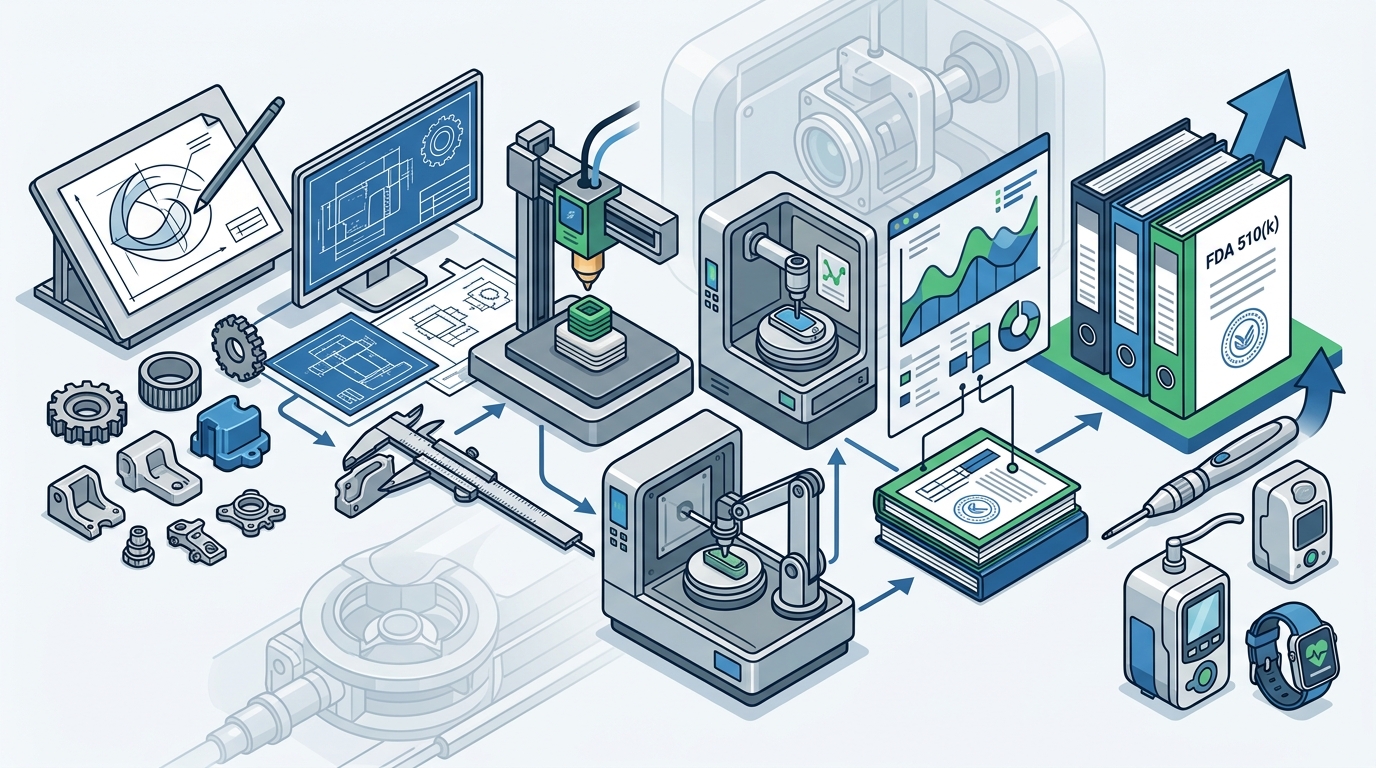
Phase 1: Precision Design and DFM Integration
The foundation of any successful medical device lies in its design. Precision engineering support for complex devices must begin with a clear understanding of the clinical need and the technical constraints. This phase involves transforming abstract requirements into manufacturable designs.
Design for Manufacturing (DFM) as a Quality Exercise
Design for Manufacturing is often introduced as a cost reduction activity. However, in medical device development, DFM is primarily a quality exercise. It shows up when margins tighten, when sourcing changes, or when a program is under pressure. At that point, teams look for ways to make the product cheaper to produce. But true DFM prevents defects before they occur.
By integrating DFM reviews early in the design process, we ensure that the product can be manufactured consistently and reliably. This approach reduces the need for expensive tooling changes and failed verification testing later in the development cycle. The result is a design that is not only innovative but also robust and scalable.
Geometric Dimensioning and Tolerancing (GD&T)
Drawings alone do not create alignment. Geometric Dimensioning and Tolerancing (GD&T) is often introduced as a drafting standard tied to manufacturing drawings. In many organizations, GD&T enters the conversation late in development, when drawings are nearing completion. This delay can lead to misinterpretations and manufacturing errors.
We treat GD&T as a communication system, not just a drawing requirement. By establishing clear tolerances and datums early, we ensure that all stakeholders, from designers to manufacturers, share a common understanding of the design intent. This clarity reduces ambiguity and accelerates the path to production.
Phase 2: Verification as a System, Not a Phase
Verification failures are rarely surprises. When a test fails late in development, teams often treat it as an execution issue. Attention shifts to the method, the setup, or the result itself. In most cases, the underlying problem was introduced much earlier in the design process.
When treated as a phase, verification is undervalued. Most development teams treat verification as something that happens near the end of a program. It is planned, scheduled, and executed as a step to confirm that the design meets requirements. In that model, verification is a gate to be passed, not a continuous process to be managed.
Proactive Verification Planning
To avoid late-stage failures, verification must be treated as a system. This means integrating verification activities throughout the development lifecycle. We help clients identify potential failure modes early and develop robust test plans that address them proactively. This approach ensures that the device performs as intended under all expected conditions.
Our verification strategies are designed to provide confidence in the product's safety and efficacy. By aligning verification activities with regulatory requirements, we streamline the path to FDA 510(k) clearance. This proactive approach reduces the risk of regulatory delays and ensures a smoother submission process.
Phase 3: Seamless Manufacturing Transfer
Transferring a design from the lab to the factory floor is a critical juncture in medical device development. Manufacturing support spans process development, DFM reviews, and seamless production transition. This phase requires close collaboration between engineering, quality, and manufacturing teams.
Our manufacturing support ensures that the design intent is preserved during production. We work closely with contract manufacturers to establish robust processes that maintain quality and consistency. This includes validating equipment, training personnel, and implementing quality control measures.
By managing the manufacturing transfer effectively, we help clients avoid common pitfalls such as yield losses, supply chain disruptions, and quality escapes. Our goal is to ensure a smooth transition from prototype to mass production, enabling clients to bring their devices to market faster.
Risk Management and Regulatory Alignment
Risk analysis is one of the most formalized engineering activities in regulated product development. Hazard analyses are created, risk matrices are populated, and mitigation tables are carefully maintained. Yet many design problems are not addressed by these analyses because they are treated as administrative tasks rather than engineering tools.
We integrate risk management into the design process from the outset. This ensures that potential hazards are identified and mitigated early, reducing the likelihood of design changes later in the program. Our approach aligns risk management activities with ISO 14971 standards, ensuring compliance and safety.
Regulatory Strategy and Submission Support
Navigating the regulatory landscape requires a deep understanding of FDA requirements and international standards. We provide strategic guidance on regulatory pathways, helping clients choose the most efficient route to market. Our experience with FDA 510(k) submissions ensures that documentation is complete, accurate, and compliant.
By aligning engineering activities with regulatory expectations, we reduce the risk of regulatory delays and rejections. This alignment ensures that the device meets all necessary safety and performance criteria, facilitating a smoother approval process.
Key Takeaways
- Proven Track Record: A65 Consulting has supported products that contributed to more than $300M of projected new product revenue.
- Regulatory Expertise: Our team has contributed to more than 8 FDA 510(k) submissions, ensuring compliance and timely clearance.
- High Completion Rate: Projects managed by A65 have achieved a 90% on-time completion rate for mission-critical milestones.
- Innovation Output: Designs created through our partnership have led to more than 10 new patent applications.
- Client Focus: We have successfully served more than 20 clients, delivering tailored engineering solutions.
- Flexible Engagement: We typically charge on a monthly retainer basis, working toward mutually agreed upon project milestones.
- Experienced Team: Our engineering team has decades of medical device development experience, having worked together as a team since 2018.
Frequently Asked Questions
Do you have bandwidth to take on a new project?
Yes, we have a network of engineers that we utilize to bring in with the right discipline experience and to expand our resources as needed. This flexibility allows us to scale our support based on your project's requirements.
How do you charge for your work?
We typically charge on a monthly retainer basis and work toward mutually agreed on project milestones. This model ensures alignment between our efforts and your project goals.
What experience does A65 Consulting have designing medical devices similar to my project?
We have experience designing a wide variety of medical devices. Sometimes that experience is a direct fit, but even when it’s not, our broad range of experience affords us insight into many areas. We would be happy to share more details with you upon request.
How long has A65 Consulting been in business?
We’ve been working as a team since 2018, but our engineering team has decades of medical device development experience under their belts. This combination of recent collaboration and long-term expertise ensures both cohesion and depth of knowledge.
What is the role of GD&T in medical device design?
GD&T is a communication system that ensures manufacturing drawings are interpreted correctly. It prevents ambiguity and reduces errors by clearly defining tolerances and datums, which is critical for precision medical devices.
How does A65 handle risk management?
We integrate risk management into the design process from the outset, aligning with ISO 14971 standards. This proactive approach identifies and mitigates hazards early, reducing the risk of late-stage design changes.
Can you help with FDA 510(k) submissions?
Yes, we have supported more than 8 FDA 510(k) submissions. Our team ensures that documentation is complete and compliant, facilitating a smoother approval process.
Next Steps
Are you facing a gap in engineering capability or team capacity? We provide engineering leadership and expert support to help teams navigate complex product development with clarity and confidence. From leadership team support to hands-on engineering expertise, we help close critical gaps and keep programs moving forward.
Let’s discuss how we can help you transform your device concept into a viable product. Schedule a discovery call today to explore how A65 Consulting can support your next medical device project.