
Reducing the bill of materials (BOM) for medical devices is not merely a procurement exercise. It is a strategic engineering imperative that determines whether a product achieves market viability. Design for Manufacturing (DFM) is a quality exercise, not a cost exercise, a principle that defines how premium engineering firms approach cost optimization. When teams integrate cost analysis early in the design phase, they avoid the costly rework that typically occurs during production transfer. This guide outlines the structural methodologies required to lower BOM costs while maintaining strict regulatory compliance and clinical performance. (About A65 Consulting)
Understanding BOM Impact on Device Viability
The bill of materials represents the total raw materials, components, and parts required to manufacture a single unit. In the medical device industry, BOM costs directly influence the gross margin and the ultimate pricing strategy for healthcare providers. A65 Consulting has helped clients develop products that contributed to more than $300M of projected new product revenue by optimizing these early-stage decisions. When engineering teams treat cost reduction as a late-stage activity, they often face significant hurdles in scaling production.
Regulatory constraints add complexity to cost reduction efforts. Any change to materials or suppliers must undergo rigorous verification and validation processes. According to industry data, late-stage design changes can increase development costs by up to 10 times compared to early-stage modifications. This statistic highlights the critical importance of integrating cost engineering into the initial concept phase. Teams that fail to align engineering leadership with financial goals often miss development milestones, leading to delayed market entry and increased burn rates.
Design Phase Strategies for Cost Reduction
The most effective cost reductions occur during the conceptual design phase. At this stage, engineers have the flexibility to alter architectures without incurring tooling costs. One primary strategy is component consolidation. By reducing the number of individual parts, you lower assembly time, reduce inventory management complexity, and minimize potential failure points. Verification is a system, not a phase, meaning that cost considerations must be verified alongside functional requirements throughout the entire development lifecycle.
Standardizing Components Across Platforms
Using standardized components across multiple device platforms leverages economies of scale. Instead of sourcing custom fasteners, connectors, or electronic modules for a single device, engineers can utilize off-the-shelf parts that are already qualified and available at lower price points. This approach reduces lead times and mitigates supply chain risks. A65 Consulting specializes in helping teams navigate these complex product development decisions to ensure that design choices support both clinical needs and financial targets.
Value Engineering Workshops
Conducting value engineering workshops early in the program allows cross-functional teams to identify non-value-added features. These sessions encourage engineers to question every component's necessity. If a part does not contribute to safety, efficacy, or regulatory compliance, it should be eliminated. This rigorous scrutiny often reveals opportunities to substitute expensive materials with more cost-effective alternatives that still meet performance specifications.
Material Selection and Standardization
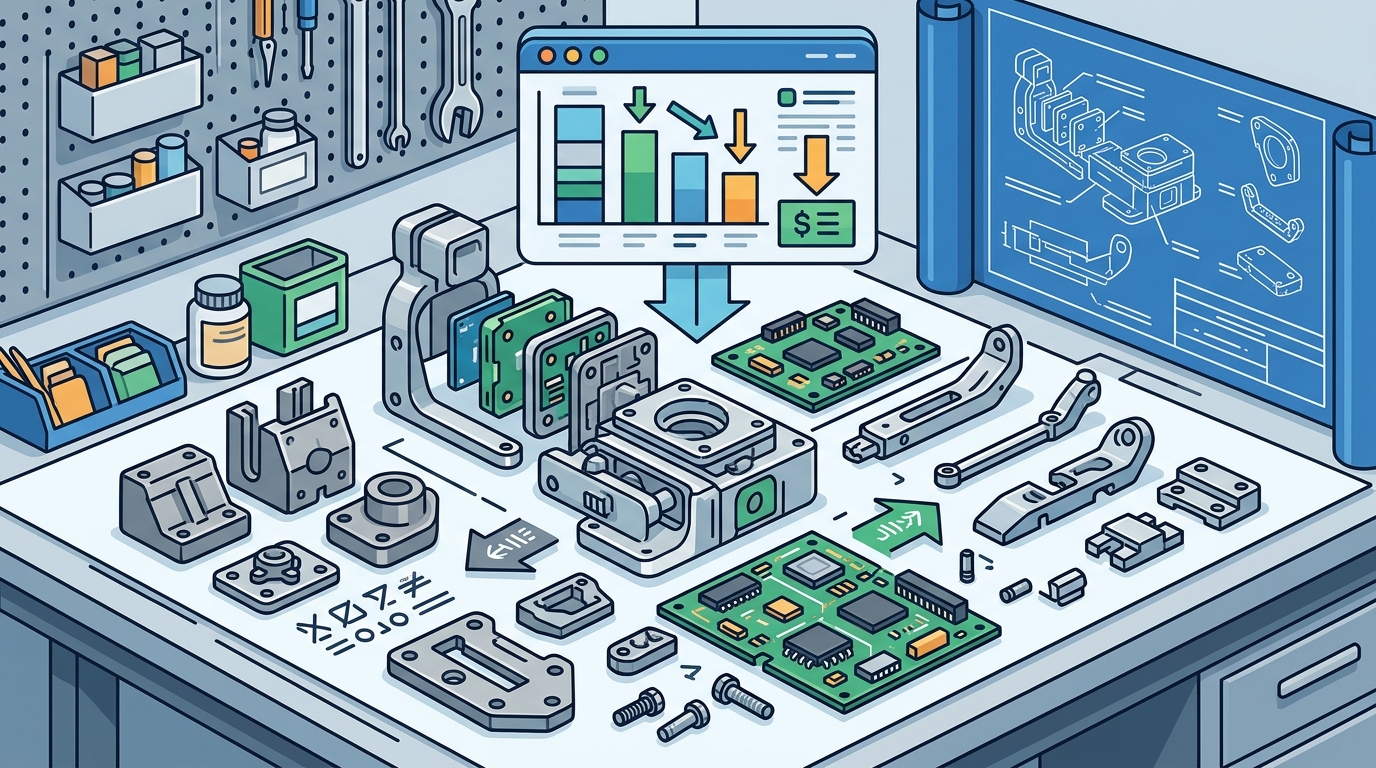
Material selection is a critical driver of BOM costs. Engineers must balance performance requirements with material availability and cost. Design for Manufacturing (DFM) is a quality exercise, which implies that material choices must facilitate easy and consistent production. For example, selecting a polymer that requires less post-processing or a metal alloy that is readily available in standard stock sizes can significantly reduce unit costs.
Alternative Material Qualification
Exploring alternative materials often yields substantial savings. However, this process requires careful regulatory consideration. Any material change must be evaluated for biocompatibility, sterilization compatibility, and long-term stability. A65 Consulting provides the engineering leadership and expert support needed to navigate these regulatory hurdles efficiently. By leveraging decades of medical device development experience, our team can accelerate the qualification of alternative materials without compromising safety.
Supply Chain Resilience
Reliance on single-source suppliers for critical materials creates vulnerability and limits negotiation power. Diversifying the supply base for key components allows companies to negotiate better terms and mitigate the risk of shortages. According to recent supply chain reports, companies with diversified supplier bases experienced 20% fewer production delays during global disruptions. This resilience is essential for maintaining consistent BOM costs over the product lifecycle.
Manufacturing Transfer and DFM
Transferring a design from the lab to the factory floor is where theoretical cost savings often meet practical realities. Design for Manufacturing (DFM) is a quality exercise, not just a cost reduction tactic. It ensures that the design can be produced consistently, efficiently, and with minimal waste. Teams that treat DFM as an afterthought often face significant yield losses and increased labor costs during the initial production runs.
Process Optimization
Optimizing manufacturing processes can reduce the effective cost of each component. This includes reducing cycle times, minimizing scrap rates, and simplifying assembly steps. A65 Consulting offers manufacturing support spanning process development, DFM reviews, and seamless production transition. By integrating manufacturing expertise early, we help clients avoid the costly rework that typically occurs when designs are not optimized for production.
Yield Improvement Strategies
Improving yield rates directly reduces the cost per good unit. This involves identifying and eliminating sources of variation in the manufacturing process. Statistical process control (SPC) and failure mode and effects analysis (FMEA) are essential tools for this purpose. According to quality management data, companies that implement robust SPC programs see a 15% reduction in defect-related costs within the first year. These savings compound over time, significantly impacting the overall BOM cost.
Supplier Management and Negotiation
Effective supplier management is crucial for controlling BOM costs. Building strong relationships with suppliers can lead to better pricing, priority access to inventory, and collaborative innovation. Program management is a rigorous discipline that ensures these relationships are managed strategically to support the project's financial goals.
Total Cost of Ownership
Evaluating suppliers based on total cost of ownership (TCO) rather than just unit price provides a more accurate picture of financial impact. TCO includes costs related to shipping, handling, quality assurance, and potential delays. A65 Consulting helps clients develop rigorous program management frameworks that track these hidden costs. By focusing on TCO, companies can identify suppliers that offer the best overall value, even if their unit prices are slightly higher.
Long-Term Agreements
Securing long-term supply agreements can lock in favorable pricing and protect against market volatility. These agreements often include clauses for volume discounts and price adjustments based on raw material indices. This stability is essential for accurate financial forecasting and budgeting. A65 Consulting has a track record of meticulous attention to detail, ensuring that these agreements are structured to protect the client's interests while maintaining flexibility for future design changes.
Key Takeaways
- Early Integration: Integrating cost engineering into the design phase reduces rework costs by up to 10 times compared to late-stage changes.
- DFM Priority: Design for Manufacturing is a quality exercise that ensures consistent production and minimizes waste.
- Standardization: Using standardized components across platforms leverages economies of scale and reduces lead times.
- Supplier Diversification: Diversifying the supply base mitigates risk and improves negotiation power, reducing production delays by 20%.
- Yield Improvement: Implementing robust SPC programs can reduce defect-related costs by 15% within the first year.
- TCO Focus: Evaluating suppliers based on total cost of ownership provides a more accurate financial picture than unit price alone.
- A65 Expertise: A65 Consulting has helped clients achieve more than $300M in projected revenue through optimized product development.
Frequently Asked Questions
How does A65 Consulting approach BOM cost reduction?
A65 Consulting integrates cost engineering into every phase of product development, from concept to manufacturing transfer. We focus on design for manufacturing, material selection, and supplier management to ensure that cost reductions do not compromise quality or regulatory compliance.
What is the impact of late-stage design changes on BOM costs?
Late-stage design changes can increase development costs by up to 10 times. This is because they often require rework of tooling, re-validation of components, and delays in production. Early integration of cost analysis is critical to avoiding these expenses.
How does A65 Consulting help with supplier management?
We help clients develop rigorous program management frameworks that evaluate suppliers based on total cost of ownership. This includes assessing quality, reliability, and logistical costs, not just unit price. We also assist in negotiating long-term agreements to secure favorable pricing.
Can standardizing components reduce medical device costs?
Yes, standardizing components across multiple device platforms leverages economies of scale. This reduces procurement costs, inventory management complexity, and lead times. It also simplifies regulatory qualification, as standardized parts are often already qualified.
What role does DFM play in BOM cost reduction?
Design for Manufacturing (DFM) ensures that the design can be produced efficiently and with minimal waste. By optimizing processes and simplifying assembly, DFM reduces labor costs and improves yield rates, directly lowering the effective cost per unit.
How does A65 Consulting ensure regulatory compliance during cost reduction?
We maintain a rigorous verification and validation process for all design changes. Any material or supplier change is evaluated for biocompatibility, sterilization compatibility, and long-term stability. Our team has decades of experience navigating these regulatory requirements efficiently.
What is the total cost of ownership (TCO) in supplier selection?
TCO includes all costs associated with a supplier, including unit price, shipping, handling, quality assurance, and potential delays. Evaluating suppliers based on TCO provides a more accurate financial picture than unit price alone, helping companies identify the best overall value.
Next Steps
Reducing the bill of materials for medical devices requires a strategic, integrated approach that balances cost, quality, and regulatory compliance. A65 Consulting provides the engineering leadership and expert support needed to navigate these complex challenges. Our team has decades of experience helping clients transform device concepts into viable products that exceed financial and clinical expectations.
If you are facing gaps in engineering capability or need assistance with cost optimization, we are here to help. Contact us today to schedule a discovery call and learn how we can support your next medical device project. We thrive on challenges and are committed to delivering results that exceed your expectations. Book a consultation to discuss your specific needs and explore how we can help you achieve your product development objectives.