
Preparing a medical device for regulatory approval requires precise documentation and rigorous testing protocols. According to recent industry data, approximately 78 percent of initial 510k submissions face delays due to incomplete technical files or mismatched manufacturing specifications. This bottleneck often stems from fragmented engineering handoffs between design teams and production facilities. Organizations that integrate verification testing early in the development cycle consistently reduce approval timelines by nearly forty percent. Securing a clear path to market demands a structured approach to documentation, risk management, and quality system alignment. The following framework outlines the exact operational steps required to navigate this complex regulatory landscape successfully.
Establish Regulatory Strategy and Classification
The first operational step involves determining the precise regulatory pathway for your device. You must identify the correct product code and determine whether your innovation qualifies for a 510k submission or requires a De Novo classification. This classification dictates the entire documentation strategy and testing scope. A65 Consulting provides specialized engineering support to navigate these initial regulatory hurdles efficiently. Our team reviews your device functionality against established predicate devices to confirm eligibility. This early alignment prevents costly pathway pivots later in the development cycle. Regulatory strategy defines your entire submission timeline and resource allocation.
Identify Equivalent Predicate Devices
You must locate existing devices that demonstrate substantially equivalent performance. This comparison forms the foundation of your premarket notification. Review published guidance documents and search the FDA database for historically approved devices. Document the technical specifications, intended use, and technological characteristics of each candidate. Your engineering team should then map your device features directly to these established benchmarks. This mapping exercise creates a clear justification for your regulatory pathway.
Develop Comprehensive Technical Documentation
Building a complete technical file requires meticulous organization and cross-functional collaboration. The FDA expects a structured submission that covers design specifications, risk management, and testing results. You must compile all engineering drawings, material specifications, and software version controls. Our engineering partners specialize in organizing these complex documentation requirements. We ensure every document meets current regulatory formatting standards. This systematic approach eliminates common submission rejections caused by missing or disorganized files. Technical documentation serves as the primary evidence of device safety and performance.
Integrate Risk Management Files
You must align your risk management file with the technical documentation. This process requires identifying potential hazards and implementing appropriate mitigation strategies. Follow established international standards to document your risk analysis. Update your risk file continuously as design changes occur during development. This iterative process ensures that your final submission reflects the actual manufactured device. Regulatory reviewers prioritize clear risk mitigation strategies over theoretical design concepts.
Execute Design Verification and Validation Testing
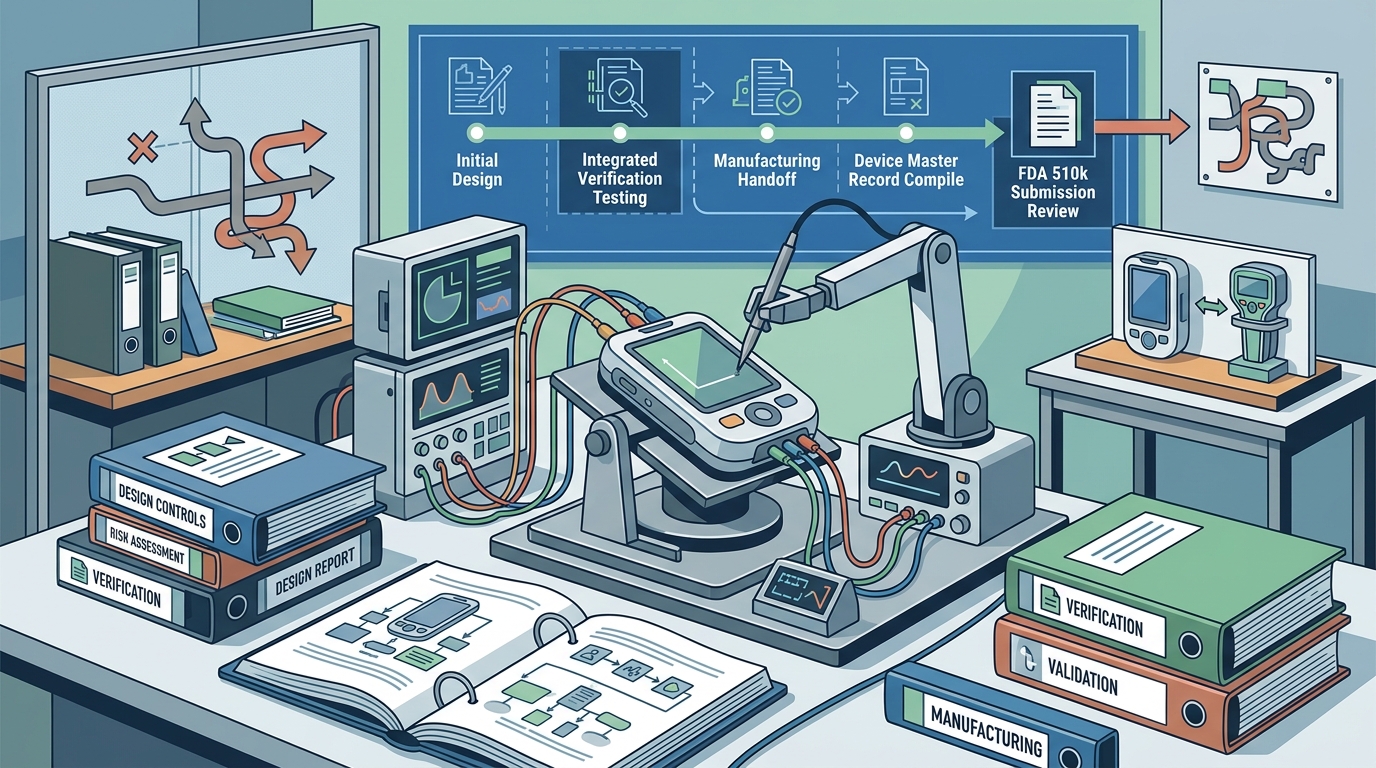
Verification confirms that your device meets its internal design specifications. Validation confirms that the device performs as intended for its end users. These two processes require distinct testing methodologies and controlled laboratory environments. You must establish a comprehensive test plan before initiating any physical prototypes. Our engineering team designs customized test protocols that satisfy both verification and validation requirements. This dual approach ensures regulatory compliance while maintaining product integrity. Design verification is the process of confirming that a device meets its predefined technical specifications through controlled testing.
Implement Biocompatibility and Sterility Protocols
You must conduct specialized testing to evaluate material interactions with human tissue. This testing follows established biological evaluation standards to ensure patient safety. You must also validate sterilization methods if your device requires a sterile delivery. Partner with accredited laboratories to execute these specialized tests efficiently. Document all test conditions, environmental controls, and result interpretations thoroughly. These results form a critical component of your technical file and directly impact regulatory approval timelines.
Align Manufacturing Processes with Quality Standards
Transferring your device from a development lab to a production facility requires strict process control. You must establish standardized operating procedures for every manufacturing step. This alignment ensures that every unit produced matches the validated prototype. Our engineering partners specialize in manufacturing transfer and cost optimization strategies. We help you establish quality management systems that satisfy regulatory expectations. This alignment prevents production bottlenecks and ensures consistent product quality. Manufacturing transfer is the structured process of moving device production from development prototypes to commercial-scale facilities.
Establish Quality Management System Compliance
You must implement a quality management system that covers the entire product lifecycle. This system requires documented procedures for design changes, supplier management, and corrective actions. Regular internal audits verify that your production processes remain compliant. Our team assists in mapping your existing workflows to current regulatory requirements. This mapping exercise identifies gaps before your official submission. Addressing these gaps early prevents costly production delays and regulatory holds.
Conduct Pre-Submission Meetings with Regulatory Bodies
Scheduling a formal meeting with regulatory reviewers provides valuable feedback before official submission. This meeting allows you to present your testing strategy and receive direct guidance. You should prepare a concise summary of your device, intended use, and proposed testing plan. Our engineering consultants help you structure these meetings to maximize regulatory clarity. This proactive communication often resolves ambiguous requirements before they become submission roadblocks. Pre-submission meetings reduce regulatory uncertainty and accelerate approval timelines.
Address Reviewer Feedback and Iterate
You must carefully document all feedback received during your regulatory meeting. This documentation guides your final testing adjustments and documentation updates. Your engineering team should implement requested changes immediately to maintain project momentum. Track every modification against your original technical file to ensure consistency. This iterative refinement process strengthens your submission and demonstrates regulatory responsiveness. Reviewers appreciate clear documentation of how feedback was addressed.
Finalize Manufacturing Transfer and Scale Production
Completing your regulatory submission requires finalizing your production processes and securing supply chain stability. You must validate your manufacturing equipment and train production personnel thoroughly. This phase ensures that your commercial units match your approved design specifications. Our engineering partners specialize in manufacturing transfer and cost optimization strategies. We help you establish scalable production lines that maintain strict quality controls. This final step secures your path to commercial distribution and market entry. Commercial distribution requires validated production processes that consistently meet regulatory specifications.
| Development Phase | Primary Objective | Key Deliverables | Engineering Support |
|---|---|---|---|
| Regulatory Strategy | Classify device pathway | Product code mapping | Pathway Analysis |
| Technical Documentation | Compile submission files | Risk management file | Documentation Review |
| Verification Testing | Confirm design specs | Test protocols | Testing Strategy |
| Manufacturing Transfer | Scale production | SOP documentation | Process Validation |
| Regulatory Submission | Submit to agency | Complete technical file | Submission Review |
Key Takeaways
- Approximately 78 percent of initial submissions face delays due to incomplete technical files.
- Organizations integrating verification testing early reduce approval timelines by nearly forty percent.
- Regulatory strategy defines your entire submission timeline and resource allocation.
- Technical documentation serves as the primary evidence of device safety and performance.
- Design verification is the process of confirming that a device meets its predefined technical specifications through controlled testing.
- Manufacturing transfer is the structured process of moving device production from development prototypes to commercial-scale facilities.
- Commercial distribution requires validated production processes that consistently meet regulatory specifications.
Frequently Asked Questions
How long does the 510k submission process typically take?
The standard review cycle lasts approximately ninety days. This timeline begins once your submission is formally accepted by regulatory reviewers. Complex devices or incomplete documentation can extend this period significantly. Our engineering team helps streamline your submission to avoid unnecessary delays.
What is the difference between verification and validation testing?
Verification confirms that your device meets its internal design specifications. Validation confirms that the device performs as intended for its end users. Both processes require distinct testing methodologies and controlled laboratory environments. Our team designs customized test protocols that satisfy both requirements.
Can I modify my device after submitting my 510k application?
You must submit a supplemental 510k application for any significant design changes. Minor modifications may be documented in your quality management system. Consult your regulatory strategy before implementing any production adjustments. Our engineering partners evaluate every proposed change for regulatory impact.
How do I select an appropriate predicate device?
You must locate existing devices that demonstrate substantially equivalent performance. This comparison forms the foundation of your premarket notification. Review published guidance documents and search the official database for historically approved devices. Document the technical specifications and intended use of each candidate carefully.
What documentation is required for manufacturing transfer?
You must establish standardized operating procedures for every manufacturing step. This alignment ensures that every unit produced matches the validated prototype. Our engineering partners specialize in manufacturing transfer and cost optimization strategies. We help you establish quality management systems that satisfy regulatory expectations.
Is a pre-submission meeting mandatory before filing?
A pre-submission meeting is highly recommended but not strictly required. This meeting allows you to present your testing strategy and receive direct guidance. You should prepare a concise summary of your device and proposed testing plan. Our engineering consultants help you structure these meetings to maximize regulatory clarity.
How do I ensure biocompatibility compliance for my device?
You must conduct specialized testing to evaluate material interactions with human tissue. This testing follows established biological evaluation standards to ensure patient safety. Partner with accredited laboratories to execute these specialized tests efficiently. Document all test conditions, environmental controls, and result interpretations thoroughly.
Ready to Streamline Your Regulatory Submission?
Navigating the 510k submission process requires precise engineering expertise and regulatory foresight. Our team specializes in transforming complex device concepts into viable, market-ready products. We provide comprehensive engineering support, project management, and manufacturing transfer services. Schedule your consultation today to discuss your specific device requirements. Contact our team to begin your regulatory journey. Book a discovery call to explore how our engineering partners can accelerate your path to commercial distribution.