
Medical device development is inherently capital-intensive, with prototyping, regulatory compliance, and manufacturing transfers consuming significant portions of a startup or established company's budget. Cost optimization is not merely a financial exercise; it is a critical engineering discipline that determines whether a viable product can reach the market sustainably. According to industry benchmarks, effective design for manufacturing (DFM) strategies can reduce production costs by up to 30% before mass production begins. This statistic highlights the importance of integrating cost-conscious engineering early in the development cycle rather than treating it as a post-launch adjustment. (Contact A65 Consulting)
Understanding Cost Optimization in Medical Devices
Cost optimization in medical device engineering refers to the systematic reduction of expenses associated with product development, manufacturing, and lifecycle management without compromising safety, efficacy, or regulatory compliance. Design for Manufacturing (DFM) is a structured approach to designing products that are easy and cost-effective to manufacture. This process involves analyzing component geometry, material selection, and assembly sequences to eliminate unnecessary complexity.
Many organizations mistakenly view cost optimization as a phase that occurs after the design is finalized. In reality, the majority of a product's cost is locked in during the conceptual and detailed design phases. Decisions made regarding tolerances, surface finishes, and standard versus custom components have a compounding effect on downstream expenses. By engaging experts who specialize in these areas, companies can identify cost-saving opportunities that internal teams might overlook due to familiarity bias or resource constraints.
Furthermore, regulatory compliance adds a layer of complexity that can inflate costs if not managed efficiently. A65 Consulting specializes in navigating these regulatory landscapes, ensuring that cost-saving measures do not inadvertently trigger additional validation requirements or submission delays. This holistic approach ensures that every dollar spent contributes directly to product viability and market readiness.
When to Engage an External Engineering Partner
Determining the right time to bring in an external engineering firm for cost optimization depends on several factors, including internal capacity, technical complexity, and project timelines. Engineering outsourcing is the practice of contracting third-party specialists to handle specific aspects of product development. This strategy is particularly effective when internal teams lack specialized expertise in areas such as high-precision machining, complex electronics integration, or advanced material science.
Consider engaging an external partner if your team is facing a gap in engineering capability. For instance, if your internal engineers are primarily focused on software or clinical validation, they may not have the bandwidth to optimize mechanical designs for manufacturability. External firms like A65 Consulting provide immediate access to multidisciplinary teams that can address these gaps without the long lead times associated with hiring full-time staff.
Additionally, if your project is under tight deadlines, an external partner can accelerate the design-to-manufacturing transition. Their experience with similar devices allows them to anticipate potential cost drivers and mitigate them proactively. This proactive stance is crucial for maintaining budget integrity and ensuring that the final product meets its target cost of goods sold (COGS).
Key Methodologies for Reducing Development Costs
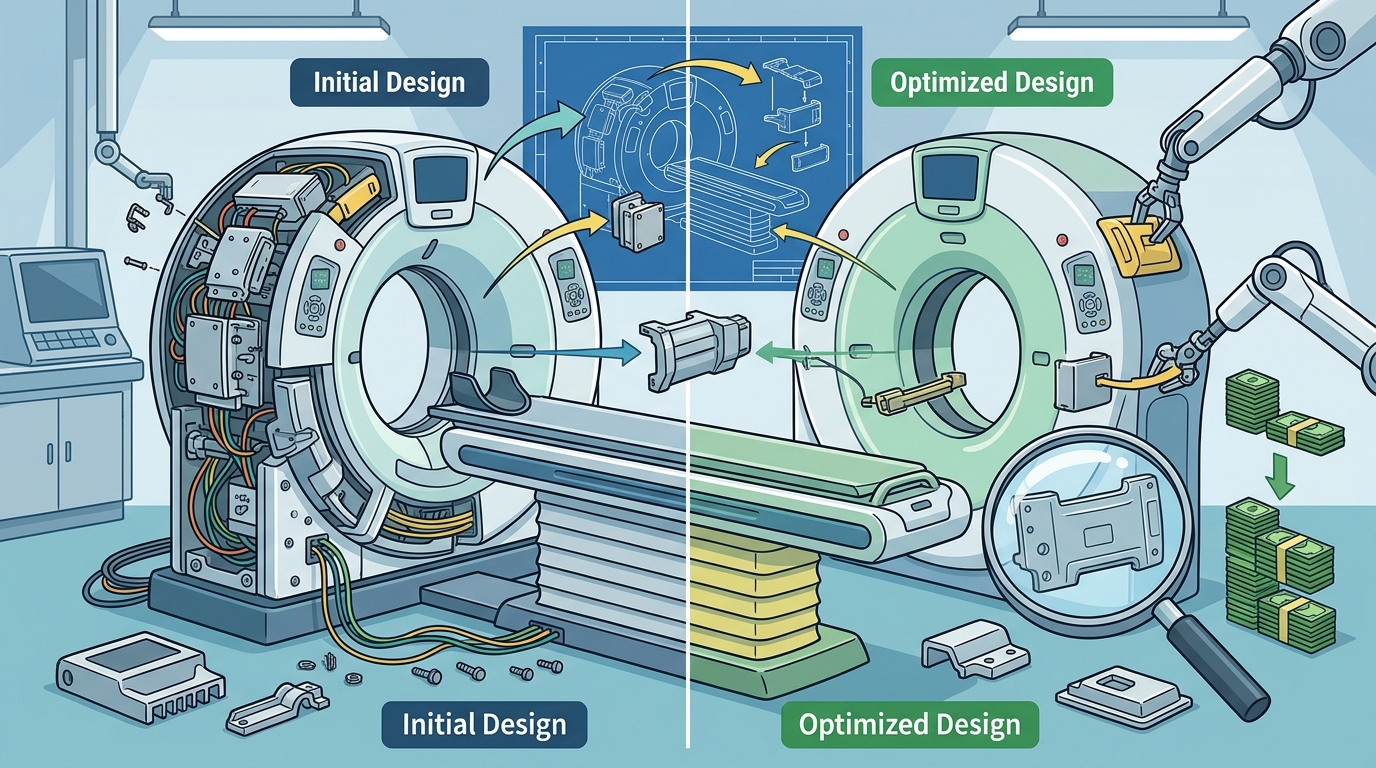
Effective cost optimization relies on proven engineering methodologies that target specific areas of expense. One of the most impactful strategies is rigorous Design for Manufacturing (DFM) review. This involves collaborating with manufacturing experts early in the design process to ensure that components can be produced efficiently. Design for Manufacturing (DFM) is a systematic process of designing products to simplify manufacturing and reduce costs. By standardizing parts and minimizing unique tooling requirements, companies can significantly lower per-unit costs.
Another critical methodology is value engineering, which focuses on maximizing the function-to-cost ratio of each component. This involves evaluating alternative materials or manufacturing processes that offer the same performance at a lower price point. For example, switching from a custom-machined part to a stamped metal component can reduce costs by orders of magnitude if the design allows for it.
Verification and validation planning also play a role in cost control. Inefficient testing protocols can lead to repeated iterations and wasted resources. By integrating verification strategies that align with regulatory expectations from the start, engineering firms can reduce the number of design cycles required to achieve compliance. This approach not only saves money but also accelerates time to market, which is a critical factor in the competitive medical device landscape.
Strategic Benefits of Outsourcing Engineering
Outsourcing engineering functions offers several strategic advantages beyond immediate cost savings. One of the primary benefits is access to specialized expertise. External firms often work across a wide variety of medical device categories, giving them a broad perspective on best practices and innovative solutions. This cross-pollination of ideas can lead to breakthroughs in cost reduction that might not be possible within a siloed internal team.
Flexibility is another key benefit. Medical device development often involves fluctuating resource needs. During intense design phases, additional engineering support may be required. Conversely, during regulatory submission periods, the focus may shift to documentation and compliance. An external partner can scale their resources up or down to match these demands, providing cost efficiency that fixed internal headcount cannot match.
Moreover, external engineering firms bring objectivity to the development process. Internal teams may become attached to specific design choices due to personal investment or historical precedent. An external partner can challenge these assumptions with data-driven insights, ensuring that decisions are made based on technical merit and cost efficiency rather than inertia. This objectivity is essential for achieving true cost optimization.
Internal Teams vs. External Engineering Firms
Choosing between building an internal team and hiring an external engineering firm requires a careful analysis of costs, capabilities, and strategic goals. The following table outlines the key differences to help guide this decision.
| Factor | Internal Engineering Team | External Engineering Partner |
|---|---|---|
| Cost Structure | High fixed costs (salaries, benefits, infrastructure) | Variable costs (retainers, milestone-based fees) |
| Expertise Breadth | Limited to specific domains and experience | Multi-disciplinary and cross-industry insights |
| Scalability | Slow to scale up or down | Rapid resource adjustment |
| Time to Start | Months for hiring and onboarding | Immediate availability |
| Focus | May be distracted by other internal priorities | Dedicated to your project's success |
While internal teams offer deep institutional knowledge, they often lack the specialized manufacturing and regulatory expertise required for optimal cost optimization. External partners like A65 Consulting provide a blend of technical depth and strategic oversight that can drive significant value. Their experience with over 20 clients and contributions to more than $300M of projected new product revenue demonstrates their ability to deliver results at scale.
Key Takeaways
- Early Integration is Critical: Cost optimization must begin during the conceptual design phase to have the maximum impact on final product costs.
- DFM is a Quality Exercise: Design for Manufacturing is not just about cost; it is essential for ensuring product quality and reliability.
- External Expertise Adds Value: External engineering firms bring specialized knowledge in regulatory compliance and manufacturing that internal teams may lack.
- Flexibility Drives Efficiency: Outsourcing allows companies to scale resources according to project needs, avoiding the overhead of fixed internal staff.
- Proven Track Record: A65 Consulting has helped clients achieve 90% on-time completion of mission-critical projects, demonstrating reliability in delivery.
- Regulatory Alignment: Cost-saving measures must always be balanced with regulatory requirements to avoid costly delays or rejections.
- Strategic Partnership: Viewing an engineering firm as a partner rather than a vendor fosters collaboration and innovative problem-solving.
Frequently Asked Questions
Can an external engineering firm really reduce my manufacturing costs?
Yes. By applying rigorous Design for Manufacturing (DFM) principles and leveraging experience with various production methods, external firms can identify cost-saving opportunities in materials, tolerances, and assembly processes that internal teams might miss.
How does A65 Consulting charge for cost optimization services?
A65 Consulting typically charges on a monthly retainer basis and works toward mutually agreed upon project milestones. This model aligns their incentives with your project's success and provides predictable budgeting.
Is it safe to share proprietary design information with an external partner?
Absolutely. Reputable engineering firms like A65 Consulting operate under strict confidentiality agreements and have robust data security protocols in place to protect your intellectual property throughout the engagement.
What is the difference between cost optimization and cost cutting?
Cost cutting often involves reducing quality or features to save money. Cost optimization, however, focuses on eliminating waste and inefficiency in the design and manufacturing process while maintaining or enhancing product value and performance.
How long does the cost optimization process take?
The timeline depends on the complexity of the device and the phase of development. However, integrating cost optimization early can prevent costly redesigns later, ultimately saving time and money over the project lifecycle.
Do you have experience with FDA 510(k) submissions?
Yes, our products developed have contributed to more than 8 FDA 510k submissions. We ensure that cost-saving design choices remain compliant with regulatory standards.
Can you help with manufacturing transfer?
Yes, we provide manufacturing support spanning process development, DFM reviews, and seamless production transition to ensure that the design can be manufactured efficiently at scale.
Next Steps for Your Project
Optimizing the cost of your medical device is not just about saving money; it is about ensuring the viability and success of your product in the market. By partnering with an experienced engineering firm, you gain access to specialized expertise, flexible resources, and a proven track record of delivering results.
If you are ready to explore how external engineering support can accelerate your development and reduce costs, schedule a discovery call with A65 Consulting today. Our team is prepared to help you navigate the complexities of medical device engineering and bring your vision to reality.