

How to Reduce Unit Manufacturing Costs for Complex Medical Devices
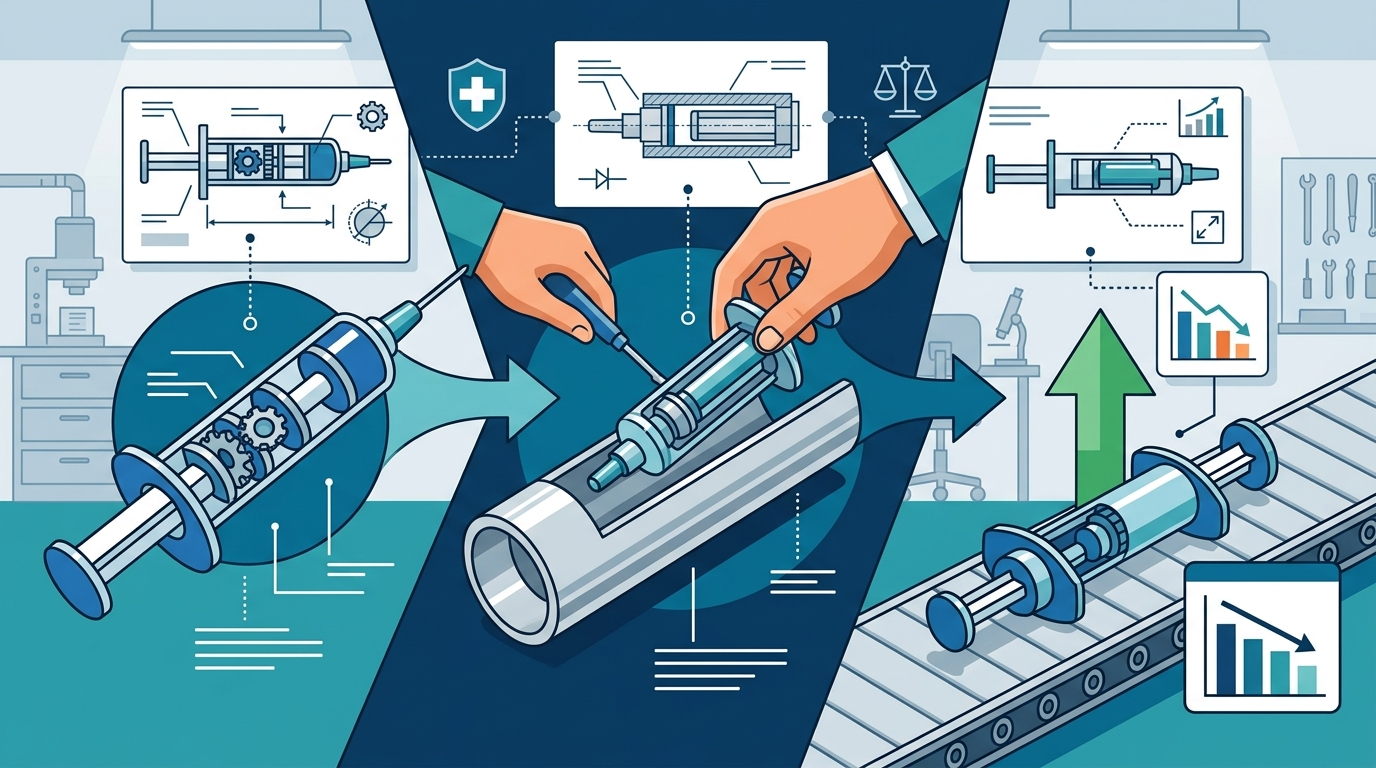
Manufacturing cost optimization in the medical device sector is rarely about simple material substitution. It is a complex engineering challenge that balances regulatory compliance, clinical safety, and production scalability. According to industry benchmarks, effective design for manufacturing (DFM) strategies can reduce total product costs by 20 to 30 percent before mass production begins. This guide outlines the critical engineering phases where cost reduction is most impactful, from initial concept to final assembly. (About A65 Consulting)
Understanding Design for Manufacturing (DFM)
Design for Manufacturing (DFM) is a systematic engineering approach that ensures a product is designed to be manufactured efficiently, reliably, and cost-effectively. In the context of complex medical devices, DFM is not merely a cost-cutting exercise but a quality assurance mechanism. When design teams integrate manufacturing constraints early in the development cycle, they avoid the expensive and time-consuming rework that typically occurs during the transition from prototype to production. (Services A65 Consulting)
Many organizations mistakenly treat DFM as a final review step. This approach often leads to significant delays and budget overruns. A65 Consulting emphasizes that DFM should be viewed as a quality exercise rather than just a cost reduction activity. By engaging manufacturing experts during the conceptual phase, engineers can identify potential production bottlenecks, such as difficult-to-machine geometries or tight tolerances that require specialized tooling, before they become costly problems. (Medical Device Design Consulting)
The integration of DFM principles requires a collaborative environment where design, quality, and manufacturing teams work in unison. This collaborative model helps in identifying opportunities for part consolidation, which reduces assembly time and inventory management costs. For instance, combining multiple components into a single molded part can eliminate fasteners, seals, and assembly steps, directly lowering the unit cost. (Blog A65 Consulting)
Strategic Material Selection
Material costs often represent a significant portion of the bill of materials (BOM) for medical devices. However, selecting materials solely based on upfront cost can lead to higher total costs due to processing difficulties or regulatory hurdles. The goal is to select materials that offer the best balance of performance, manufacturability, and cost.
One effective strategy is to utilize standard, off-the-shelf materials whenever possible. Custom extrusions, specialized alloys, or proprietary polymers often come with high minimum order quantities (MOQs) and long lead times. By adhering to industry-standard material grades, companies can leverage economies of scale and reduce procurement costs. Additionally, standard materials are often easier to source, reducing supply chain risk.
Another critical aspect of material selection is considering the processing method. Some materials are easier to mold, machine, or assemble than others. For example, choosing a polymer with a wider processing window can reduce scrap rates during injection molding. Similarly, selecting metals that are easier to weld or bond can improve assembly yield rates. These subtle choices in material science can have a profound impact on the final unit cost.
Process Optimization and Automation
Process optimization involves refining the manufacturing steps to maximize efficiency and minimize waste. In complex medical device production, even small improvements in cycle time or yield can result in significant cost savings at scale. Automation plays a pivotal role in this optimization, particularly for repetitive tasks such as assembly, testing, and packaging.
Automated assembly systems can reduce labor costs and improve consistency. However, the initial investment in automation must be justified by the production volume. For low-volume, high-complexity devices, semi-automated solutions or flexible manufacturing cells may be more cost-effective than fully automated lines. The key is to align the level of automation with the production requirements and cost structure.
Furthermore, process optimization includes the reduction of non-value-added activities. This can involve streamlining workflows, reducing setup times, and minimizing material handling. Lean manufacturing principles, such as value stream mapping, can help identify and eliminate waste in the production process. By focusing on continuous improvement, companies can steadily reduce unit costs over time without compromising quality.
Supply Chain and Component Standardization
A robust supply chain strategy is essential for controlling manufacturing costs. Component standardization is a powerful tool in this regard. By using standard components across multiple product lines, companies can increase purchasing power, reduce inventory complexity, and mitigate supply chain risks.
Standardization also simplifies the qualification process. When a component is used across several devices, its regulatory and quality documentation is already in place, reducing the time and cost associated with new component qualification. This approach is particularly beneficial for medical device companies with diverse product portfolios.
Additionally, diversifying the supplier base can help prevent cost inflation and supply disruptions. Relying on a single supplier for critical components creates vulnerability. By qualifying alternative suppliers, companies can maintain competitive pricing and ensure business continuity. Regular supplier audits and performance evaluations are also crucial for maintaining quality and cost efficiency.
Reducing Verification and Validation Costs
Verification and validation (V&V) are critical phases in medical device development, but they can also be significant cost drivers. Late-stage verification failures are particularly expensive, often requiring design changes and retesting. Therefore, integrating verification planning early in the development process is essential for cost control.
One effective strategy is to adopt a risk-based approach to V&V. By focusing testing efforts on the most critical functions and user interactions, companies can reduce the scope of testing without compromising safety or efficacy. This approach aligns with regulatory expectations and helps in managing resources more efficiently.
Another key aspect is the use of simulation and modeling tools. Virtual testing can help identify potential design flaws and performance issues before physical prototypes are built. This reduces the number of prototype iterations required, saving both time and money. As noted in recent engineering analyses, treating verification as a system rather than a phase can significantly improve outcomes and reduce costs.
Key Takeaways
- Early DFM Integration: Engaging manufacturing experts during the design phase can reduce total product costs by 20 to 30 percent.
- Material Strategy: Utilizing standard, off-the-shelf materials reduces procurement costs and supply chain risk.
- Process Efficiency: Aligning automation levels with production volume ensures optimal return on investment.
- Component Standardization: Reusing components across product lines simplifies qualification and increases purchasing power.
- Risk-Based V&V: Focusing verification efforts on critical functions reduces testing costs and time.
- Supplier Diversification: Qualifying alternative suppliers mitigates cost inflation and supply disruptions.
- Virtual Testing: Using simulation tools reduces the need for physical prototype iterations.
Frequently Asked Questions
How does DFM impact the overall cost of a medical device?
DFM impacts cost by identifying manufacturing constraints early, which prevents expensive design changes and rework during production. It also helps in selecting materials and processes that are easier and cheaper to produce.
What are the benefits of standardizing components?
Standardizing components reduces inventory complexity, increases purchasing power, and simplifies regulatory qualification. It also allows for economies of scale in procurement.
When should automation be considered for medical device manufacturing?
Automation should be considered when production volumes are high enough to justify the initial investment. For low-volume devices, semi-automated or flexible manufacturing solutions may be more cost-effective.
How can verification costs be reduced?
Verification costs can be reduced by adopting a risk-based testing approach, using simulation tools for virtual testing, and integrating verification planning early in the development cycle.
What role does supply chain management play in cost reduction?
Supply chain management plays a crucial role by ensuring competitive pricing, mitigating supply risks, and optimizing inventory levels. Diversifying suppliers and standardizing components are key strategies.
Can material substitution significantly lower costs?
Yes, but it must be done carefully. Substituting materials should not compromise performance or regulatory compliance. Standard materials often offer the best balance of cost and manufacturability.
How does A65 Consulting help with cost reduction?
A65 Consulting provides expert engineering support throughout the product development lifecycle, including DFM reviews, process optimization, and supply chain strategy, to help clients reduce costs while maintaining quality.
Next Steps
Reducing unit manufacturing costs for complex medical devices requires a holistic approach that integrates engineering, manufacturing, and supply chain expertise. By implementing the strategies outlined in this guide, you can achieve significant cost savings without compromising product quality or regulatory compliance.
If you are looking to optimize your medical device manufacturing costs, A65 Consulting is here to help. Our team of experienced engineers can provide the expertise and support you need to navigate the complexities of product development and manufacturing. Contact us today to schedule a consultation and learn how we can assist you in achieving your cost reduction goals.