
Accelerate Medical Device Manufacturing Transfer: A Strategic 2026 Guide
Manufacturing transfer is the critical bridge between a validated prototype and a commercially viable medical device. According to industry benchmarks, nearly 80% of medical device projects experience delays during the transition from development to production FDA guidance. These delays often stem from fragmented communication between engineering and manufacturing teams, insufficient design for manufacturability (DFM) analysis, and reactive rather than proactive quality planning. For startups operating on tight capital runways, every month of delay represents a significant burn rate increase and a delay in revenue generation. This guide outlines the precise engineering and operational strategies to accelerate this transfer while maintaining regulatory compliance and product integrity. (About A65 Consulting)
Understanding the Manufacturing Transfer Lifecycle
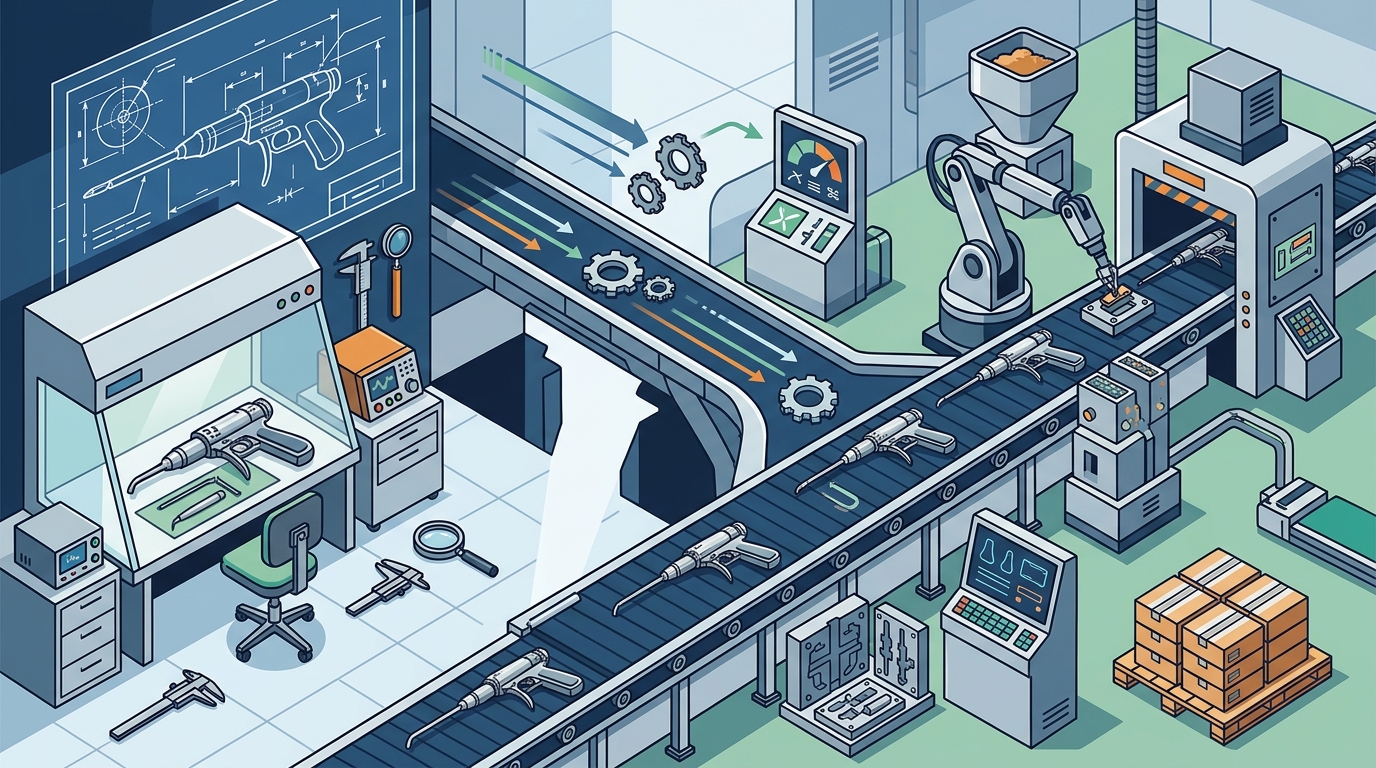
Manufacturing transfer is not a single event but a structured process that moves a product from the laboratory bench to the factory floor. Design for Manufacturing is a quality exercise, not a cost exercise A65 Blog. This distinction is vital for startups that often view manufacturing solely through the lens of unit cost reduction. In reality, the primary goal of the transfer phase is to ensure that the design can be reproduced consistently, safely, and at scale.
The lifecycle typically involves three distinct phases: pre-transfer planning, the actual transfer execution, and post-transfer stabilization. During pre-transfer planning, engineering teams must define the manufacturing process flow, identify critical process parameters, and establish acceptance criteria. The execution phase involves the physical move of components, tooling, and documentation to the manufacturing site. Finally, post-transfer stabilization ensures that the process is capable and stable before full-scale production begins.
Startups often fail to allocate sufficient resources to the pre-transfer phase, leading to costly rework during execution. By treating the transfer as a parallel workstream rather than a sequential handoff, companies can identify risks earlier and mitigate them before they impact the timeline.
Integrating Design for Manufacturing Early
One of the most effective ways to accelerate manufacturing transfer is to integrate Design for Manufacturing (DFM) principles from the earliest stages of product development. DFM is the systematic practice of designing products in a way that facilitates efficient and cost-effective manufacturing. When DFM is treated as an afterthought, engineers often create complex geometries or specify materials that are difficult to source or process, leading to bottlenecks during the transfer phase.
Collaborative Engineering Reviews
Early collaboration between design engineers and manufacturing specialists is essential. These reviews should focus on identifying potential manufacturing challenges, such as tight tolerances that require expensive machining or complex assemblies that increase labor time. By addressing these issues in the design phase, startups can simplify the product architecture and reduce the complexity of the transfer process.
Standardization and Modular Design
Adopting a modular design approach can significantly reduce the time required for manufacturing transfer. By using standardized components and interfaces, startups can leverage existing supply chains and manufacturing processes. This strategy not only accelerates the transfer but also provides flexibility for future product iterations and scaling.
Process Validation and Quality Systems
Regulatory compliance is a non-negotiable aspect of medical device manufacturing. Verification is a system, not a phase A65 Blog. This principle applies equally to process validation. Startups must ensure that their quality management system (QMS) is robust enough to support the manufacturing process from day one.
IQ/OQ/PQ Execution
Installation Qualification (IQ), Operational Qualification (OQ), and Performance Qualification (PQ) are the pillars of process validation. Executing these qualifications efficiently requires clear protocols and well-defined acceptance criteria. Startups should work closely with their manufacturing partners to develop these protocols, ensuring that they are practical and aligned with the actual capabilities of the production equipment.
Risk Management Integration
Risk management must be integrated into the manufacturing transfer process. Most risk analyses fail to change the design because they are treated as documentation exercises rather than engineering tools A65 Blog. By actively using risk analysis to drive design and process decisions, startups can identify and mitigate potential failures before they occur, reducing the likelihood of delays during validation.
Supplier Qualification and Supply Chain Resilience
The reliability of the supply chain is a critical determinant of manufacturing transfer speed. Supplier qualification is the process of evaluating and approving vendors to ensure they meet quality and capacity requirements. Startups often underestimate the time required to qualify new suppliers, particularly for critical components with long lead times.
Early Supplier Involvement
Involving key suppliers early in the development process can accelerate the transfer by ensuring that components are designed for manufacturability and that production capacity is available. Suppliers can provide valuable insights into material availability, lead times, and potential bottlenecks, allowing the startup to make informed decisions that prevent delays.
Dual Sourcing Strategies
Implementing a dual sourcing strategy for critical components can enhance supply chain resilience. By qualifying multiple suppliers for key parts, startups can reduce the risk of production stoppages due to supplier issues. This strategy also provides leverage in negotiations and ensures continuity of supply during the transfer phase.
Leveraging Technology for Accelerated Transfers
Technology plays a pivotal role in accelerating manufacturing transfer. Executive dashboards rarely show real risk because they focus on milestone completion rather than underlying engineering health A65 Blog. Startups must use data-driven tools to monitor the transfer process and identify risks early.
Digital Twin and Simulation
Using digital twin technology and simulation tools can help startups predict manufacturing outcomes before physical production begins. These tools allow engineers to test different process parameters and identify potential issues in a virtual environment, reducing the need for physical prototypes and iterations.
Project Management Software
Effective project management software is essential for coordinating the complex activities involved in manufacturing transfer. Startups should use tools that facilitate real-time collaboration, document control, and task tracking. This ensures that all stakeholders are aligned and that progress is visible to leadership, enabling faster decision-making.
Key Takeaways
- Early DFM Integration: Integrate design for manufacturing principles from the concept phase to reduce complexity and accelerate transfer.
- Parallel Workstreams: Treat manufacturing transfer as a parallel workstream rather than a sequential handoff to identify risks earlier.
- Robust QMS: Ensure your quality management system supports process validation from day one, treating verification as a continuous system.
- Supplier Involvement: Involve key suppliers early to leverage their expertise and secure production capacity.
- Data-Driven Monitoring: Use digital tools and dashboards to monitor real engineering health, not just milestone completion.
- Risk-Driven Design: Use risk analysis to actively drive design and process decisions, preventing failures before they occur.
- Modular Architecture: Adopt modular design to leverage existing supply chains and simplify future scaling.
Frequently Asked Questions
How long does a typical medical device manufacturing transfer take?
The timeline varies based on device complexity and regulatory requirements, but typically ranges from 6 to 18 months. Startups can accelerate this by integrating DFM early and engaging suppliers early in the process.
What is the role of Design for Manufacturing (DFM) in transfer?
DFM ensures that the product design is optimized for efficient production. It reduces complexity, lowers costs, and minimizes the risk of manufacturing issues during the transfer phase.
How can startups manage supply chain risks during transfer?
Startups can manage supply chain risks by qualifying multiple suppliers for critical components, involving suppliers early in design, and maintaining clear communication regarding capacity and lead times.
Why is process validation critical in manufacturing transfer?
Process validation ensures that the manufacturing process consistently produces products that meet specifications and regulatory requirements. It is a mandatory step for FDA clearance and market entry.
What are the common pitfalls in manufacturing transfer?
Common pitfalls include treating DFM as an afterthought, insufficient supplier qualification, and reactive risk management. These issues often lead to delays and cost overruns.
How does A65 Consulting support manufacturing transfer?
A65 Consulting provides expert engineering support across the product development lifecycle, including DFM reviews, process validation planning, and supply chain strategy. View our services to learn more about how we can help.
What is the impact of delayed manufacturing transfer on startups?
Delays increase burn rate, delay revenue generation, and can jeopardize funding rounds. Accelerating transfer is crucial for startup survival and growth.
Next Steps for Your Device
Accelerating your manufacturing transfer requires precision, expertise, and a strategic approach. A65 Consulting specializes in helping medical device startups navigate the complexities of product development and manufacturing transfer. Our team of experienced engineers provides the leadership and support needed to bring your device to market efficiently and compliantly. Contact us today to schedule a discovery call and discuss how we can help you achieve your product development objectives.