
Turning a medical concept into a tangible prototype is a high-stakes endeavor that requires precise engineering, regulatory foresight, and strategic resource management. According to industry data, over 50 percent of medical device startups fail due to poor product-market fit or technical execution errors during the early development phases. This statistic highlights why a structured approach to prototyping is not merely a technical step but a critical business survival mechanism. Founders must navigate the complex intersection of clinical need, engineering feasibility, and regulatory compliance to create a viable product that stands up to scrutiny. (Contact A65 Consulting)
Understanding the Prototype Lifecycle
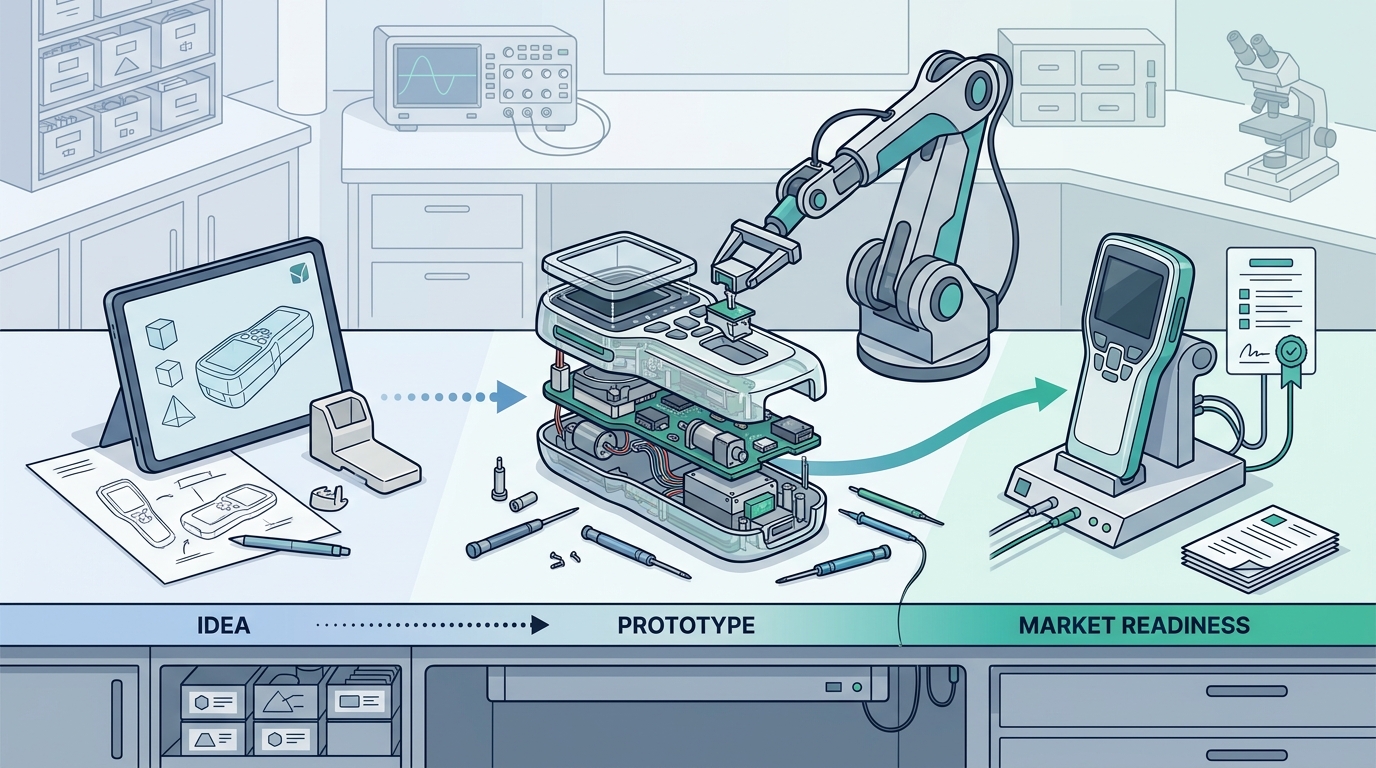
The journey from a rough idea to a functional prototype is rarely linear. It involves iterative cycles of design, testing, and refinement. Proof of Concept (PoC) prototypes are early-stage models used to demonstrate that a specific technical feature or scientific principle works. These are often rough, non-clinical models that validate the core innovation without worrying about aesthetics or durability.
Following the PoC, founders move toward Engineering Validation Test (EVT) units. These prototypes are built using materials and processes that closely resemble the final production device. They are used to verify that the design meets all technical specifications and performance requirements. The final stage before production is Design Verification, where the device is rigorously tested against user needs and regulatory standards.
Each stage serves a distinct purpose in de-risking the project. Skipping or rushing these phases often leads to costly redesigns later in the development cycle. A structured approach ensures that every engineering decision is backed by data and aligned with the ultimate goal of regulatory approval.
Defining Clinical Need and Regulatory Path
Before writing a single line of code or drawing a CAD model, founders must define the clinical problem and the regulatory pathway. Regulatory Strategy is the roadmap that guides how a device will be cleared or approved by agencies like the FDA or CE. Understanding this path early prevents expensive missteps in design and testing.
For many devices, the 510(k) clearance process is the most common route to market. This pathway requires demonstrating that the new device is substantially equivalent to a legally marketed predicate device. Founders must identify these predicates early to inform their design requirements and testing protocols.
Clinical need is equally critical. A device that works technically but fails to solve a real clinical problem will not succeed in the market. Founders should engage with clinicians and end-users to validate the problem statement. This user-centric approach ensures that the prototype addresses actual pain points rather than perceived ones.
From Concept to Design Engineering
Once the clinical and regulatory foundations are set, the focus shifts to design engineering. This phase involves translating requirements into detailed designs. Design for Manufacturing (DFM) is a critical consideration that should begin early in this process. DFM ensures that the device can be produced efficiently and consistently at scale.
At A65 Consulting, we emphasize that DFM is not just a cost exercise but a quality exercise. Design for Manufacturing is a quality exercise because it prevents defects and ensures consistency in the final product. Ignoring DFM until late in the development cycle can lead to significant delays and increased costs.
Engineering teams must also manage the complexity of regulatory and risk management throughout the design process. Risk analysis is not a one-time activity but an ongoing process that informs design decisions. By integrating risk management into the engineering workflow, teams can proactively address potential hazards before they become critical issues.
Verification and Validation Testing
Verification and validation are often confused, but they serve distinct purposes. Verification asks, "Did we build the device right?" It involves testing the device against its design specifications. Validation asks, "Did we build the right device?" It involves testing the device in real-world conditions to ensure it meets user needs.
Verification is a system, not just a phase. Verification is a system, not a phase because it requires continuous testing and documentation throughout the development lifecycle. This approach ensures that any deviations from the design are identified and addressed immediately.
Validation testing often requires human factors studies to ensure that the device is intuitive and safe for end-users. Human factors and usability testing are essential for devices that will be used by patients or healthcare providers. These tests help identify potential use errors and inform design improvements that enhance safety and efficacy.
Choosing Your Engineering Partner
For early-stage founders, building an in-house engineering team is often impractical due to cost and time constraints. Outsourcing to a specialized engineering partner can accelerate development and provide access to critical expertise. However, choosing the right partner is crucial for success.
Founders should look for partners with a proven track record in medical device development. A65 Consulting has helped clients generate over $300 million in projected revenue through successful product development. This experience demonstrates the partner's ability to navigate the complexities of the industry and deliver results.
Key factors to consider include the partner's technical expertise, regulatory knowledge, and cultural fit. The partner should be able to integrate seamlessly with your team and provide the leadership and support needed to navigate the development process. A strong partnership is built on trust, transparency, and a shared commitment to quality.
Comparison of Development Approaches
| Approach | Pros | Cons | Best For |
|---|---|---|---|
| In-House Team | Full control, direct communication | High cost, slow setup, hiring challenges | Large, well-funded companies |
| Freelance Engineers | Flexible, lower cost | Limited expertise, coordination risks | Small, simple projects |
| Specialized Partner | Expertise, speed, regulatory support | Higher initial cost, dependency | Complex medical devices |
Key Takeaways
- Regulatory Strategy First: Define your regulatory pathway early to guide design and testing decisions.
- Iterative Prototyping: Use PoC, EVT, and DVT stages to de-risk the project progressively.
- DFM Integration: Incorporate Design for Manufacturing principles early to ensure producibility.
- Risk Management: Treat risk analysis as an ongoing process that informs design choices.
- Human Factors: Validate usability with end-users to ensure safety and efficacy.
- Partner Selection: Choose an engineering partner with a proven track record in medical devices.
- Verification System: Implement verification as a continuous system, not a final phase.
Frequently Asked Questions
How long does it take to build a medical device prototype?
The timeline varies based on complexity, but a typical proof-of-concept prototype can take 3 to 6 months. Full design verification may take 12 to 18 months or more.
What is the difference between verification and validation?
Verification ensures the device meets its design specifications, while validation ensures it meets user needs and clinical requirements in real-world conditions.
Do I need a regulatory strategy before starting development?
Yes, defining your regulatory strategy early helps guide design decisions and testing protocols, reducing the risk of costly delays later.
How can I find the right engineering partner?
Look for partners with experience in your specific device class, a strong regulatory track record, and a collaborative approach to project management.
What is Design for Manufacturing (DFM)?
DFM is the practice of designing products in a way that makes them easy and cost-effective to manufacture without compromising quality.
Why is human factors testing important?
Human factors testing identifies potential use errors and ensures that the device is intuitive and safe for end-users, which is critical for regulatory approval.
Can I outsource all aspects of development?
Yes, many founders outsource the entire development process to a specialized partner, allowing them to focus on business strategy and fundraising.
Next Steps
Turning your medical idea into a working prototype is a complex but rewarding journey. By following a structured approach and leveraging the right expertise, you can de-risk your project and increase your chances of success. If you are ready to discuss your project, schedule a discovery call with A65 Consulting to explore how we can help you bring your vision to life.