
Medical device manufacturers face intense pressure to optimize their Bill of Materials (BOM) without compromising regulatory compliance or clinical safety. According to recent industry analyses, effective cost reduction strategies can improve gross margins by 15 to 20 percent while accelerating time-to-market. This guide outlines the critical engineering and procurement steps to achieve sustainable cost savings.
Understanding the Medical Device BOM
A Bill of Materials is more than a simple list of parts. It is a comprehensive inventory of every component, assembly, and material required to build a medical device. In the medical device industry, the BOM serves as the foundation for regulatory submissions, quality control, and supply chain management. Cost reduction begins with a granular understanding of every line item.
Many engineering teams treat the BOM as a static document. However, it is a dynamic tool that evolves throughout the product lifecycle. Early-stage BOMs often include over-engineered components to ensure functionality. As the product matures, these components can be optimized for cost without sacrificing performance. A65 Consulting specializes in helping teams navigate this complex transition from concept to viable product.
Effective BOM management requires cross-functional collaboration. Engineering, procurement, and quality teams must work together to identify cost drivers. This collaborative approach ensures that cost reductions do not inadvertently introduce regulatory risks or quality issues. For more insights on managing these complex workflows, explore our blog resources on engineering leadership.
Design Phase Cost Optimization
The most significant impact on BOM cost occurs during the design phase. Decisions made in the early stages of product development lock in 70 to 80 percent of the final cost. Therefore, proactive cost engineering is essential for financial success.
Standardization and Commonality
One of the most effective strategies for reducing BOM cost is component standardization. By using common parts across multiple product lines, companies can leverage economies of scale. This approach reduces procurement costs, simplifies inventory management, and minimizes the risk of supply chain disruptions. Standardization also facilitates easier maintenance and repair processes in the field.
Value Engineering
Value engineering involves analyzing each component to determine if it provides the necessary function at the lowest possible cost. This process often reveals opportunities to substitute expensive materials with more affordable alternatives that meet the same performance criteria. For example, switching from a custom-machined part to a stamped metal component can significantly reduce costs if the design allows for it.
At A65 Consulting, we help clients identify these opportunities through rigorous design reviews. Our team brings decades of experience in medical device innovations to ensure that value engineering efforts align with clinical requirements. Learn more about our product development services to see how we can support your cost reduction goals.
Design for Manufacturing (DFM)
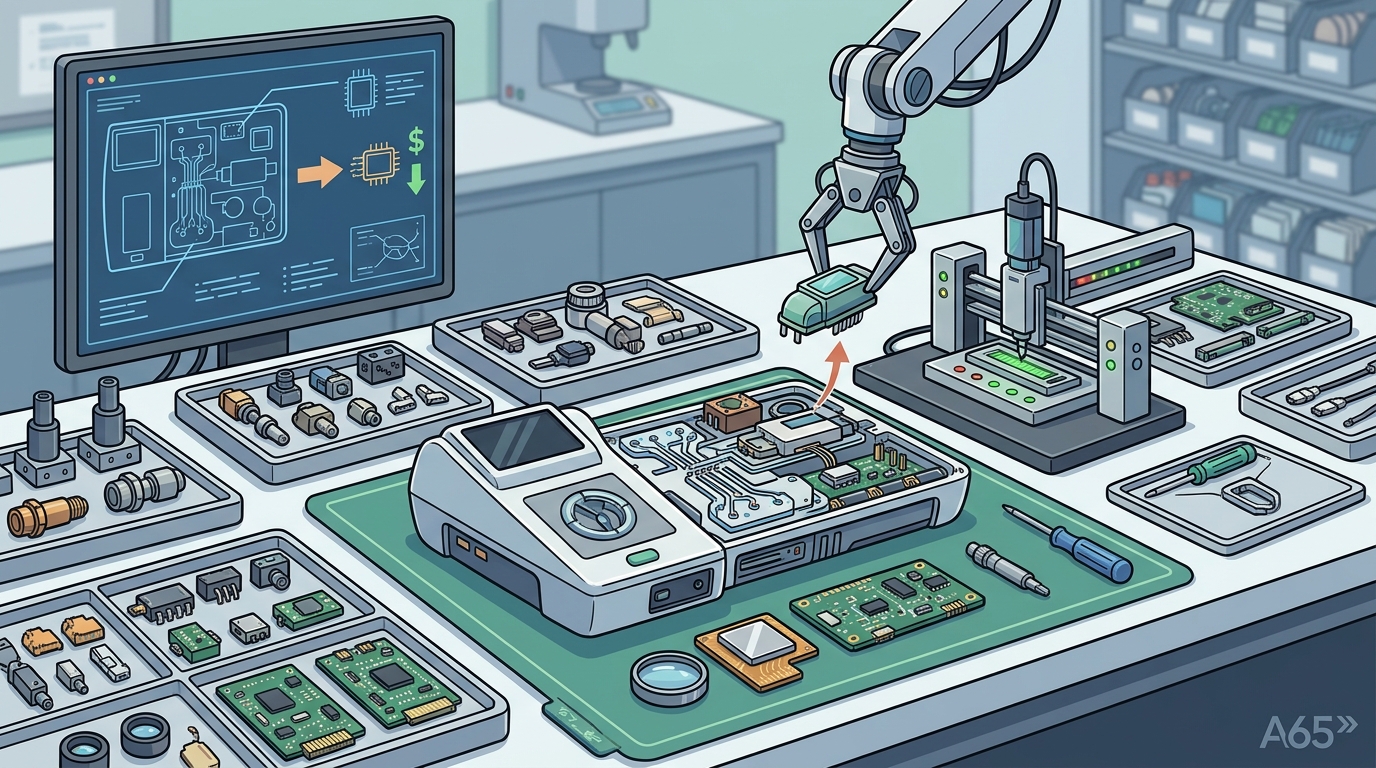
Design for Manufacturing (DFM) is a critical practice that ensures products are designed to be easily and cost-effectively manufactured. DFM involves analyzing the design for potential manufacturing challenges and making adjustments to simplify assembly, reduce material waste, and improve production efficiency. DFM is not just a cost exercise; it is a quality exercise.
By involving manufacturing experts early in the design process, teams can avoid costly redesigns later in the development cycle. This proactive approach reduces the need for expensive tooling modifications and minimizes production delays. Our recent insights on Design for Manufacturing highlight why this approach is vital for long-term success.
Manufacturing and DFM Strategies
Once the design is finalized, the focus shifts to manufacturing efficiency. Even the best-designed product can incur high costs if the manufacturing process is inefficient. Optimizing the manufacturing process is key to reducing the overall cost of goods sold (COGS).
Process Optimization
Process optimization involves streamlining production steps to reduce labor costs, energy consumption, and material waste. This can include automating repetitive tasks, improving workflow layouts, and implementing lean manufacturing principles. Lean manufacturing focuses on eliminating waste in all forms, including overproduction, waiting time, and unnecessary transportation.
Implementing lean principles can lead to significant cost savings and improved quality. For instance, reducing the number of assembly steps can lower labor costs and decrease the likelihood of errors. A65 Consulting provides manufacturing support to help teams transition from design to production seamlessly.
Yield Improvement
Yield improvement is another critical factor in reducing BOM cost. Low yield rates mean that more raw materials are required to produce a given number of finished units, increasing the cost per unit. By identifying and addressing the root causes of defects, manufacturers can improve yield rates and reduce material waste.
Statistical process control (SPC) tools can help monitor production processes and identify variations that lead to defects. Implementing SPC allows for real-time adjustments, ensuring that the process remains within control limits. This proactive approach minimizes scrap and rework costs, contributing to a lower BOM.
Supplier Management and Negotiation
Supplier relationships play a crucial role in BOM cost management. Effective supplier management can lead to better pricing, improved quality, and more reliable delivery schedules. Building strong partnerships with key suppliers is essential for long-term cost reduction.
Strategic Sourcing
Strategic sourcing involves analyzing the supply market to identify the best suppliers for each component. This process includes evaluating supplier capabilities, financial stability, and geographic location. By diversifying the supplier base, companies can reduce dependency on single sources and mitigate supply chain risks.
Negotiating favorable terms with suppliers can also lead to significant cost savings. This includes securing volume discounts, longer payment terms, and joint development agreements. A65 Consulting helps clients navigate these complex negotiations by providing expert guidance and market insights. Discover how we can help by contacting our team for a consultation.
Total Cost of Ownership (TCO)
When evaluating suppliers, it is important to consider the Total Cost of Ownership (TCO) rather than just the purchase price. TCO includes all costs associated with a component, including procurement, logistics, quality, and end-of-life disposal. A lower purchase price may result in higher TCO if the supplier has poor quality or unreliable delivery.
By focusing on TCO, companies can make more informed decisions that lead to long-term cost savings. This holistic approach ensures that cost reduction efforts are sustainable and do not compromise product quality or supply chain resilience.
Regulatory Considerations in Cost Cutting
Cost reduction in the medical device industry must always be balanced with regulatory compliance. Any changes to the BOM, design, or manufacturing process must be carefully evaluated to ensure they do not impact safety or efficacy. Regulatory bodies such as the FDA require rigorous documentation and validation of any changes.
Change Control Processes
Implementing a robust change control process is essential for managing BOM cost reductions. This process ensures that all proposed changes are reviewed, approved, and documented before implementation. Change control helps prevent unauthorized modifications that could lead to regulatory non-compliance or product recalls.
A65 Consulting assists clients in establishing effective change control processes that align with regulatory requirements. Our expertise in regulatory and risk management ensures that cost reduction efforts do not jeopardize product approval or market access.
Verification and Validation
Verification and validation are critical steps in confirming that cost-reduced components meet all performance and safety requirements. This process involves testing and documenting that the changes do not adversely affect the device. Rigorous verification and validation are necessary to maintain regulatory compliance and ensure patient safety.
Our team at A65 Consulting provides comprehensive verification and testing support to help clients navigate these complex requirements. We ensure that your cost reduction strategies are backed by solid data and regulatory evidence.
Key Takeaways
- Early Intervention: Cost reduction strategies are most effective when implemented during the design phase, where 70-80% of costs are determined.
- DFM Importance: Design for Manufacturing is a quality exercise that prevents costly redesigns and improves production efficiency.
- Standardization: Using common components across product lines leverages economies of scale and simplifies supply chain management.
- Supplier Partnerships: Strategic sourcing and TCO analysis lead to more sustainable cost savings than price negotiation alone.
- Regulatory Compliance: All BOM changes must undergo rigorous verification and validation to maintain FDA compliance and patient safety.
- Lean Principles: Implementing lean manufacturing reduces waste and improves yield, directly lowering the cost per unit.
- Expert Support: Engaging experienced engineering partners like A65 Consulting can accelerate cost reduction efforts and mitigate risks.
Frequently Asked Questions
How does Design for Manufacturing reduce BOM cost?
DFM reduces BOM cost by simplifying part geometry, reducing the number of components, and selecting materials that are easier to process. This minimizes machining time, assembly steps, and material waste, leading to lower production costs.
What is the role of standardization in cost reduction?
Standardization allows companies to purchase components in larger volumes, which often results in lower unit prices. It also reduces inventory complexity and the risk of obsolescence, further lowering overall costs.
Can cost reduction affect regulatory compliance?
Yes, if not managed properly. Any change to the BOM must be evaluated for its impact on safety and efficacy. A65 Consulting helps ensure that cost reduction efforts comply with FDA 510(k) and other regulatory requirements.
How do you choose the right supplier for cost optimization?
Evaluate suppliers based on Total Cost of Ownership (TCO), including quality, delivery reliability, and financial stability. Strategic sourcing involves negotiating long-term partnerships rather than just focusing on the lowest purchase price.
What is the typical ROI of BOM cost reduction initiatives?
Effective BOM cost reduction can improve gross margins by 15 to 20 percent. The ROI depends on the scale of the product and the effectiveness of the implemented strategies, such as DFM and supplier negotiation.
How long does it take to implement DFM?
DFM should be integrated throughout the design process. Early involvement can prevent delays, while late-stage DFM may require redesign cycles that extend the timeline by several months.
Does A65 Consulting offer BOM cost reduction services?
Yes, A65 Consulting provides expert engineering support for cost optimization, including DFM reviews, supplier collaboration, and regulatory-compliant design changes. Contact us to discuss your project.
Next Steps
Reducing the Bill of Materials cost for medical devices requires a strategic, multi-disciplinary approach. By focusing on design optimization, manufacturing efficiency, and supplier management, you can achieve significant cost savings without compromising quality or compliance. A65 Consulting is your trusted partner in navigating these complexities. We help transform device concepts into viable products with expert teams and meticulous attention to detail.
Ready to optimize your medical device costs? Book a consultation with our team today to learn how we can help you achieve your product development objectives.