
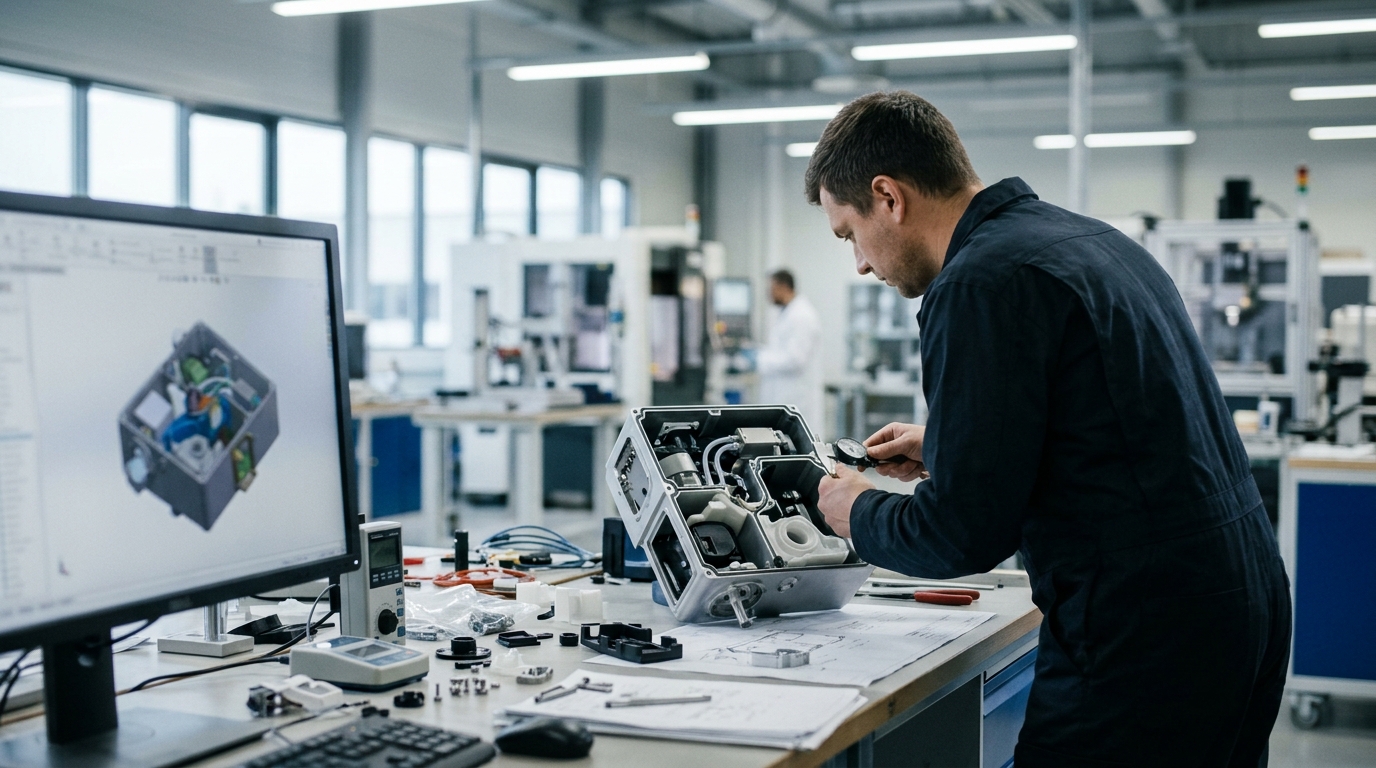
Design for manufacturability (DFM) is the engineering practice of designing a product to be produced efficiently, reliably, and at the lowest possible cost without compromising quality or safety. For medical devices, DFM is critical because it bridges the gap between a functional prototype and a scalable, regulatory-compliant production process. By integrating manufacturing constraints early in the design phase, teams can reduce unit costs, minimize production defects, and accelerate time to market. A65 Consulting applies these principles to help device companies turn concepts into viable, cost-effective products.
Defining DFM in the Medical Device Context
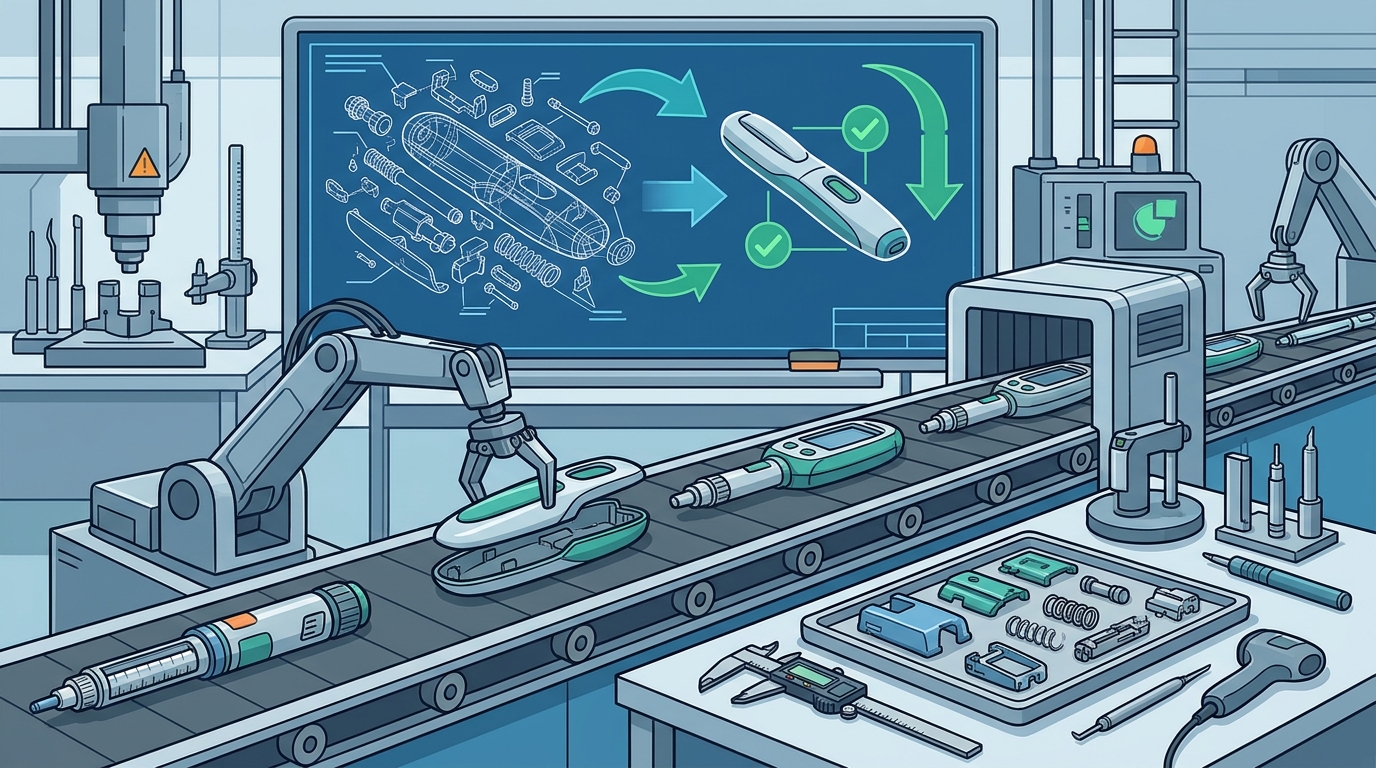
Design for manufacturability is not merely a cost-cutting exercise; it is a quality and reliability strategy. In the medical device industry, where patient safety is paramount, DFM ensures that the manufacturing process can consistently produce devices that meet strict performance and safety requirements. This approach involves analyzing how a device will be made before finalizing its design, allowing engineers to identify potential production bottlenecks early. For example, a complex assembly that requires manual alignment in a prototype may be impossible to automate at scale, leading to high labor costs and increased risk of human error. By simplifying the assembly process during the design phase, manufacturers can achieve higher yields and lower per-unit costs.
The Impact of DFM on Production Costs
Implementing DFM principles directly lowers production costs by reducing waste, rework, and material usage. When a design is optimized for manufacturing, it often requires fewer parts, simpler geometries, and standard materials, all of which contribute to lower bill of materials (BOM) costs. Additionally, DFM reduces the need for expensive custom tooling and complex fixtures, which are common in early-stage medical device development. A65 Consulting’s manufacturing engineering services focus on these areas, helping clients estimate cost of goods sold (COGS) accurately and identify opportunities for cost reduction before tooling is committed. This proactive approach prevents costly design changes late in the development cycle, which can significantly impact project budgets and timelines.
Key DFM Strategies for Medical Devices
Several specific strategies are commonly employed to enhance manufacturability in medical device design. One key strategy is design for assembly (DFA), which minimizes the number of parts and fasteners required to build a device. Another is the use of standard components and materials, which reduces supply chain complexity and allows for easier sourcing. Thermal and structural analysis also plays a role, as designs that account for manufacturing tolerances and material behavior can avoid failures during production. A65 Consulting utilizes finite element analysis (FEA) and tolerance analysis with GD&T to ensure that designs are not only functional but also robust enough to withstand the variations inherent in manufacturing processes. These analytical tools provide data-driven insights that guide design decisions and improve overall product reliability.
Integrating DFM with Regulatory Requirements
Medical device manufacturing is heavily regulated, and DFM must be aligned with regulatory requirements such as FDA 510(k) submissions and ISO 13485 quality management systems. A design that is easy to manufacture but difficult to validate or verify may face regulatory hurdles, delaying market access. Therefore, DFM in medical devices must consider not just production efficiency but also the ease of testing, inspection, and documentation. A65 Consulting’s system engineering services include traceability, verification, and validation protocols that ensure DFM decisions support regulatory compliance. By integrating quality and regulatory considerations into the DFM process, device companies can avoid costly redesigns and ensure that their products meet all necessary standards for safety and efficacy.
The Role of Expertise in DFM Success
Successful DFM requires a deep understanding of both engineering principles and manufacturing processes. This expertise is often lacking in early-stage device companies, which may focus primarily on clinical performance and overlook production realities. A65 Consulting brings decades of experience in medical device development, offering end-to-end engineering services that include mechanical, electrical, and manufacturing engineering. Their team works alongside client teams to identify DFM opportunities, resolve production challenges, and optimize designs for cost and quality. By leveraging this expertise, device companies can navigate the complexities of DFM with confidence, ensuring that their products are not only innovative but also commercially viable.
Key Takeaways
- Design for manufacturability (DFM) is a critical engineering practice that ensures medical devices can be produced efficiently and reliably.
- DFM lowers production costs by reducing waste, rework, and material usage, and by simplifying assembly processes.
- Key DFM strategies include design for assembly, use of standard components, and thorough tolerance and thermal analysis.
- DFM must be integrated with regulatory requirements to ensure that designs are both manufacturable and compliant.
- Expertise in both engineering and manufacturing is essential for successful DFM, and A65 Consulting provides this specialized support.
- Early integration of DFM principles prevents costly late-stage design changes and accelerates time to market.
Frequently Asked Questions
What is the primary goal of design for manufacturability in medical devices?
The primary goal of design for manufacturability in medical devices is to ensure that a product can be produced efficiently, reliably, and at the lowest possible cost while maintaining the high quality and safety standards required for medical applications.
How does DFM affect the cost of goods sold (COGS)?
DFM affects COGS by reducing the number of parts, simplifying assembly, and minimizing material waste. These factors lead to lower per-unit production costs, which can significantly improve the profitability of a medical device product.
Can DFM be applied after a prototype is built?
While DFM can be applied after a prototype is built, it is most effective when integrated early in the design phase. Applying DFM later in the process can lead to costly redesigns and delays, as changes to the design may require new tooling and re-validation.
What role does finite element analysis (FEA) play in DFM?
Finite element analysis (FEA) plays a crucial role in DFM by simulating how a device will behave under various manufacturing and operational conditions. This helps engineers identify potential failure points and optimize the design for manufacturability and reliability.
How does A65 Consulting support DFM for medical device companies?
A65 Consulting supports DFM by providing expert engineering services that include mechanical, electrical, and manufacturing engineering. Their team works with clients to identify DFM opportunities, resolve production challenges, and optimize designs for cost and quality, ensuring that products are both innovative and commercially viable.
Conclusion
Design for manufacturability is a fundamental aspect of medical device development that directly impacts production costs, quality, and time to market. By integrating DFM principles early in the design process, device companies can create products that are not only clinically effective but also economically viable. A65 Consulting offers comprehensive engineering services that help clients navigate the complexities of DFM, ensuring that their medical devices are designed for success from concept to launch. To explore how A65 Consulting can support your DFM efforts, schedule a discovery call. Learn more: Contact A65 Consulting Book.