

Design for Manufacturing (DFM) is a systematic engineering approach that optimizes product design to simplify production processes, reduce material waste, and lower unit costs. By integrating manufacturing constraints early in the development phase, medical device companies can significantly decrease their cost of goods sold (COGS) without compromising safety or performance. A65 Consulting specializes in applying these principles to turn complex device concepts into viable, cost-efficient products.
The Cost of Late-Stage Design Changes
One of the most significant drivers of production cost in medical devices is the timing of design modifications. Changes made during the prototype phase are relatively inexpensive, but the same changes made after tooling is finalized can cost thousands of dollars per part. This is because tooling for medical devices, particularly injection molds, requires high-precision machining and rigorous validation. When a design change necessitates a new mold or a significant modification to an existing one, the financial impact is immediate and substantial.
Material Selection and Waste Reduction
Material costs often represent a large portion of the total production cost for medical devices. However, the most expensive material is not always the most appropriate one. DFM involves selecting materials that balance performance requirements with manufacturing efficiency. For instance, using a material that requires slower processing speeds or higher temperatures can increase energy costs and reduce throughput. By choosing materials that are compatible with high-speed manufacturing processes, companies can reduce both material and processing costs.
Furthermore, DFM focuses on minimizing material waste. In processes like injection molding, sprues and runners are often discarded. Designing parts that allow for efficient material flow and minimal scrap can lead to significant savings over time. A65 Consulting works with clients to analyze material options and process parameters to find the optimal balance between performance and cost. This ensures that the final product meets all regulatory and clinical requirements while maintaining a competitive cost structure.
Simplifying Assembly Processes
Assembly is a critical stage in medical device production, and it is often where labor costs accumulate. DFM aims to reduce the number of parts and simplify the assembly sequence. Each additional part requires its own tooling, inventory management, and assembly step. By consolidating multiple parts into a single component, manufacturers can reduce the number of assembly operations, which in turn lowers labor costs and reduces the risk of assembly errors.
For example, a device that originally required ten separate components might be redesigned to use only five. This reduction not only lowers the cost of materials but also simplifies the assembly process. A65 Consulting has experience in redesigning complex assemblies to improve manufacturability and reduce costs. By focusing on assembly simplification, we help clients achieve higher production yields and lower unit costs.
Improving Production Yield and Quality
Production yield is a key metric in manufacturing, and it directly impacts production costs. A low yield means that a higher percentage of parts are defective and must be scrapped or reworked. DFM helps improve yield by designing parts that are less prone to manufacturing defects. For example, sharp corners and thin walls are common sources of defects in injection molded parts. By avoiding these features, engineers can produce parts that are more consistent and reliable.
Higher yield rates mean that more parts are produced per unit of input, which reduces the effective cost per good part. A65 Consulting uses DFM to identify and mitigate potential sources of defects, ensuring that the design is robust and manufacturable. This approach not only lowers production costs but also improves the overall quality of the product, which is essential for medical devices that are subject to strict regulatory scrutiny.
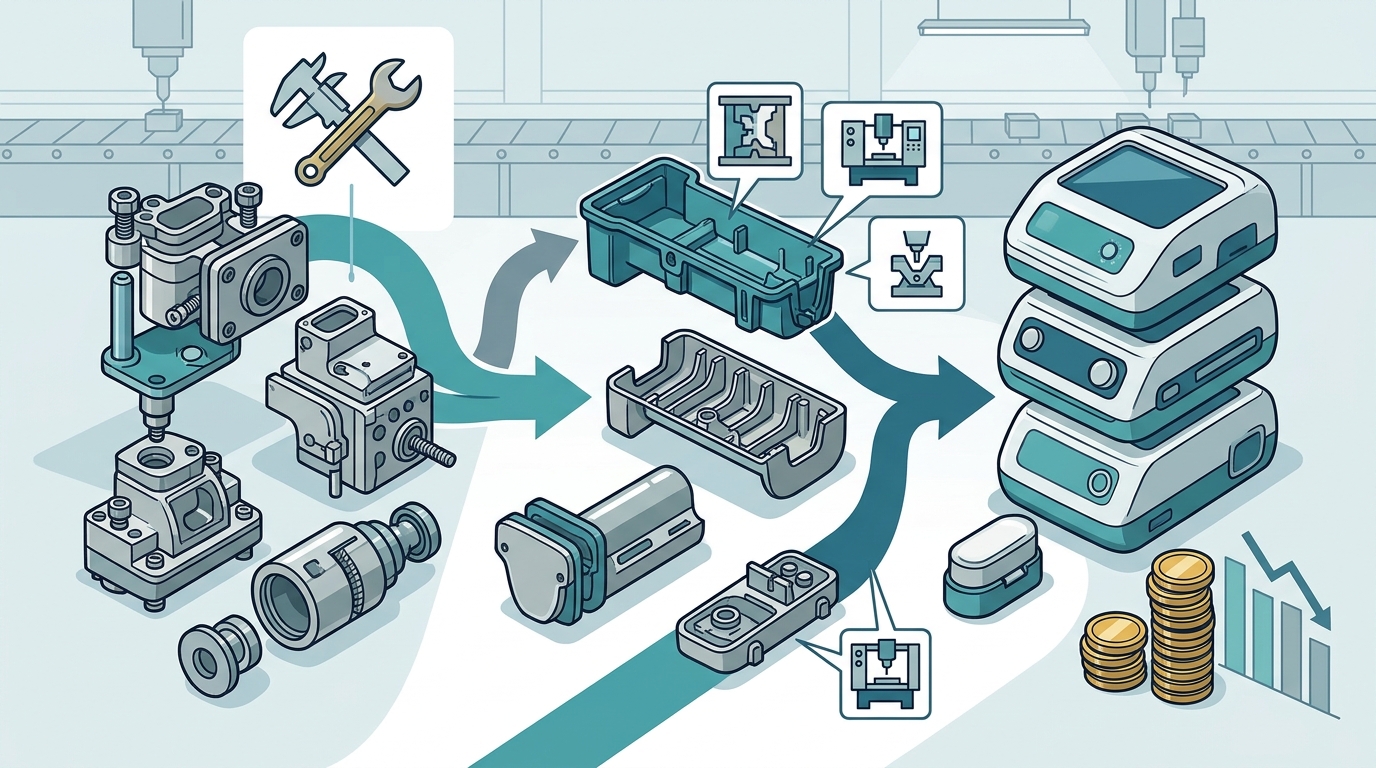
Long-Term Financial Impact
The benefits of DFM extend beyond the initial production run. By designing for manufacturability, companies can create a product that is easier to maintain, repair, and scale. This long-term perspective is crucial for medical device companies that are looking to grow their market share and reduce their overall cost structure. DFM also makes it easier to introduce new product variants or updates, as the underlying design is already optimized for manufacturing.
A65 Consulting helps clients achieve these long-term savings by integrating DFM into every stage of the product development process. From initial concept to final production, our team ensures that the design is aligned with manufacturing capabilities and cost targets. This holistic approach to DFM allows clients to reduce their production costs significantly, while maintaining the high quality and safety standards required for medical devices.
Key Takeaways
- DFM is a systematic approach that optimizes design for manufacturing efficiency and cost reduction.
- Early integration of DFM principles prevents expensive late-stage design changes and re-tooling.
- Material selection and waste reduction are critical components of DFM that directly impact production costs.
- Simplifying assembly processes by reducing part count lowers labor costs and assembly errors.
- Improving production yield through robust design reduces the effective cost per good part.
- Long-term DFM benefits include easier maintenance, scaling, and introduction of new product variants.
Frequently Asked Questions
What is Design for Manufacturing (DFM)?
Design for Manufacturing (DFM) is a design approach that considers the manufacturing process early in the product development cycle to optimize cost, quality, and efficiency.
How does DFM reduce production costs?
DFM reduces production costs by simplifying designs, optimizing material usage, and minimizing assembly steps, which lowers material, labor, and defect rates.
When should DFM be applied in the development process?
DFM should be applied as early as possible, ideally during the conceptual design phase, to prevent costly changes later in the process.
Can DFM compromise product performance?
No, when done correctly, DFM balances performance requirements with manufacturability, ensuring that the product meets all clinical and regulatory standards.
What role does A65 Consulting play in DFM?
A65 Consulting provides expert DFM services, helping clients optimize their medical device designs for cost-effective and efficient manufacturing.
Conclusion
Design for Manufacturing is a critical strategy for reducing medical device production costs. By integrating DFM principles early in the development process, companies can avoid expensive design changes, optimize material usage, and simplify assembly. A65 Consulting is committed to helping you achieve these goals through our expert engineering services. To learn more about how we can help you optimize your medical device design for cost and efficiency, . Learn more: Contact A65 Consulting.