
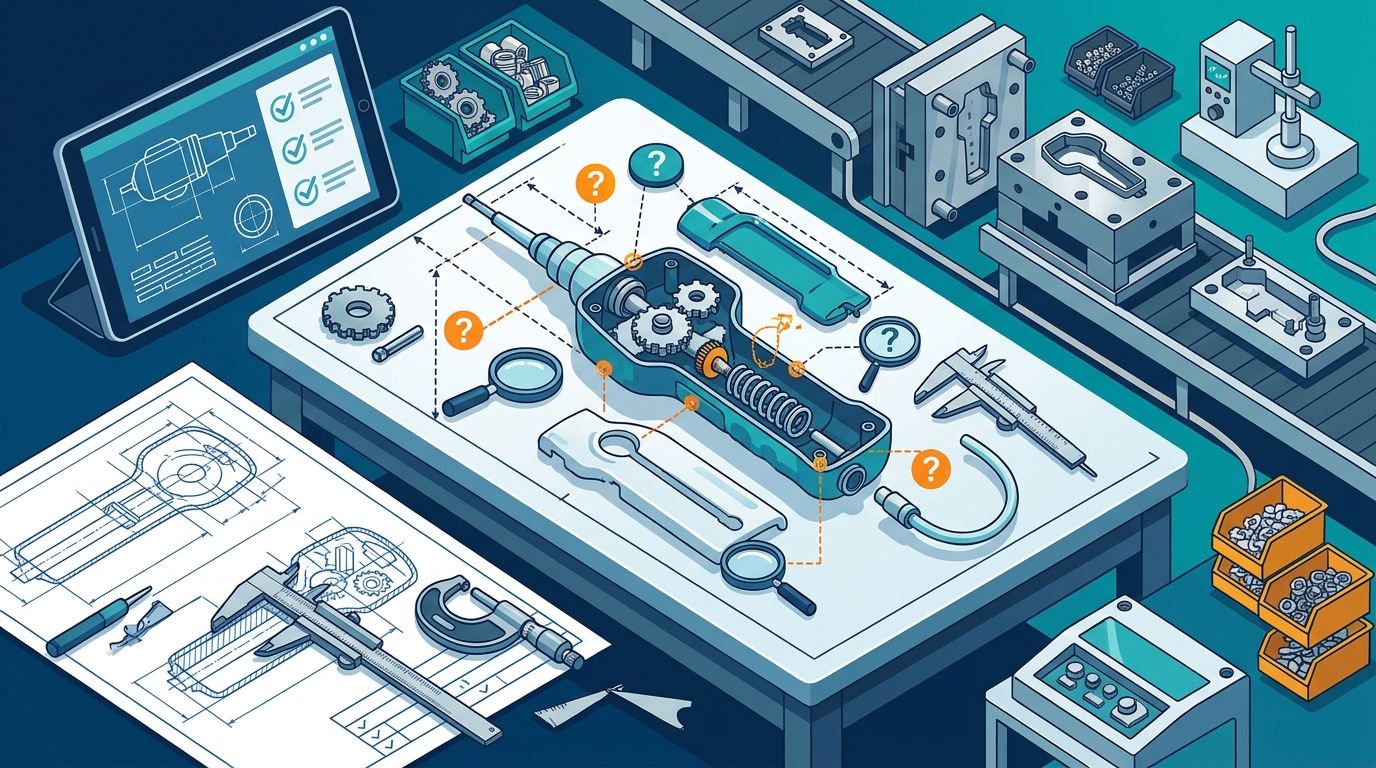
Design for manufacturability (DFM) is the process of designing a product to be manufactured efficiently and cost-effectively. In the medical device industry, DFM is not just about cost; it is about ensuring that the device can be produced consistently, safely, and in compliance with regulatory standards. Asking the right questions early prevents costly redesigns and delays during the transition from prototype to production.
1. How Do You Validate Tolerances for High-Volume Production?
Statistical process control must be applied to critical dimensions. A consultant should explain how they use tolerance analysis, such as GD&T, to ensure parts fit together reliably. They should demonstrate how they account for manufacturing variations that do not appear in CAD models. This ensures that the design works not just at nominal values, but across the entire production range.
2. What Is Your Approach to Reducing Cost of Goods Sold (COGS)?
COGS reduction requires a balance between performance and material efficiency. The consultant should outline specific strategies for lowering unit costs without compromising clinical performance. This might include simplifying part geometries, selecting more cost-effective materials, or optimizing assembly sequences. A strong partner will provide a clear roadmap for how these changes impact the final product budget.
3. How Do You Handle Design Changes During Manufacturing Transfer?
Unplanned changes are a major source of project delay and cost overrun. Ask how the consultant structures their CAD architecture to minimize the impact of late-stage changes. They should have a process for evaluating the ripple effects of a design change on other components and the assembly. This proactive approach prevents the expensive scenario where a single change requires re-tooling multiple parts.
4. Can You Demonstrate Experience with Similar Manufacturing Processes?
Process-specific expertise is critical for successful DFM. Whether the device involves injection molding, machining, or additive manufacturing, the consultant should have direct experience with the specific processes required. They should be able to share case studies or examples of how they have solved similar manufacturing challenges in the past. This experience allows them to anticipate pitfalls that a generalist might miss.
How Do You Ensure Regulatory Compliance in the Manufacturing Design?
DFM must align with FDA and ISO 13485 requirements. The consultant should explain how they integrate quality and regulatory considerations into the design phase. This includes ensuring that the manufacturing process is capable of producing devices that meet all safety and performance requirements. They should also discuss how they document design changes to maintain a clear audit trail for regulatory submissions.
What Is Your Strategy for Supplier Selection and Management?
Supplier capability directly impacts manufacturing yield and cost. A good consultant will help you evaluate potential suppliers based on their technical capabilities, quality systems, and financial stability. They should also outline a plan for managing supplier relationships, including how they will handle issues like material shortages or quality deviations. This ensures that your supply chain is robust and reliable.
How Do You Measure and Report Manufacturing Yield?
Yield data is the ultimate metric of DFM success. The consultant should explain how they track and analyze yield rates during pilot production and initial commercial runs. They should be able to identify root causes for any yield losses and implement corrective actions. This data-driven approach ensures that the design is truly manufacturable and that any issues are addressed before full-scale production.
Choosing the Right Consultant
When evaluating a medical device engineering consultant, look for a partner who combines technical depth with a proven track record in manufacturing transfer. A65 Consulting offers reliable engineering solutions that seamlessly integrate with your team to deliver results. Our team has experience with a wide variety of medical devices, from precision mechanisms to complex robotic systems. By partnering with a firm that prioritizes both design excellence and manufacturing efficiency, you can ensure that your product is ready for the market.
Frequently Asked Questions
What is the primary goal of DFM in medical devices?
The primary goal of DFM in medical devices is to ensure that the product can be manufactured consistently, safely, and cost-effectively while meeting all regulatory and performance requirements.
How early should DFM be integrated into the design process?
DFM should be integrated from the very beginning of the design process. Early integration allows for easier and less costly changes, whereas late-stage DFM often requires significant redesigns and re-tooling.
What is the difference between DFM and DFA?
DFM (Design for Manufacturing) focuses on the ease and cost of producing individual parts, while DFA (Design for Assembly) focuses on the ease and cost of assembling those parts into the final product. Both are critical components of a comprehensive DFM strategy.
How does A65 Consulting approach DFM?
A65 Consulting approaches DFM by applying classical engineering principles, analysis, and prototyping to achieve desired results. They use FEA, tolerance analysis, and process-specific expertise to ensure that designs are manufacturable and cost-effective.
Can DFM help reduce time to market?
Yes, DFM can significantly reduce time to market by preventing costly redesigns and delays during the manufacturing transfer phase. By identifying and resolving manufacturing issues early, the overall development timeline is shortened.
What skills should a DFM consultant have?
A DFM consultant should have strong skills in mechanical engineering, manufacturing processes, tolerance analysis, and regulatory compliance. They should also have experience working with suppliers and managing production lines. Learn more: Contact A65 Consulting Book.