
Medical device development is a capital-intensive endeavor where margins are often determined long before the first prototype is built. Regulatory submissions require rigorous documentation, and manufacturing transitions demand precision engineering to avoid costly rework. According to industry benchmarks, late-stage design changes can increase development costs by up to 10 times compared to early-stage modifications. This financial reality makes strategic cost optimization not just a preference, but a necessity for viable product launches. (Services A65 Consulting)
Why Cost Optimization Matters in MedTech
Cost optimization in medical device development is not about cutting corners on safety or efficacy. It is about eliminating waste in the engineering process, streamlining supply chains, and ensuring that every design decision supports manufacturability. Healthcare market trends indicate that companies with optimized cost structures achieve faster time-to-market and higher ROI on R&D investments.
Many startups and established firms alike struggle with hidden costs. These include over-engineered components, complex assembly processes, and inadequate design validation. By engaging specialized engineering partners, companies can identify these inefficiencies early. This proactive approach ensures that the final product is not only compliant but also profitable.
The Role of External Engineering Partners
Hiring an external engineering firm provides access to specialized expertise without the overhead of full-time hires. Academic studies on medical device innovation highlight that cross-functional teams often solve complex engineering challenges more efficiently than siloed internal groups.
External partners bring a breadth of experience across multiple device classes. They understand the nuances of different materials, manufacturing processes, and regulatory pathways. This knowledge allows them to suggest design alternatives that reduce part counts, simplify assembly, and lower material costs. For example, replacing a custom-machined part with a standardized injection-molded component can drastically reduce per-unit costs at scale.
Furthermore, external firms often have established relationships with contract manufacturers and suppliers. These connections can lead to better pricing and faster prototyping cycles. By leveraging these networks, engineering partners help clients navigate the supply chain more effectively, ensuring that cost savings are realized without compromising quality.
Design for Manufacturing (DFM) Strategies
Design for Manufacturing (DFM) is a critical component of cost optimization. It involves designing products in a way that makes them easy and cost-effective to manufacture. ISO standards emphasize the importance of integrating manufacturing considerations early in the design phase to avoid costly redesigns later.
Component Standardization
One of the most effective DFM strategies is component standardization. Using off-the-shelf components instead of custom parts reduces lead times and costs. Standardized parts are also easier to source and replace, which is crucial for long-term product maintenance and support.
Material Selection
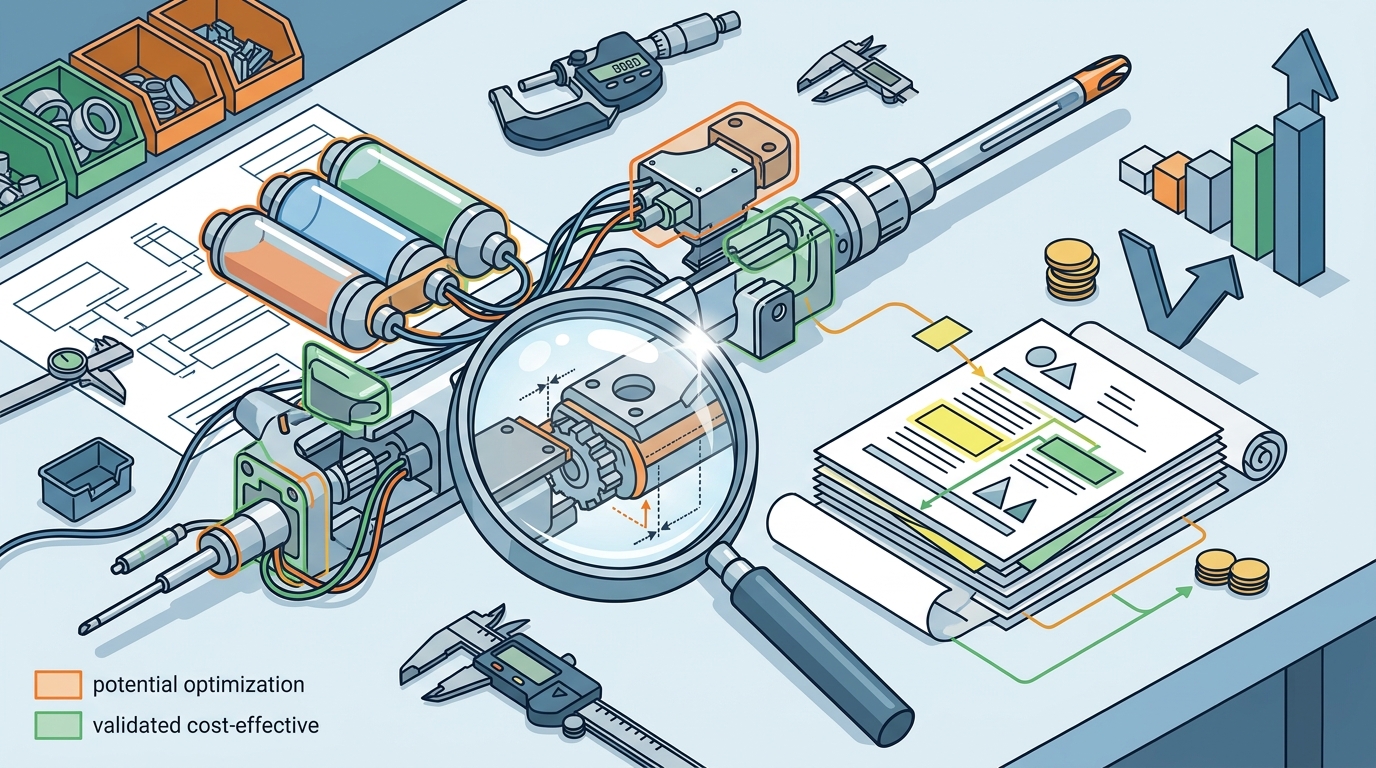
Material selection plays a significant role in cost optimization. Engineers must balance performance requirements with material costs. For instance, using a high-grade polymer instead of metal can reduce weight and cost while maintaining necessary strength and durability. This decision must be validated through rigorous testing to ensure compliance with biocompatibility and performance standards.
Assembly Simplification
Simplifying assembly processes reduces labor costs and minimizes the risk of errors. Fewer parts mean fewer opportunities for misalignment or damage during assembly. Engineering partners can analyze the assembly process and suggest design changes that reduce the number of fasteners, adhesives, or complex joints required.
Regulatory Impact on Cost Structures
Regulatory compliance is a major driver of cost in medical device development. However, poor planning in this area can lead to exponential cost increases. FDA guidelines require detailed documentation and validation data for every design change. If a design is not optimized for regulatory efficiency, the submission process can become prolonged and expensive.
External engineering firms help mitigate these risks by ensuring that designs are compliant from the outset. They understand the specific requirements for different regulatory pathways, such as 510(k), De Novo, or PMA. By aligning the design with regulatory expectations early, they prevent costly delays and rework during the review process.
Additionally, risk management is a key aspect of regulatory compliance. ISO 14971 outlines the framework for risk management in medical devices. Engineering partners integrate risk analysis into the design process, identifying potential hazards and implementing mitigations that do not unnecessarily inflate costs. This proactive approach ensures that safety is maintained while keeping the product economically viable.
Comparing Engagement Models
When hiring an engineering firm, it is essential to choose an engagement model that aligns with your project needs and budget. Below is a comparison of common models:
| Engagement Model | Description | Best For | Cost Implication |
|---|---|---|---|
| Monthly Retainer | Continuous access to engineering resources for ongoing support and milestone-based work. | Long-term development projects requiring flexible capacity. | Predictable monthly costs; scalable based on hours. |
| Fixed-Price Project | Defined scope and deliverables with a set price. | Well-defined tasks like DFM reviews or specific design phases. | Lower risk for budgeting; potential for change order costs. |
| Hourly Consulting | Pay for actual time spent on advisory or specialized tasks. | Short-term advice, audits, or specialized expertise. | Flexible but can become expensive if scope expands. |
At A65 Consulting, we typically utilize a monthly retainer model combined with milestone-based payments. This approach allows for flexibility while ensuring that both parties are aligned on project goals and timelines. It also facilitates a deeper partnership, where the engineering team becomes an extension of your own, fully invested in the success of your product.
Key Takeaways
- Early Intervention is Critical: Cost optimization is most effective when integrated into the concept and design phases, not after manufacturing begins.
- DFM Reduces Waste: Designing for manufacturability can significantly lower production costs by simplifying assembly and standardizing components.
- Regulatory Alignment Saves Money: Proactive compliance planning prevents costly delays and rework during FDA submissions.
- External Expertise Adds Value: Specialized engineering firms bring diverse experience and supplier networks that internal teams may lack.
- Risk Management is Cost-Efficient: Integrating risk analysis early reduces the need for expensive mitigation strategies later.
- Flexible Engagement Models: Choosing the right engagement model, such as a retainer, ensures cost predictability and scalability.
- Proven Track Record: A65 Consulting has helped clients achieve over $300M in projected new product revenue through optimized engineering solutions.
Frequently Asked Questions
How does an engineering firm reduce medical device costs?
Engineering firms reduce costs by optimizing designs for manufacturability, standardizing components, and streamlining supply chain processes. They also ensure regulatory compliance early to avoid costly redesigns.
Is cost optimization compatible with regulatory compliance?
Yes, in fact, they are synergistic. Optimizing for manufacturing often simplifies the validation process, making regulatory submissions more straightforward and less expensive.
What is the difference between DFM and DFX?
DFM (Design for Manufacturing) focuses specifically on production efficiency. DFX (Design for X) is a broader term that includes manufacturing, assembly, testing, and serviceability considerations.
How long does it take to see cost savings from engineering optimization?
Savings are realized during the manufacturing phase, but the planning and design optimization typically occur months before production begins. Early intervention yields the highest ROI.
Can small startups benefit from external engineering firms?
Absolutely. Startups often lack the specialized expertise and supplier networks of larger firms. External partners provide these resources on a flexible basis, making them ideal for budget-conscious innovators.
What types of medical devices can be optimized?
Cost optimization applies to all medical devices, including implants, diagnostic equipment, surgical instruments, and wearable health monitors. The strategies vary based on the device class and complexity.
How do you measure the success of cost optimization?
Success is measured by reduced per-unit costs, shorter time-to-market, fewer regulatory queries, and higher overall product profitability.
Next Steps
Optimizing your medical device for cost and manufacturability is a strategic advantage that can define your success in the market. Do not wait until production to address these challenges. Partner with experts who understand the intersection of engineering, manufacturing, and regulatory compliance.
Contact A65 Consulting today to schedule a discovery call. Let us help you transform your device concept into a viable, cost-effective product that meets the highest standards of quality and performance.